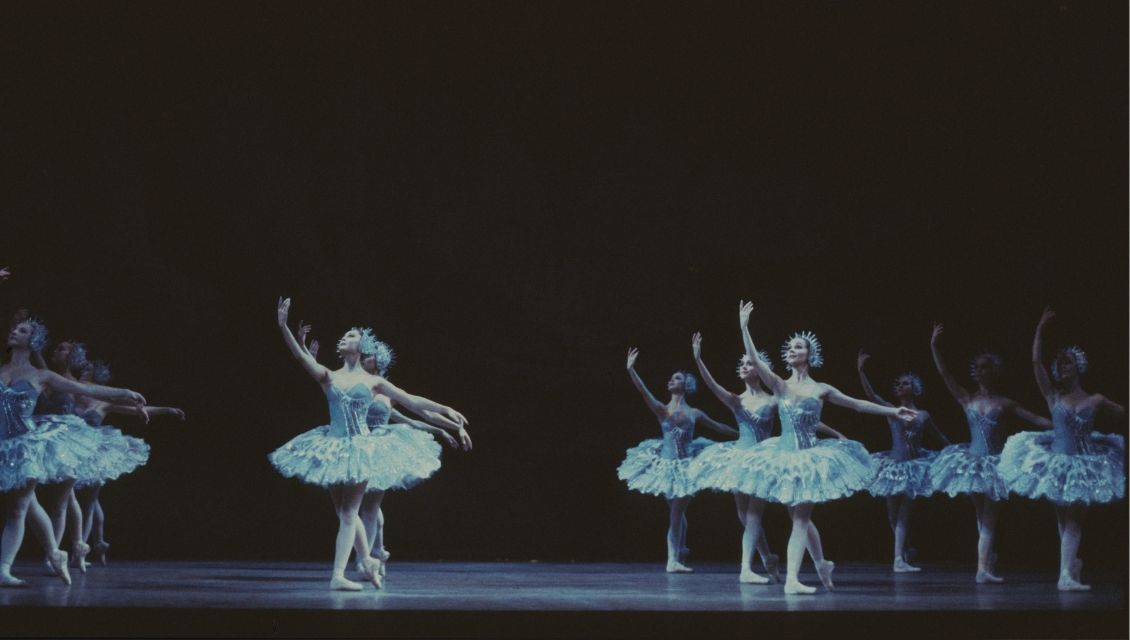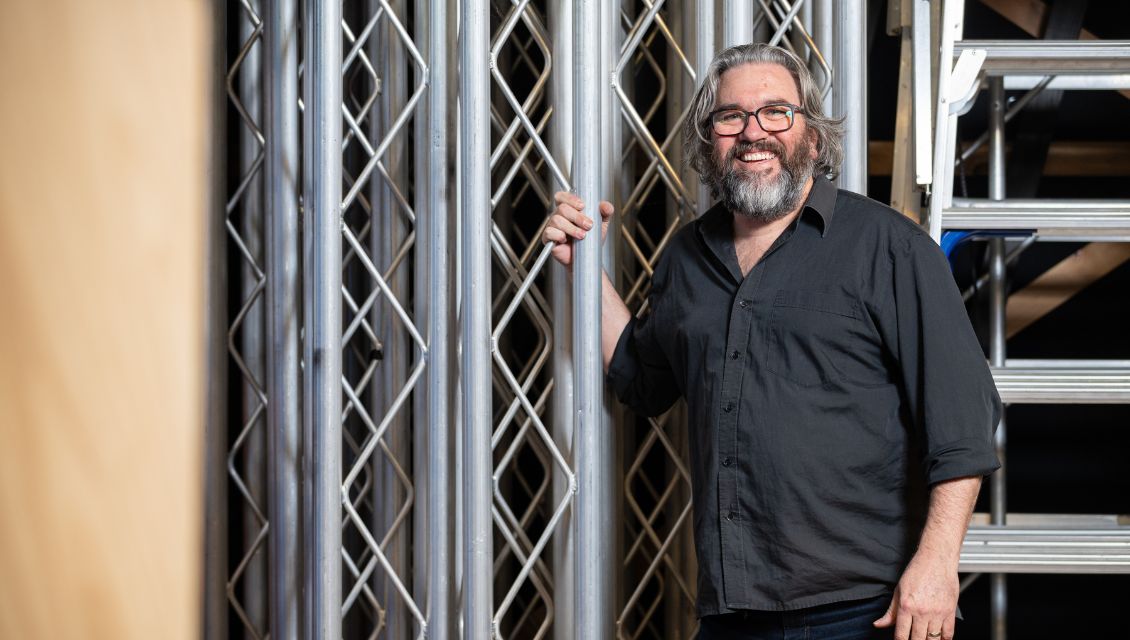
The production manager at State Opera South Australia is in charge of everything and everyone working behind the scenes on our operatic productions: techs, wardrobe, props and stage management team.
The production manager makes the director’s and designer’s vision a reality on stage and is the main conduit of information between the office/administration and the people running and performing the show.
We take ideas in the form of music and words in a script or score and make them appear real in front of thousands of people. It can be as simple as a bespoke prop for a performer or as complicated as acoustic treatment in an orchestra pit; as straightforward as ensuring the chorus know that a music call was moved by half an hour, to understanding the cost ramifications of a designer wanting to rotate the set 10 degrees.
The majority of my department’s expenditure is on wages, employing extraordinary, flexible, talented craftspeople with rare skills and knowledge, who can make it all a reality when time and budgets are tight.
There’s no such thing as a typical workday and that’s why I love this job!
The production process is different for every show, but broadly there are four phases – preproduction, rehearsals, season and post-production.
We are currently rehearsing Verdi’s Macbeth that will open in September at Her Majesty’s Theatre, but we are also planning our schools touring show, The Frog Prince, as well as creating sets and costumes for The Marriage of Figaro that will hit the stage in November.
Plus a few more projects that I can’t mention yet. So, you may be working on a show in the theatre and switch your focus to something happening in three or six months or even years away.
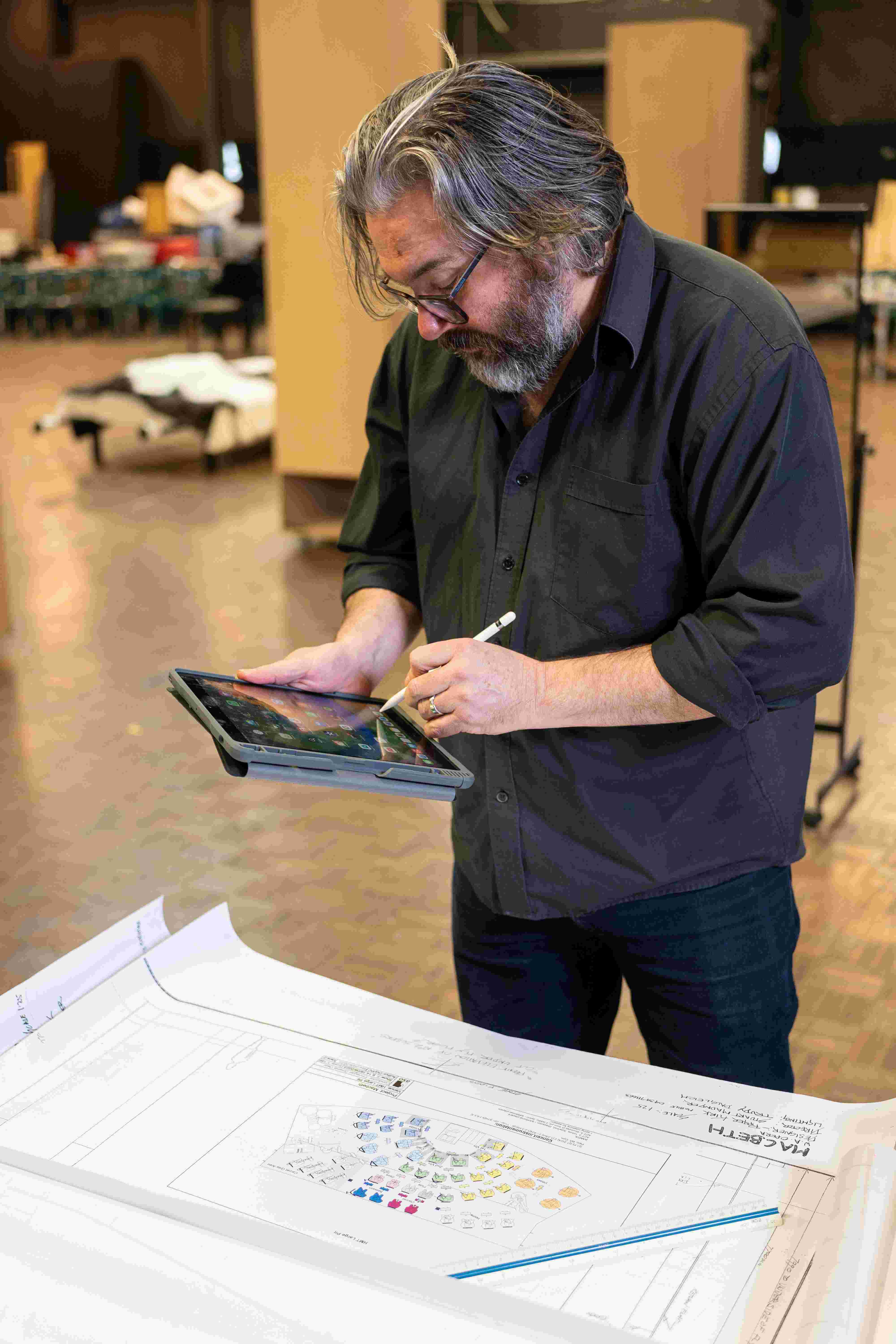 On most days, my schedule looks something like:
Once I get the kids off to school and kindy, I’m usually catching up on emails in the morning, maybe a staff or planning meeting.
Then I review some plans or a schedule … I’m always having to check things are on budget.
I check in with my stage management team to see how things are going in the rehearsal room.
Opera bump ins (industry jargon for setting up) go for four to 14 days depending on the scale of the show. If we’re bumping in, I’m at the theatre all day and night – but I’m always a phone call or an email away for our admin or marketing team.
My career as a production manager started with a love of performing arts.
I started in drama and music at high school. I sang in the choir all through school and played in the band once I was a bit older, and then got involved in amateur theatre. I trained at the Centre for the Performing Arts (now Adelaide College of the Arts) in set construction, lighting and audio, but back then you did a little bit of everything to start you off. I learned basic sewing, stage management, scenic art and prop making.
That little bit of everything led me to a freelance career as a technician in the second-tier, schools and festivals industries here in Adelaide thence to lighting designs for State Theatre Company of SA, and a bunch of touring. It was the logical next step to go into management.
Essentially, experience in the production process is what is going to bring anyone to this sort of role. It’s great to have knowledge of the craft-based skills and have a bit of an obsession with spreadsheets. You should have the ability to see the big picture and an eye for detail.
The last qualification would be a deep and abiding love of live performance. We always need to go the extra mile to make it right on the night.
Work, health and safety is a big part of my job.
It’s horrible when performers injure themselves. We are ultimately there to entertain people and we want everyone to feel safe in the theatre, on stage and behind the scenes. Stages are inherently dangerous places where you always need to watch around you and be extremely careful. There’s always metal hanging 22m above our heads and sometimes a half ton part of a set on rollers. Occasionally accidents occur, and that is the worst.
The odd hours and long days never bothered me until I became a father, but my four-year-old is an early riser which makes those bump in days challenging at the moment. Coffee helps.
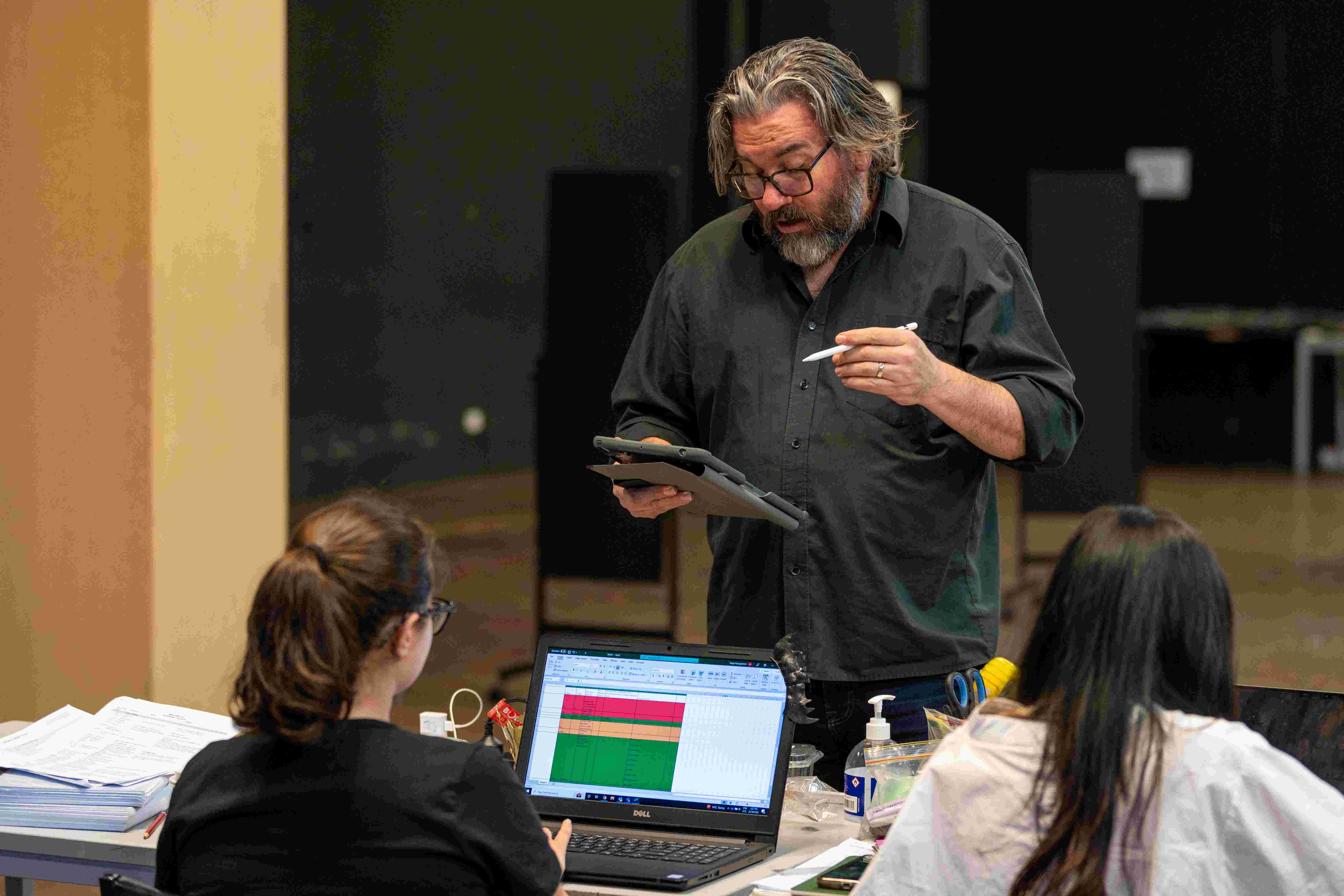 The best thing about my job is the people.
Passionate, compassionate, conscientious, humans are all around me.
The variety is great too. The other day I went with a props buyer to pick up a free couch that we will be using for a production later this year, then I popped back to the office and finalised negotiations on a very exciting set build. Oh, and rehearsals in between. You never get bored!
It might surprise people to learn that State Opera South Australia has a very small core team of only 15 people.
When we’re in preproduction, I have only one employee in the production team. That can expand anywhere up to 50 or 60 people on a big production, or close to 100 for outdoor events.
My advice to people wanting a career in the arts is that there’s never been a better time to get into technical production work.
There’s a shortage of skills across all disciplines, with companies and venues all over the state looking for technicians, craftspeople and stage managers.
Start in the industry in any area, and you’ll work with some excellent people, especially in Adelaide. Your breadth of experience and good relationships with a network of colleagues can make you a production manager, but it’s creativity and flexibility that make you a good production manager… which could be said of working in the theatre in any role really.
European theatre has a history spanning back to the ancient Greeks and Roman republic, and we still use some of the terms they used today.
Rostra was the Latin term for the oaken beak of a ship. When Roman generals defeated “pirate” fleets they cut the reinforced bow of the flag ship down and paraded it through the city as a trophy.
Some of these Rostra were mounted along the front of the senate house and around the Western end of the area that the plebians assembled to cast their votes on plebiscites. Tribunes and other representatives began to use these oaken beaks to stand above and address the crowd. Thus, we still use the term “rostra” for a small (usually mobile) stage.
Of course, in 21st century South Australia we have nicknamed it “Rozzy”.