The settlement history of Adelaide, indeed of all Australian cities, goes something like this. Land, build a jail, build some pubs, build a church, then build some theatres.
The oldest theatres in Adelaide are almost as old as the city itself, springing up very soon after the city was founded.
This fact, according to Adelaide Theatres: Then and Now exhibition curator Sarah Northcott, speaks to the value people placed on live performance in the 19th Century.
In a time before the internet, before television and before movies the theatre was the cultural hub of any community, a place to come together and be seen, gossip, network and, finally, watch a show.
It attracted all classes and all walks of life, Ms Northcott says, with the more well-to-do patrons in the dress circle and balconies and the working class down in “the pits”.
“It was a meeting place, it was for leisure, it was for business,” she says.
“And it was the start of forming a cultural connection back to Britain.
“There were different seating hierarchies. The pits were very rowdy – you could even bring your dog – and the police were often called.
“In fact a lot of the really early theatres were actually above taverns, possibly as a way to bring more people into the pub and keep them drinking.”
A highlight of the exhibition, on display in the Ian and Pamela Wall Gallery located on the rooftop level of Her Majesty’s Theatre, 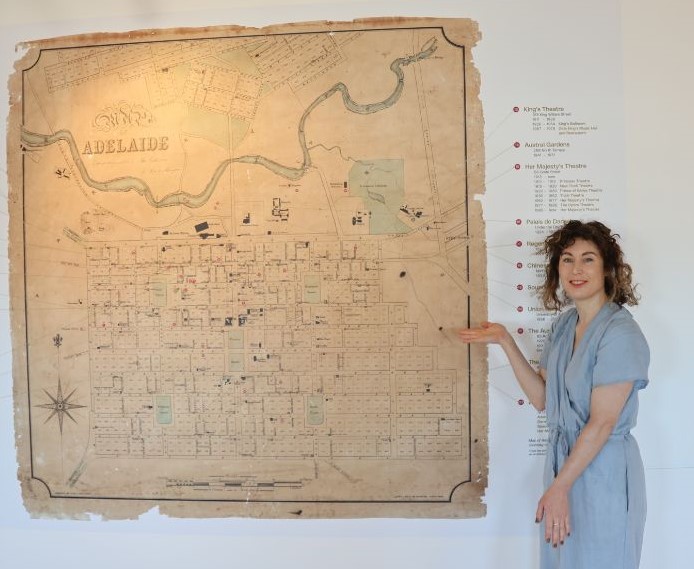 is a map of the city square mile from 1861 (pictured right with Ms Northcott) showing the dozens of theatres and dozens of pubs that had sprung up within just a couple of decades of settlement.
Many of those pubs are still standing and still operating. The theatres, unfortunately, didn’t fare as well. In fact only one from the 1861 map– the Queens Theatre – is still standing and hosting live entertainment.
“We’ve told an extended story of eight theatres, including Her Majesty’s, in this exhibition but there are 35 theatres mentioned on the map,” Ms Northcott says.
The arrival of the moving picture saw many theatres close or reinvent themselves as cinemas.
“Then there were theatres like the Austral Gardens, which was an open air theatre that was needed by the army in 1941 and never came back,” Ms Northcott says.
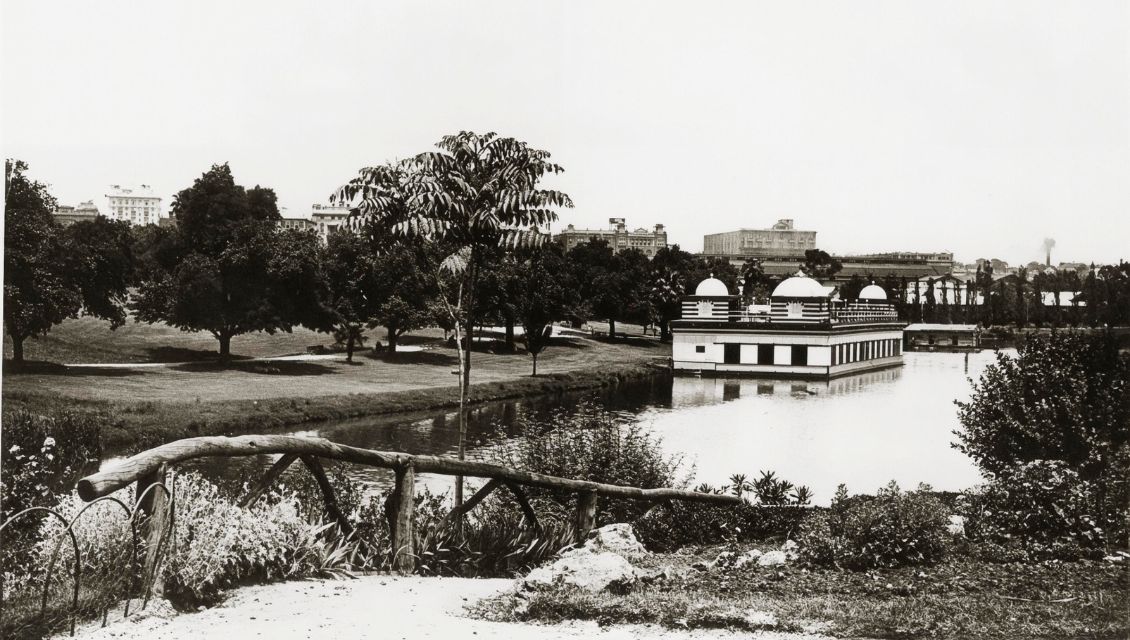
“And there was the Palais de Dance, a floating theatre – that sank in the Torrens in 1929.”
The second big blow came during the period of modernisation that swept Australia in the 1960s, a period that saw less value placed on anything that seemed dated or old.
“Some of the losses were a real shame,” Ms Northcott says.
“The Theatre Royal on Hindley Street, for example, was just beautiful. It had this incredible interior, with a dome that was painted blue with stars on it. Absolutely stunning. That was demolished to build a car park.
“Many of these theatres were demolished to build far less beautiful buildings.”
The exhibition celebrates the 110th birthday of Adelaide’s iconic Her Majesty’s Theatre, which was built in 1913 and is one of the last remaining examples in Australia of the famous chain of Tivoli theatres.
Having played a significant role in Australia’s theatre and entertainment history, Her Majesty’s Theatre has survived two world wars, the Great Depression and two pandemics.
It recently underwent a stunning redevelopment, partly thanks to a public fundraising campaign, and was unveiled in June 2020 to rave reviews.
Located on Grote Street in the Chinatown Precinct, The Maj is managed by Adelaide Festival Centre, making her part of the family that is the heart of the arts in South Australia.
The exhibition will be open to the public during Her Majesty’s Theatre performance times. For more information visit the Adelaide Festival Centre
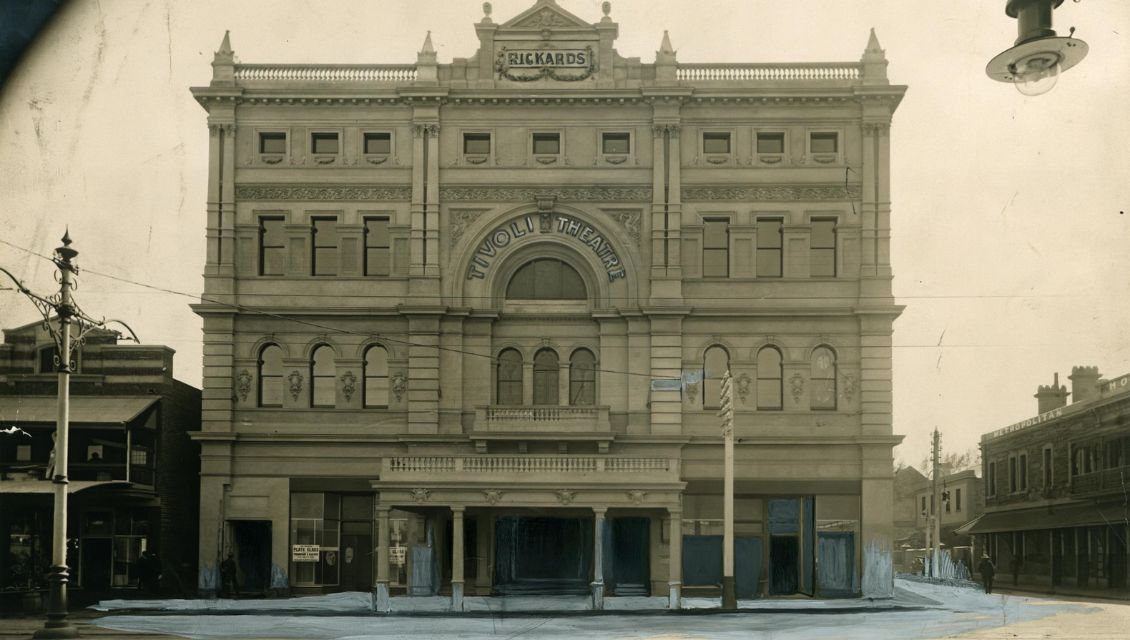
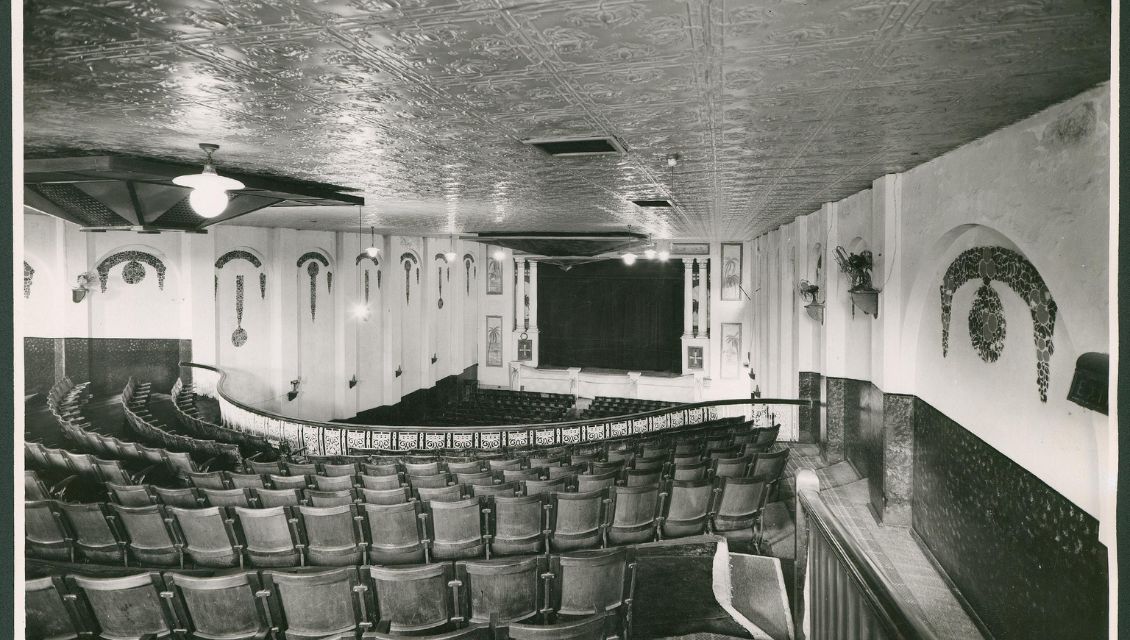
Picture credits: Tivoli Theatre (now Her Majesty’s Theatre), Grote Street, c 1913, courtesy of State Library of South Australia, B 792. Interior of Empire Theatre, Grote Street,1952, photographed by Keith Rainsport, courtesy of State Library of South Australia, B 13020