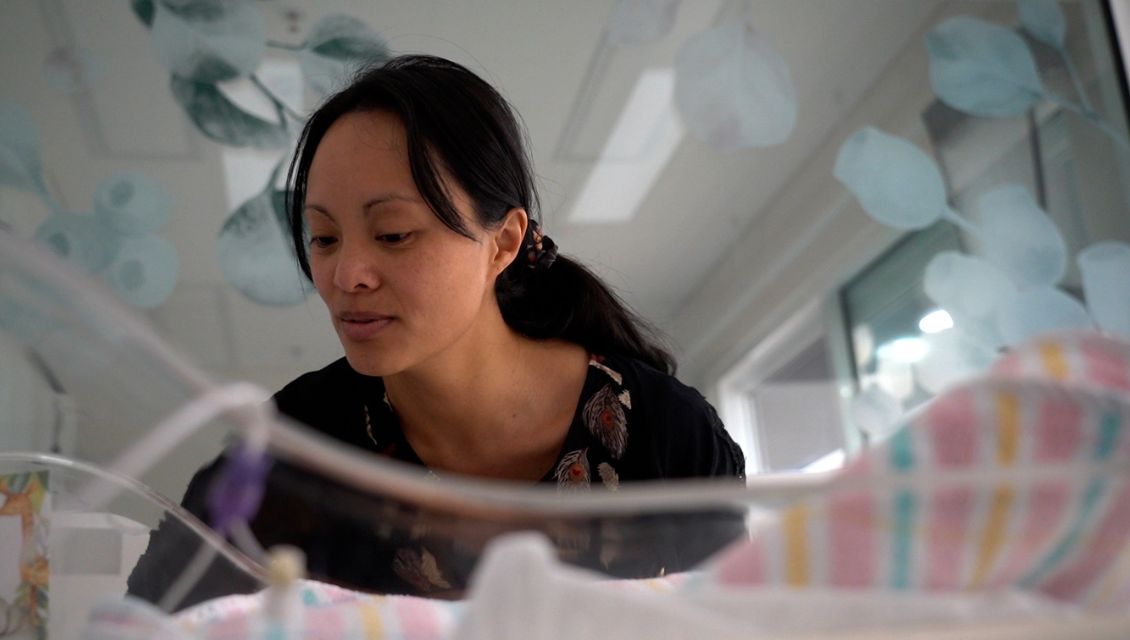
Maybelle Swaney believes in the power of music.
She believes in its power to heal, to calm, to create bonds, to provide an outlet for feelings and emotions, to help people feel less alone.
That’s why the registered music therapist at the Women’s and Children’s Hospital (WCH) can be found in the wards and corridors helping babies, young people and their parents better navigate their hospital journey with guitar, voice and a big dose of understanding.
Ms Swaney says she grew up playing classical piano from the age of six, before going on to study music and arts, specialising in composition, at university.
“I'd always had a special interest in creative music making,” the WCH’s Music Therapy Team Leader/Clinical Lead says.
“Around the time that I was doing my degree, I was also working in a part-time capacity at a brain injury centre as a healthcare assistant.
“And while there I started facilitating some music-based sessions for the clients that I was supporting. And it was there that someone from my work introduced me to the vocation and the professional practice of music therapy. And in that moment, I thought, “that's my door!”.
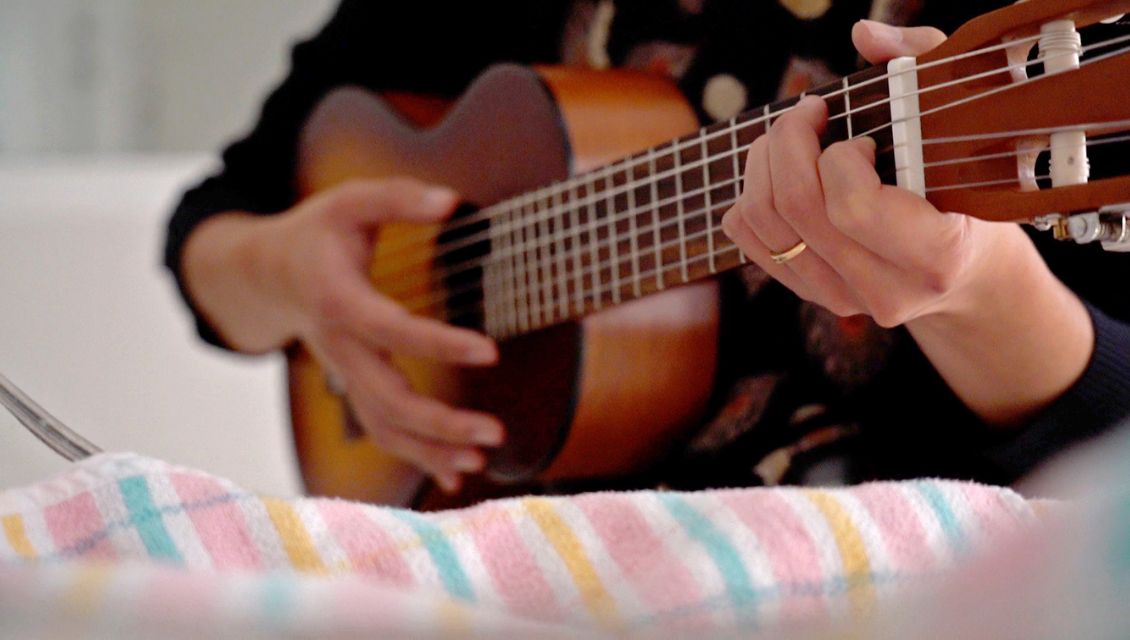 “So I went over to the UK and completed a two-year master's program to qualify as a music therapist.”
Ms Swaney is part of a growing field, with around 650 registered music therapists currently working in Australia.
“RMTs often work as part of an allied health team,” she says.
“And they can work in a range of settings, including aged care, mental health, disability, education, private practice … in addition to hospital settings.”
Ms Swaney says that because music plays such an integral and personal role in almost everyone’s life there are many ways to approach music therapy.
“It can be hard to define, but the way that I would describe it is it's very similar to how we might understand verbal therapy, wherein the counsellor or the psychologist uses words as their primary modality in a therapeutic relationship with the client to facilitate positive changes in the person's health and wellbeing," she says.
“The music therapist is using music, rather than words, as their primary modality.”
When Ms Swaney became a mother, she got to see first-hand the calming, healing qualities of music.
“When I had my first child, she spent two weeks in the neonatal intensive care unit,” she recalls.
“And there as a new mom, I personally experienced the effects that my maternal singing voice had on her physiological parameters.
“Just watching her calm down, watching as her breathing rate slowed, seeing how she was able to regulate her behavioral state, just by listening to my singing was so powerful.
“And now it's my passion to come alongside parents and help them see the incredib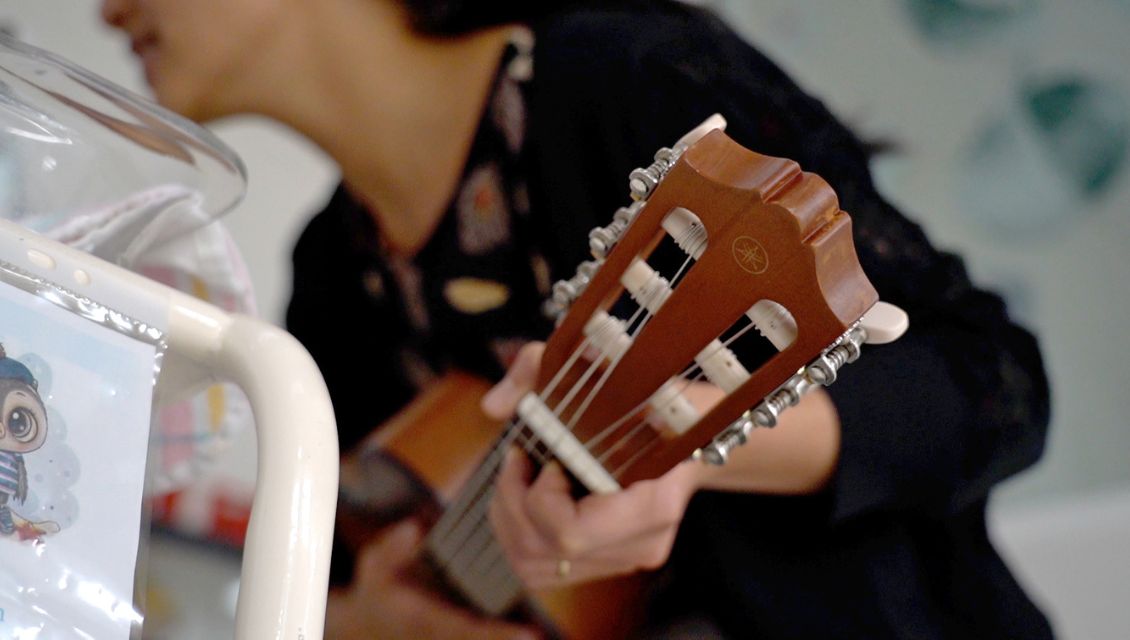 le benefits of their parental voice as part of caregiving to promote bonding to provide a sense of safety, to help their baby's brain growth at such a critical period of their lives.
“Parents should feel empowered to use that as a tool that nothing else in this hospital can replace or be a substitute for.”
Ms Swaney admits that it’s not always easy for new parents to feel comfortable singing to their baby within a hospital environment, and part of her job is helping everyone involved find their way to a place where music and sound can become a part of the healing journey.
“It's not easy to just start singing, especially when you're in a hospital environment where there are loads of people around,” she says.
“One of the core aspects of my role is really to normalise that vulnerable feeling.
“When you sing, it creates a sense of intimacy, so of course there is always going to be a sense of feeling a bit nervous or shy or awkward or even embarrassed about using your voice.
“Once we acknowledge that we can then move from there to think about what are some of the ways that could help you to begin using your voice?
“Is it humming? Is it reading, there are so many other ways of beginning to use your voice before you get to the point of singing.
“And what mums have shared with me is that the more you do it, the less you care about what others are thinking.
“And the second part, which is so key, is that as they start to see the feedback that they are getting from their own baby, that sense of feeling calm or baby becoming alert and attending to their mum's voice, that really encourages them to keep doing it because they can see it is making a difference.”
 As well as working with parents and newborns, Ms Swaney also works with older children in hospital, often making music alongside them as a way to deal with the myriad feelings that can come with being ill.
“It's not always or just about putting smiles on people's faces, or about bringing about happy experiences,” she says.
“Often, it’s about using music to meet the emotional experiences of the child exactly as they are.
“Sometimes it's deep sorrow. Sometimes it's the loneliness, sometimes it's deep distress, or anxiety, grieving, feeling loss, or adjusting to a different kind of identity when you've been newly diagnosed with cancer, for example.
“And so I think, with what we know about music’s ability to meet us in all those different emotional states, we can really harness the potential to be present with someone in the midst of that, without trying to change or shift anything.
“More often than not we also find that, just in and through that experience of being with each other, you do feel better, or you may feel less alone, within that hospital experience.”
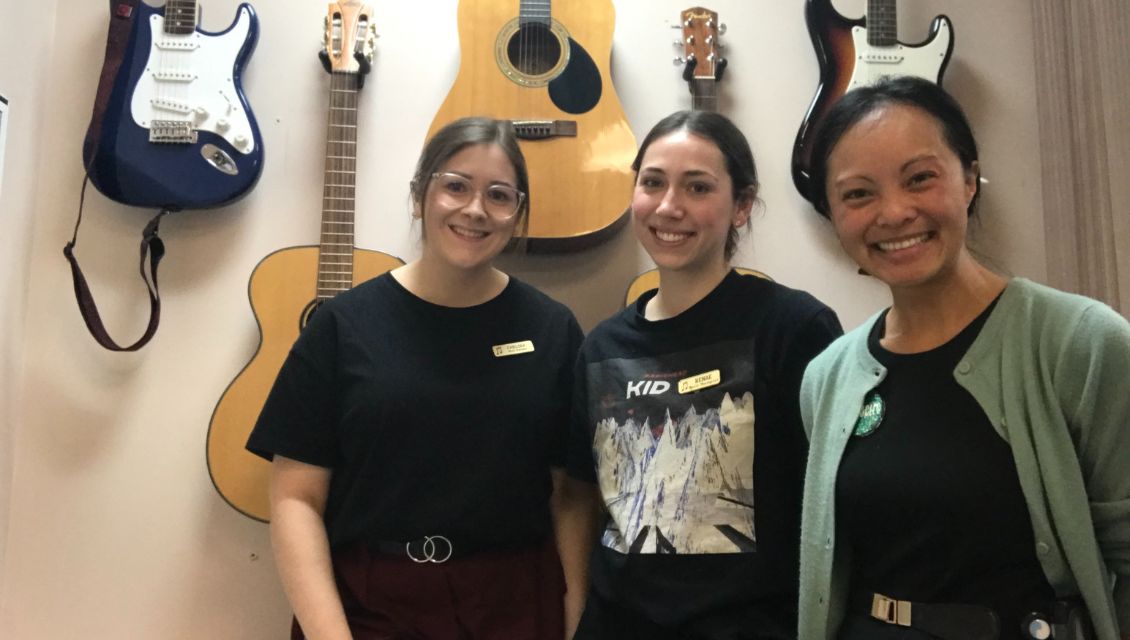
The Music Therapy Service is funded by the Women’s & Children’s Hospital Foundation through its Arts in Health Program. The WCH Music Therapy Team (pictured above) is made up of Chelsea Laratro, Renae Attenborough and Maybelle Swaney.