
Something very big is about to bloom at Adelaide Botanic Garden.
Dubbed Smellanie, the Garden's amazing Amorphophallus titanum - commonly known as Titan Arum or corpse flower - is expected to flower sometime this week, an event that has previously drawn huge crowds to the Bicentennial Conservatory.
This rare giant is famous not only for the enormous size of its bloom but also for its rather unpleasant smell, which many describe as resembling the odour of rotting flesh.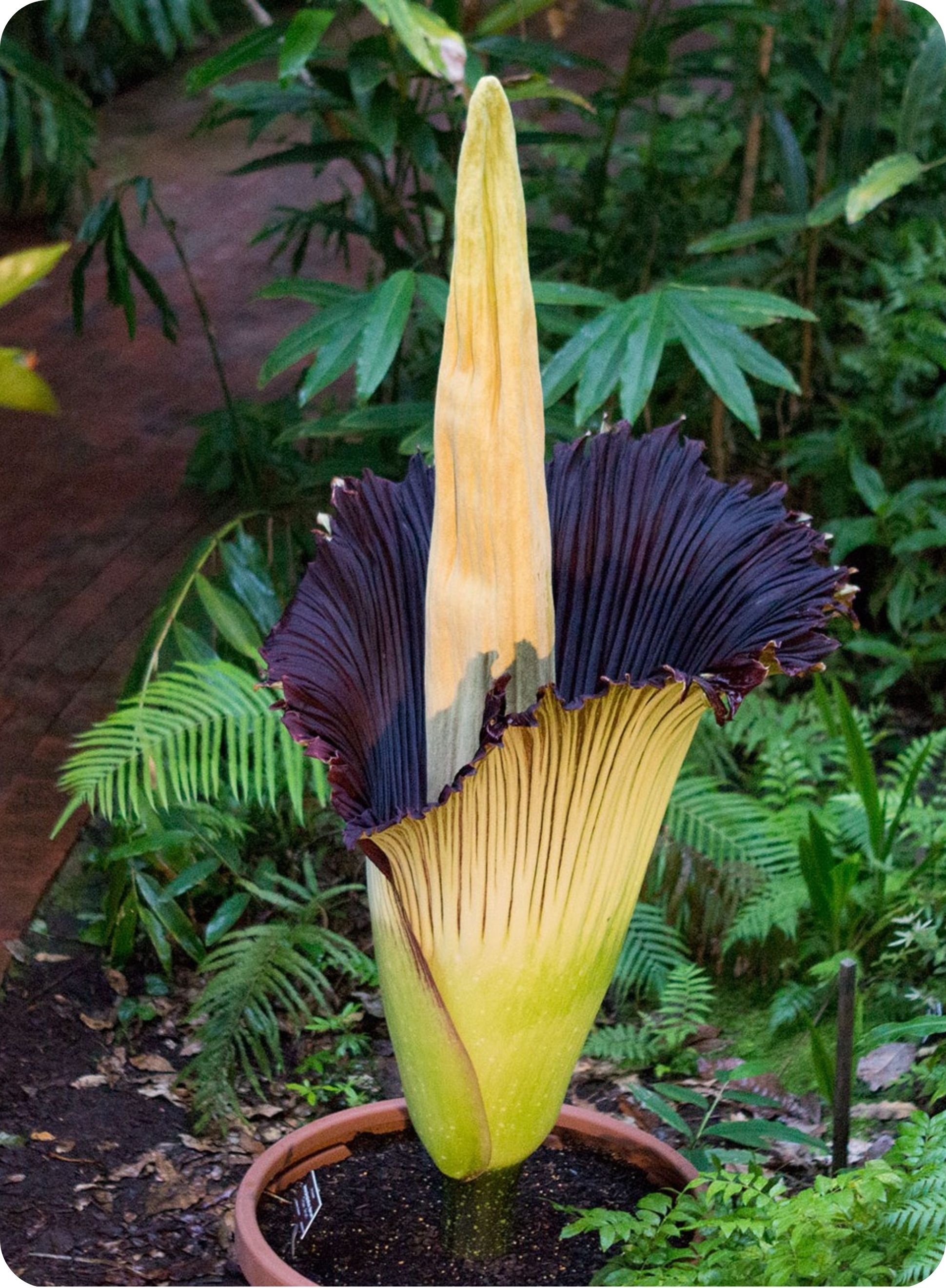
The smell, which in the wild can travel as far as 5km, attracts the carrion-feeding insects needed for pollination in its native home on the Indonesian island of Sumatra, where fewer than 1000 plants remain.
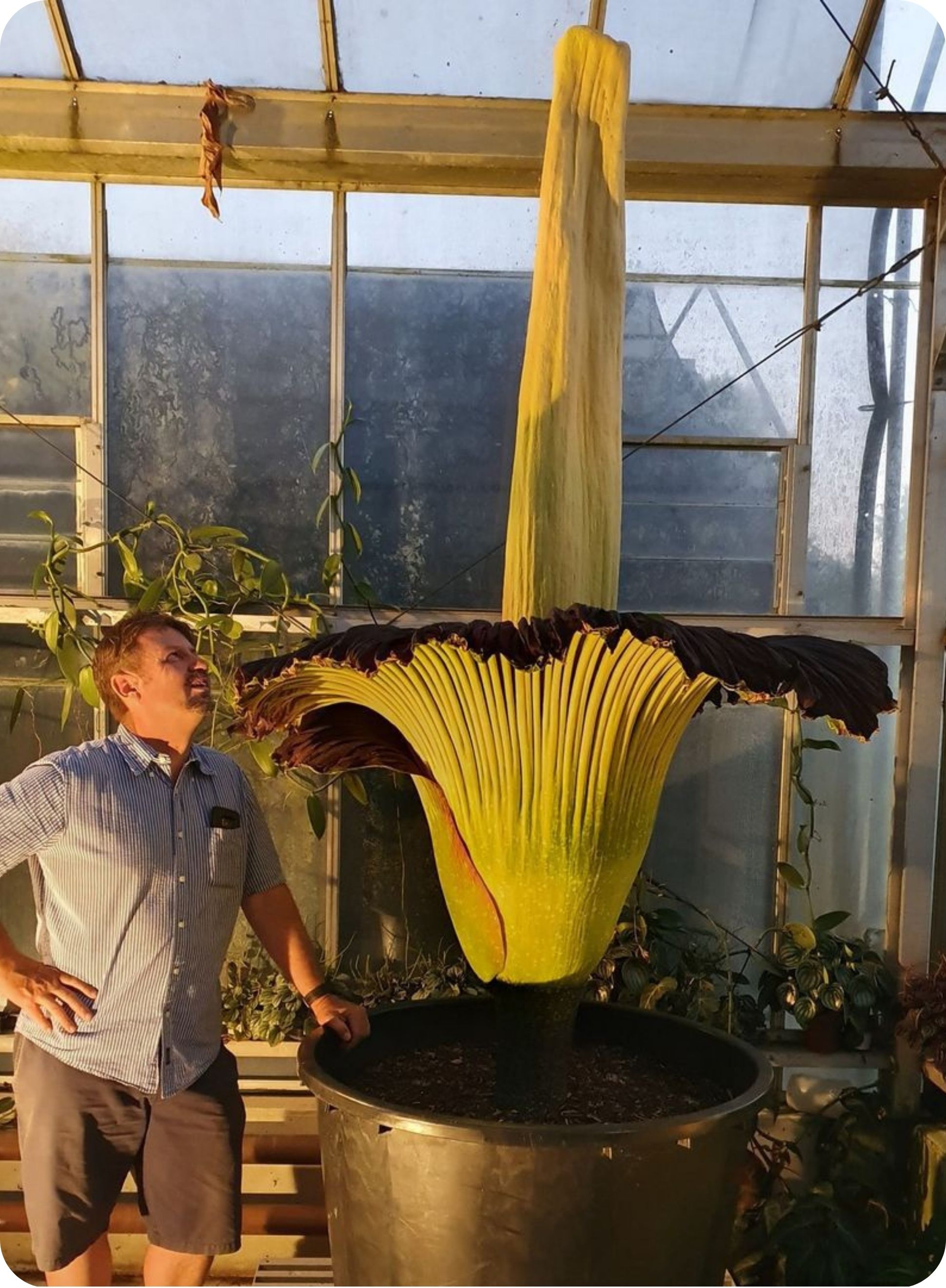
Adelaide Botanic Garden horticultural curator and corpse flower expert Matt Coulter, pictured below, has devoted countless hours to learning how to grow the notoriously temperamental flower, which can take up to 10 years to flower for the first time.
Mr Coulter has been instrumental in preserving the unique species, with successful blooms interstate - including Sydney's Royal Botanic Garden's own Putricia - coming from plant material grown in Adelaide.
He said there were many reasons he found the Titan Arum fascinating.
"It’s such a unique species in the way it grows - how the vegetative stage is so different to the reproductive stage," Mr Coulter said.
"When I started working at the Botanic Gardens, I didn’t know anything about the plant, but over the years I have visited and met with other botanic garden curators to discuss our collections. It’s been a wonderful and educational journey and one in which I feel privileged to be able to be part of."
Mr Coulter said that growing the Titan Arum in "hot, dry" Adelaide was a challenge, but he said we were lucky to have "an environmentally controlled glasshouse that replicates the conditions of a Sumatran rainforest".
"There are many challenges in growing this species and the tubers can rot very easily; unless we had our facility to grow them, we would not be able to have them as part of our living collections.
 "Every time a plant goes into its dormant stage, I have to take the tuber out of the pot and these can be in excess of 50kg.
"I then have to wash all the potting media off, inspect the tuber for any rot and then repot them into fresh material. Every individual plant is different, and their dormancy and growth time will vary across the collection, which can also be challenging."
Mr Coulter said it was satisfying to see how thoroughly the Titan Arum had been embraced by the public.
"The species seems to be really taken on by the public, and we find that even people not generally interested in plants seem to be fascinated by the species - it’s not something that you see every day," he said.
"The way the spathe opens is a great thing to watch, and we are so excited to talk about all the interesting facts about the plant."
Mr Coulter said the work being done at the Adelaide Botanic Garden played an important part in the plant's future survival.
"One of the reasons we have this plant in our living collections is to conserve the species away from its natural habitat, which is called ex-situ conservation," he said.
"There are only around 1000 plants left in the wild, and it has a small distribution in Sumatra where it is endemic to. Botanic gardens have an important role in helping to conserve threatened species."
The bloom, likely to happen later this week, will probably last for just 48 hours. Keep an eye on the Adelaide Botanic Garden's social media pages for updates on its progress and viewing hours.
During the flower’s two bloom days entry to the conservatory will be free, although the Garden encourages a donation so it can continue its important conservation work. Find out more here.