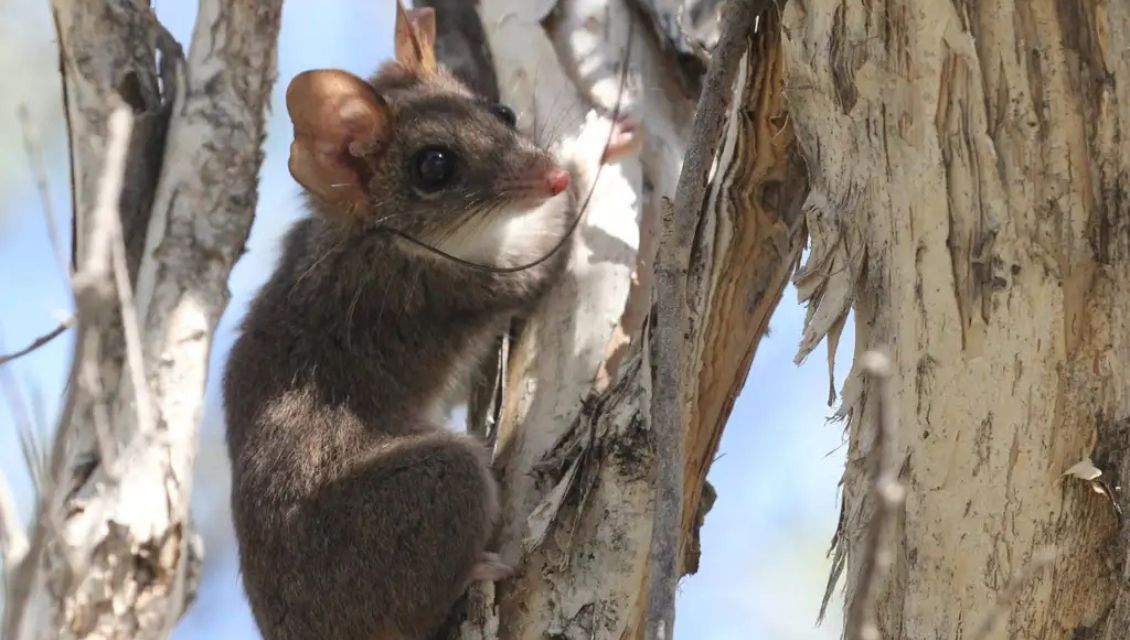
The red-tailed phascogale is making a comeback.
The tiny, but feisty, carnivorous marsupial – also known as the wambenger or mousesack – has been extinct in South Australia for many years and until recently was only found in living in the wild in a small area of Western Australia.
However, 45 red-tailed phascogales reintroduced into the Gawler Ranges National Park on the northern Eyre Peninsula in May have since produced 30 youngsters, with another 40 phascogales from Alice Springs Desert Park and Cleland Wildlife Park’s captive breeding programs to be released this month and in April 2025.
The red-tailed phascogale is a small, insectivorous marsupial with – as its name suggests – a distinctive reddish-brown tail.
They may be tiny, weighing 60g or less, but they are a feisty and tenacious predator with a taste for mice, insects, birds and reptiles.
They live largely in trees, particularly mallee and black oak woodlands.
The released phascogales are now having to stand on their own four feet in a “safe haven”, an unfenced but predator-reduced wilderness and so far, they are faring well.
As with many small mammals, habitat loss and predation by foxes and cats brought the phascogale to the brink of extinction.
Since European colonisation it is estimated that 73 species – 41 plants and 32 animals – have become extinct in South Australia.
However, thanks to the combined efforts of the Department for Environment and Water (DEW) and the Foundation for Australia’s Most Endangered Species (FAME), the future for this precious marsupial is looking up.
The multi-faceted project involves scientific research, captive breeding programs at Cleland Wildlife Park and Alice Springs Desert Park, large-scale feral predator control and radio tracking of the reintroduced phascogales.
Cleland’s phascogale captive breeding program has gone from strength to strength, with the 2024 breeding season producing another 50 young.
A key element to DEW’s 30-year Bounceback project is managing threats to species such as reducing fox and cat numbers and managing goat numbers.
This has enabled the project, through the funding partnership with FAME, to reintroduce species such as western quolls and brush-tailed possums into Ikara-Flinders Ranges National Park and Vulkathunha National Park with great success.
Fame CEO Tracy McNamara said the results achieved in partnership with DEW "speak volumes about the value of commitment, determination and persistence".
"The importance of private-public partnerships in nature positive conservation and the collaboration that comes with it, drives success.
"After years of determined effort, the western quoll, the brushtailed possum and now the phascogale are thriving in those northern areas of SA and extinction has now been headed off.
"This program is a wonderful example of what can be achieved by committed, capable and like-minded partners."