Temporary restrictions on both recreational and commercial fishers will be rolled out from 1 November in response to research showing a decline in number across key species due to the algal bloom.
The measures, both short and long term, are aimed at protecting and growing fish stocks in waters affected by the algal bloom and supporting businesses and recreational fishing.
A 50 per cent reduction in bag and boat limits will apply to recreational and charter fishers in the Gulf St Vincent/Kangaroo Island Fishing Zone, while a temporary restriction on all commercial marine scalefish fishing and blue crab fishing will be implemented in the zone.
Fishers further west in Spencer Gulf will only be allowed to take 50 per cent of the usual calamari, garfish, blue crab and King George whiting catches.
It is envisaged the restrictions will remain in place until 30 June 2026, subject to regular science reviews.
Commercial fishing in Spencer Gulf will remain unaffected, as will the state’s sardine, abalone and rock lobster fisheries.
Prawn fisheries will operate as normal, noting a temporary November-December spawning closure will occur in parts of northern Gulf St Vincent, as occurred last year.
Stock assessments of the waters of Gulf St Vincent, Kangaroo Island and Spencer Gulf have shown declines of some species including calamari, garfish and King George whiting, particularly in Gulf St Vincent. Other species including blue crab and abalone have also been impacted in that Gulf.
Calamari and garfish have been particularly impacted in the Gulf St Vincent/Kangaroo Island region, with SARDI advice indicating that the species are in severe decline. King George whiting has also experienced severe decline in localised areas.
The State Government’s algal bloom fishing plan includes:
- fishing fee relief and industry assistance grants
- expanded Small Business Support grants
- a $500,000 comprehensive voluntary Marine Scalefish Fishery licence surrender study
- establishment of an industry recovery framework
- discounted boat registration
- free access to boat ramps
- free vehicle access to coastal parks
- threatened and vulnerable marine species breeding program
- a saltwater fish restocking program
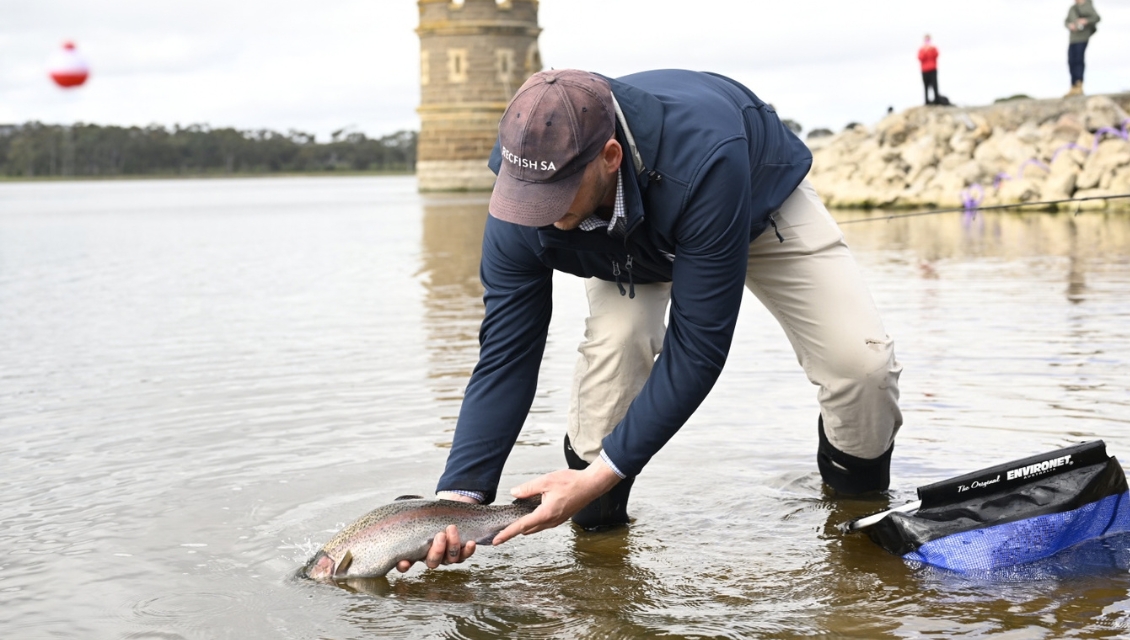
- a freshwater fish restocking program
- additional compliance and intensive scientific monitoring
- more recreational fishing reefs
- recreational fishing and tackle store support.
More details can be found at the Algal Bloom Fish Recovery Program website.
Seafood Industry SA executive officer Kyri Toumazos said the algal bloom was "probably the hardest journey that we have had in the history of commercial fishing in South Australia".
"The decision to look after fish stocks in a trajectory of rebuilding over the next period is the right decision which we fully support," Mr Toumazos said.
“I would like to highlight the leadership and the custodianship of the marine ecosystem by the commercial fishing sector, having those conversations is not easy.”
The sentiment was reflected by The Hon. Bob Baldwin, independent chair of the Australian Fishing Trade Association.
"It’s never easy to make tough decisions, but it is made easier knowing that this is the right decision to support sustainability, not only in our industry, but in our oceans and marine stocks as well," Mr Baldwin said.
For more algal bloom information, including the Summer Plan and latest beach reports, go to http://www.algalbloom.sa.gov.au
READ MORE STORIES LIKE THIS