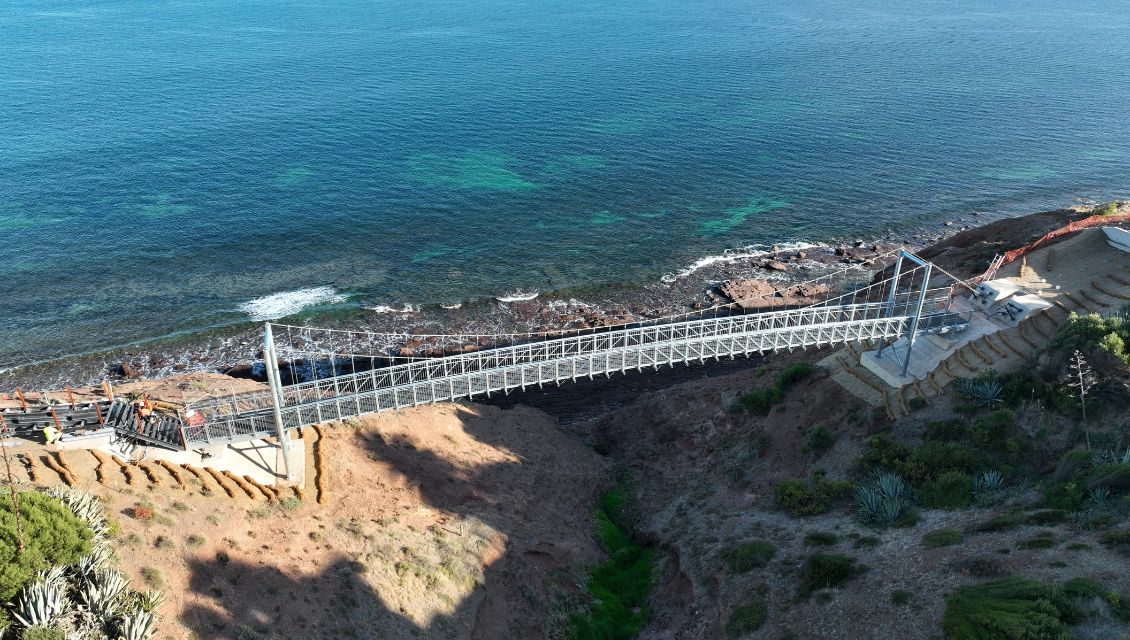
An iconic Adelaide walking trail is back in action thanks to two new multi-million-dollar suspension bridges.
The bridges – possible thanks to a partnership between the state government and the City of Marion – span two gullies on the popular 7.2km walkway between Marino in the north and the Hallett Headland Reserve in the south.
A structural audit on the trail was conducted in 2019, leading to some sections of the boardwalk being closed for safety reasons until they could be rebuilt.
Instead of replacing the old boardwalk, the City of Marion made an ambitious plan to build two bridges at Grey Rd and Kurnabinna Tce gullies to connect the walkway between Heron Way Reserve and the Field River.
The bridges span 41m across Kurnabinna Gully and 39m across Grey Gully. They both sit approximately 25m above ground and were constructed using more than 800 lineal metres of reinforced steel.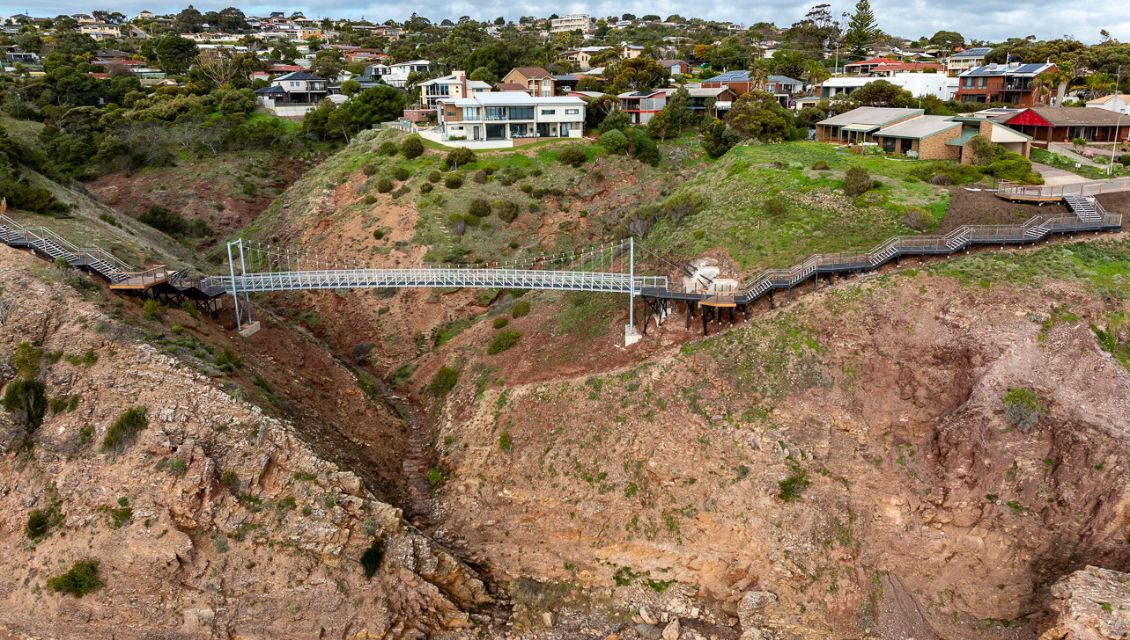
The area's rugged cliffs, small coves and rocky coast have been preserved during the building of these bridges, with the City of Marion also planting 6000 additional plants across this section of the trail.
The bridges are the latest development along this area of coastline after the $1.1 million Field River section extension was officially opened in April 2022.
And in more good news for the area, the Cove Netball Hub is now the new home for the Hallett Cove Netball Club and the Cove Tigers following the completion of the Cove Netball and Lower Oval project.
The upgrades include a new netball club building, two new netball courts, shelters, lighting and a new car park.
A multi-purpose sporting oval at the southern end of the facility has also been upgraded.
The $5 million upgrade was jointly funded between the state government and the City of Marion.
The Cove Sports and Community Club is currently home to five sporting clubs comprising of football, cricket, soccer, netball and BMX.
Marion Mayor Kris Hanna said the coastal walk was a jewel in the region’s crown.
“The walkway is one of Adelaide’s highlights; valued by local residents, other South Australians, and tourists from all over the world,” Mr Hanna said.