

They may be much maligned, eating holes in our clothes and spoiling barbecues as they zoom around the light, but moths play a crucial role in the web of life.
So, what better time to celebrate them then during National Moth Week (19-27 July).
The South Australian Museum’s Senior Researcher in terrestrial invertebrates, Mark Stevens, said there were about 160,000 species of moths, compared to just 17,500 for butterflies.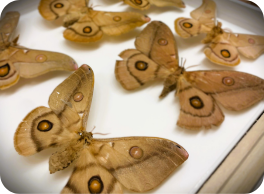
"They’re definitely not the poor cousin of butterflies," he said. "They vary enormously in their size, what they eat, how they reproduce and how they live their lives.
"There’s a long-standing argument among scientists over whether butterflies are really colourful, flashy moths."
A few defining features separate moths from butterflies. Moths have larger "scales", giving them more stocky, furry-looking bodies. Moths also have eyes suited for night vision and exhibit wing coupling, where the fore and hind wings join as a single wing for flight.
"Then there’s the colour palette," Dr Stevens said. "But these features actually don’t separate all moths from butterflies, just night-flyers from day-flyers.
"Butterflies should perhaps be considered as a group of day-flying 'flamboyant' moths."
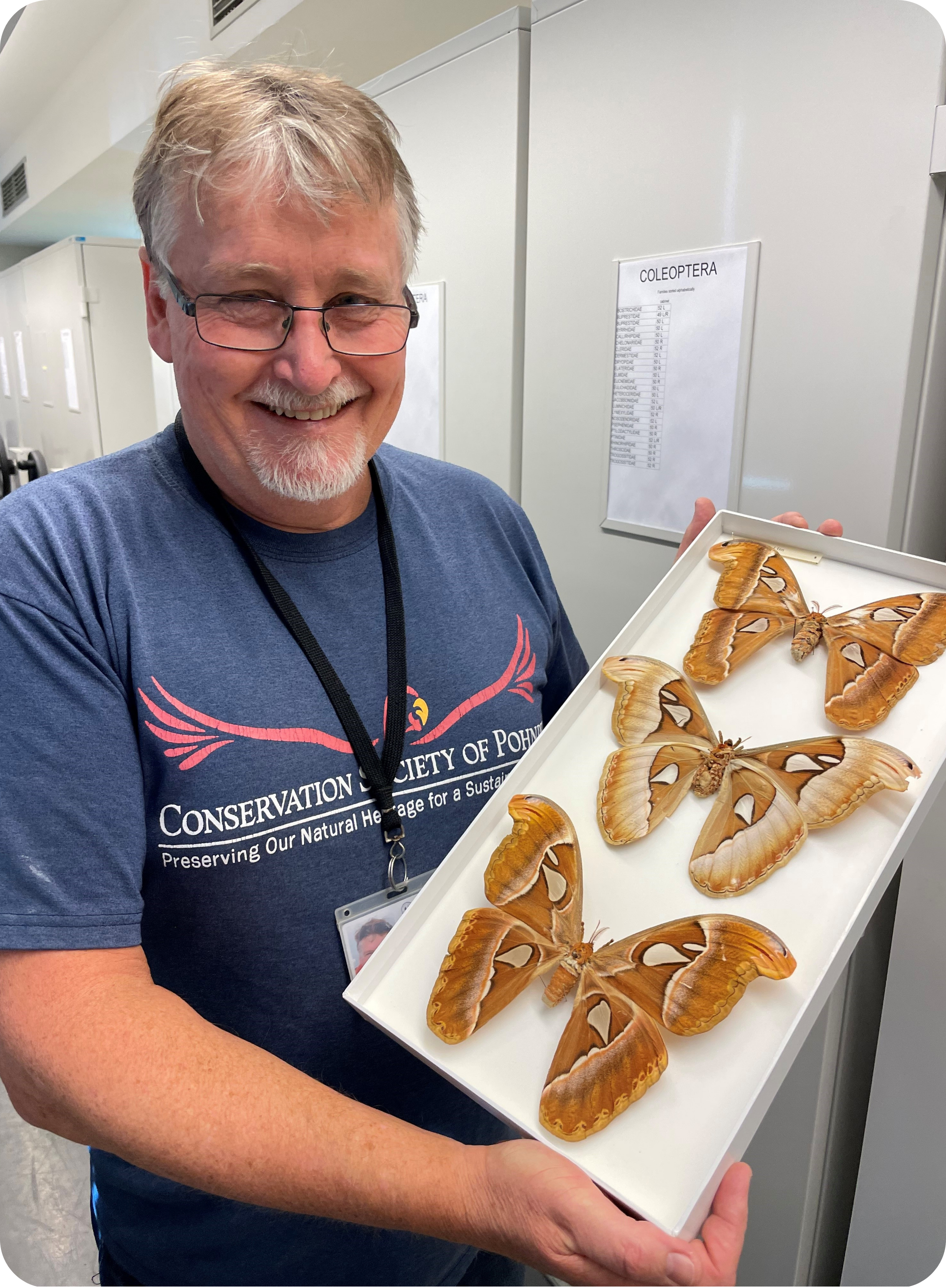 Moths evolved as pollinators and still play that crucial role. The oldest moth discovered so far was found encased in amber, and dates back 125 million years – making them at least twice as old as butterflies.
Moths use sucking mouthparts including their proboscis (feeding tube) to reach deep into flowers to access their nectar.
"This means moths are not only the night-shift pollinator," Dr Stevens said, "they’re also more efficient than the daytime bee pollinators we hear most about."
Another interesting aspect about moth biology is the huge variation in their size.
The smallest has a wingspan of 2.6mm, while the Hercules moth from North Queensland and the Atlas moth (pictured left), also from Australia, have recorded wingspans greater than 300mm.
"So, next time you’re out for a walk, or spending time in your garden, day or night, look out for moths," Dr Stevens said. "They’re truly remarkable creatures."
Find out more about National Moth Week (external site) (external site) (external site) (external site) and visit the South Australian Museum’s (external site) (external site) (external site) Discovery Centre to see a dazzling array of moths up close.
This story first appeared on South Australian Museum and is republished here with permission.
MORE STORIES LIKE THIS