Dug into the side of a frozen hill on an isolated island between Norway and the North Pole sits a bunker.
Looking more like a lair that might house a Bond villain than an important scientific facility, the “Doomsday Vault” – as it is commonly known – doesn’t hold nuclear weapons or secret laboratories or even cutting-edge medicines.
It holds something much more important to humanity’s future – seeds. More than 1.2 million varieties to be exact, representing 13,000 years of agricultural history.
In the event of a global disaster, war or even just bad management, the Svalbard Global Seed Vault holds the genetic information that could be vital to keeping us all fed.
Here in South Australia, at the University of Adelaide’s Waite Campus, we have our own 'Svalbard’, but it’s not tunnelled into an ice-covered mountain and you’re far more likely to see a koala than a polar bear.
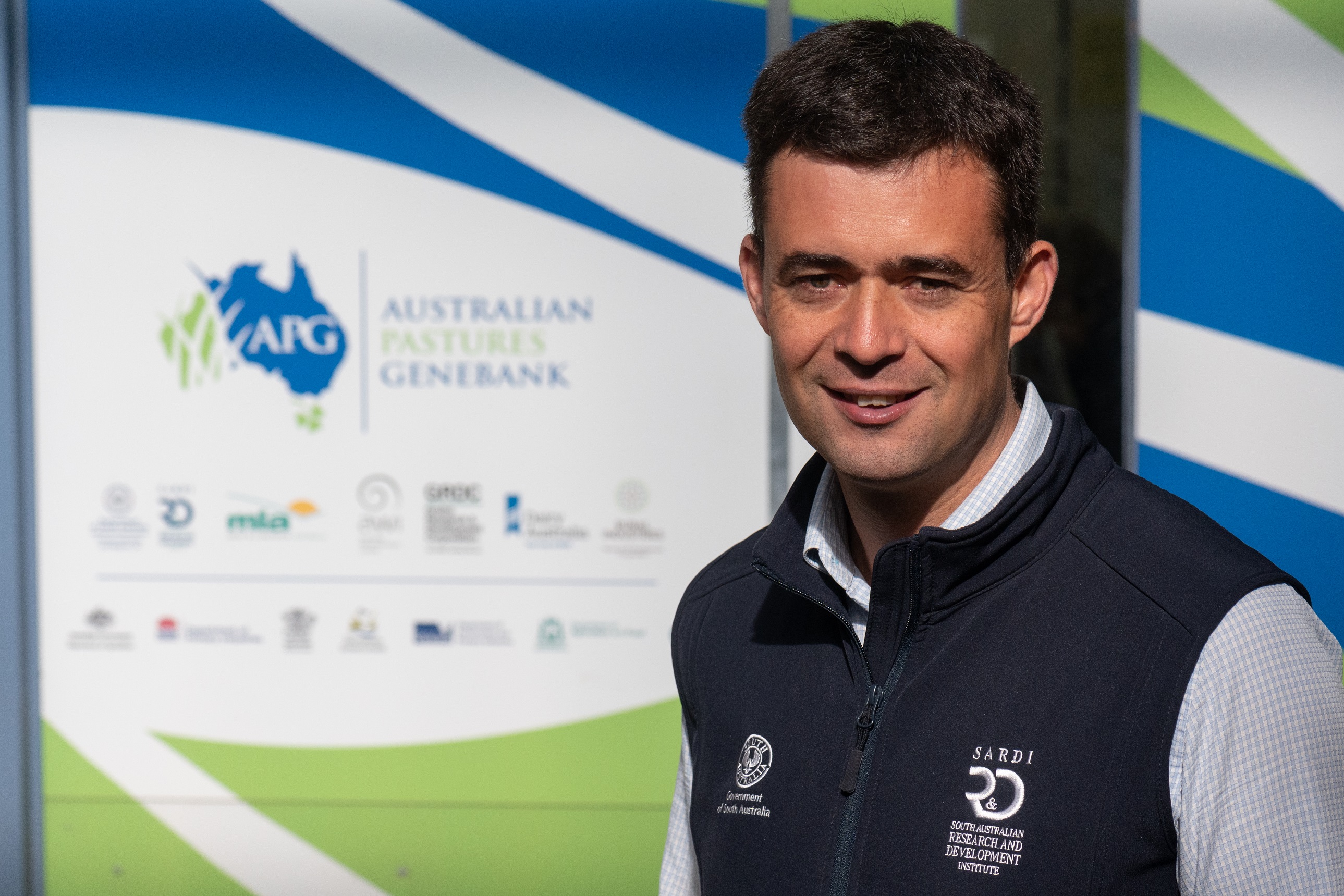
But the Australian Pastures Genebank (APG) - managed by the South Australian Research and Development Institute - is performing the same work as Svalbard, collecting and collating and preserving the seeds that are so important to the world.
And while we may not have permafrost, we do have a very large freezer doing the same job according the APG’s curator Dr Alan Humphries.
“It's essentially a large walk-in freezer held at minus 20 degrees,” Alan says.
“It doesn't look that exciting – in fact it looks fairly utilitarian – but it’s actually a world-class facility.
“And we’ve also incorporated really extensive risk-management strategies –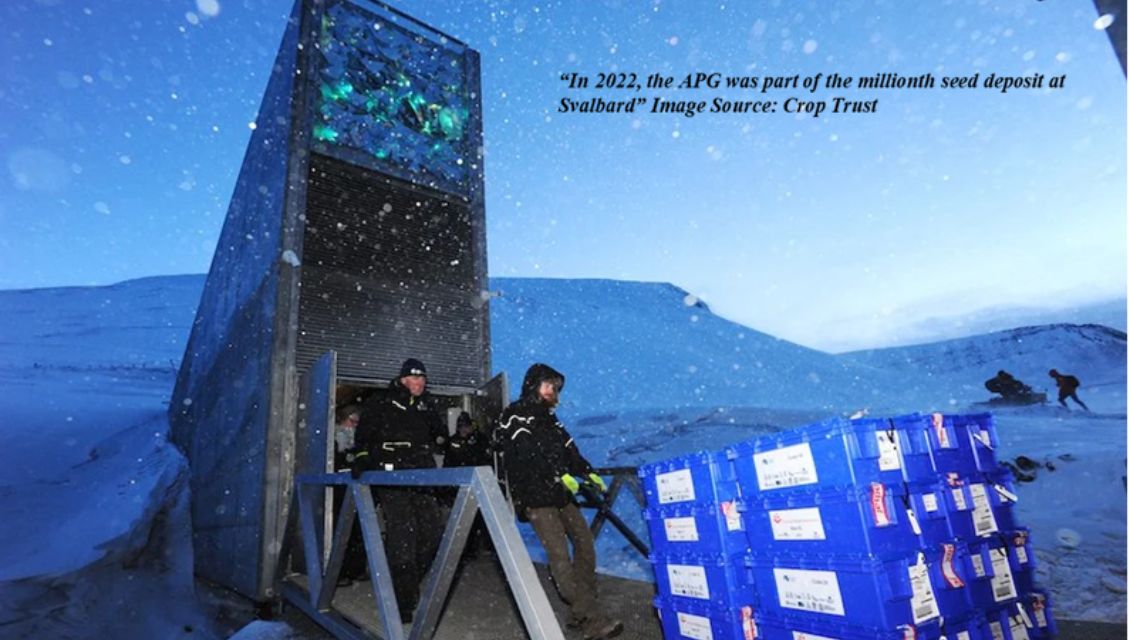 things like having a refrigeration mechanic who’s available all night, alarms that will go off if something goes wrong and most importantly, the capacity to produce our own power if there’s a power interruption.”
Alan and his team are in charge of a staggering 85,000 packets of seeds that have been collected from 178 countries across the globe.
The APG came together a little over a decade ago when 12 seed collections from around Australia were consolidated at the Adelaide facility.
“It was an enormous effort to catalogue those collections and work out the duplication and bring all the packets together,” Alan says.
And part of that effort has involved backing up the seeds at the Svalbard facility (pictured above), an endeavour that Alan says is around 50 per cent complete.
“That’s been an ongoing challenge to get the collection fully backed up, but 50 per cent is actually fairly impressive,” he says.
“I think when we made our last deposit a couple of years ago, we had the fifth-highest number of deposits of any country in the world, so we’re really punching above our weight.
“I haven't been fortunate enough to make the journey myself – it’s something I'd love to do – but it's two long-haul flights to Europe and then a third flight to Norway, and then a fourth flight to the archipelago and to Svalbard. It's a long journey from Adelaide for our seeds.”
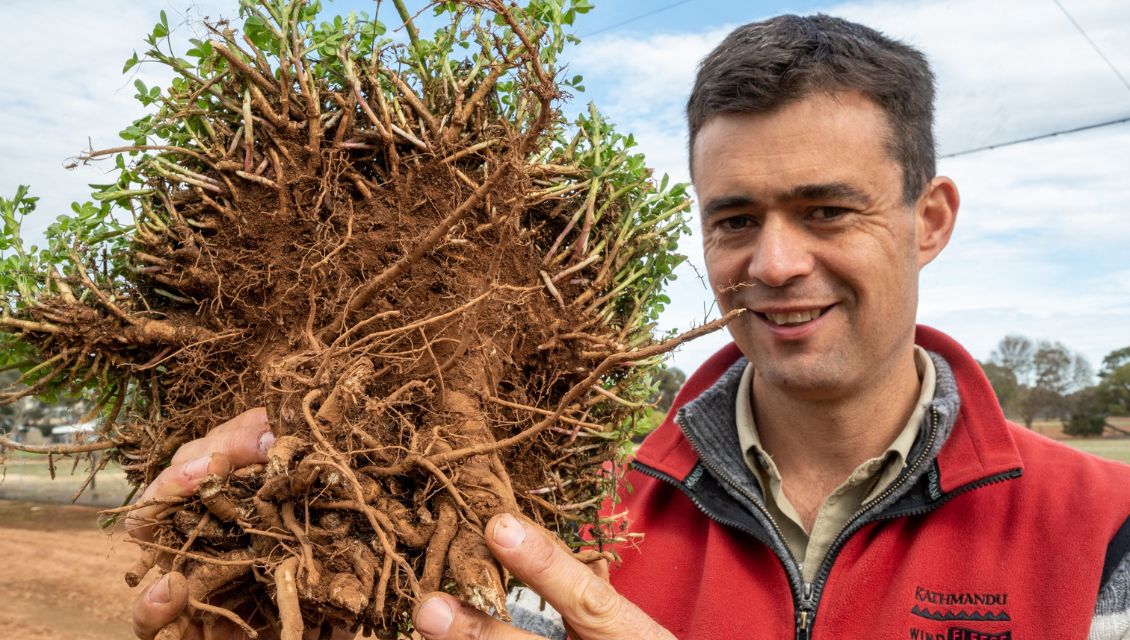 Alan says that as the world becomes more urbanised, more people become disconnected from just how important seeds are for our survival.
“I think to many people, in many areas of the world, that link is lost,” he says.
“When you're pouring milk onto your breakfast, that milk is produced by a cow, but that cow has been grazing on ryegrass or lucerne.”
Education, Alan says, is an important part of APG’s role.
“I was fortunate enough with a gene bank to be involved in a program that sent some of our seeds into space,” he says.
“The seeds were on the International Space Station for 58 days, but probably what was even more exciting was that the program sent these same seeds to 300 schools around the world.
“So the school children got to grow the plants and compare the growth of their plants in that classroom with the growth of the plants in the microgravity of space.”
Alan says he would encourage young people to consider studying a plant science degree if they had any interest in the field.
“For most of my career I’ve been a plant breeder, and as a plant breeder you’re a bit of a jack of all trades,” he says.
“You have to be a botanist, a soil scientist, a microbiologist, a pathologist – you have to know a little bit about everything.
“But that’s changing, and I think the modern generation tends to specialise a bit more. That’s really important as we move into the next generation of plant breeding – we’re going to need bioinformaticians and geneticists to work with plant breeders.”
And as for a typical day for Alan, well he says that’s likely to change considerably depending on what he’s working on.
“I’m the curator of the Genebank, but I still get heavily involved in lucerne breeding and other pasture research looking at how we can reduce methane emissions from livestock, so I don’t really have a daily routine as such,” he says.
“Every day is quite different, which is challenging from a work management point of view, but it certainly keeps life interesting.”
The Australian Pastures Genebank is managed by the South Australian Research and Development Institute, the research arm of the Department of Primary Industries and Regions (PIRSA). For more information on the APG click here (external site) (external site).