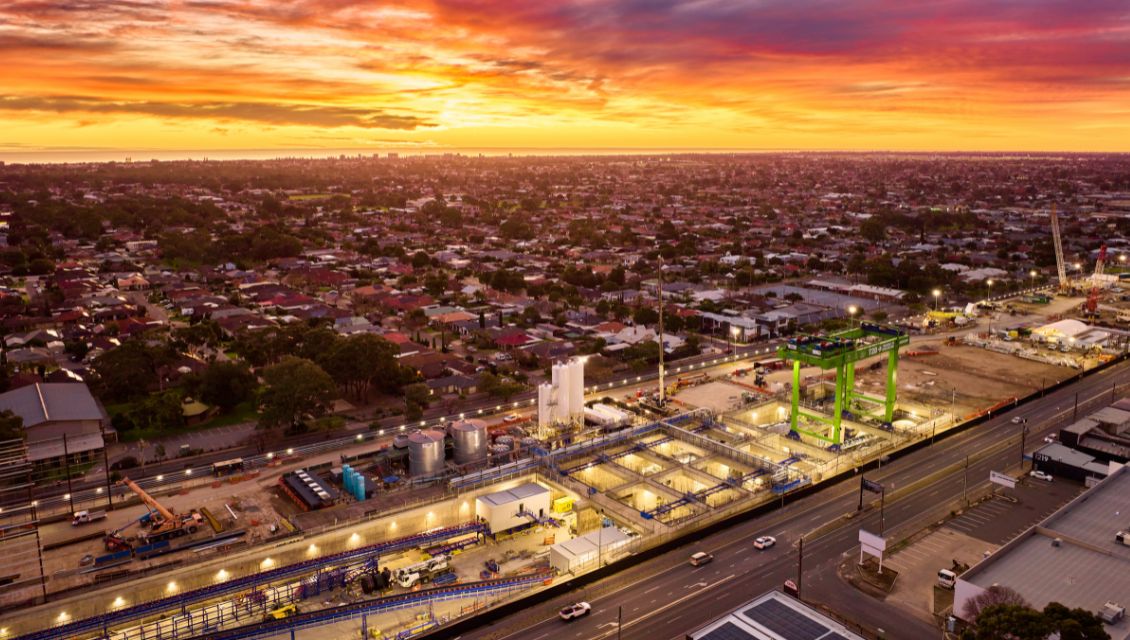
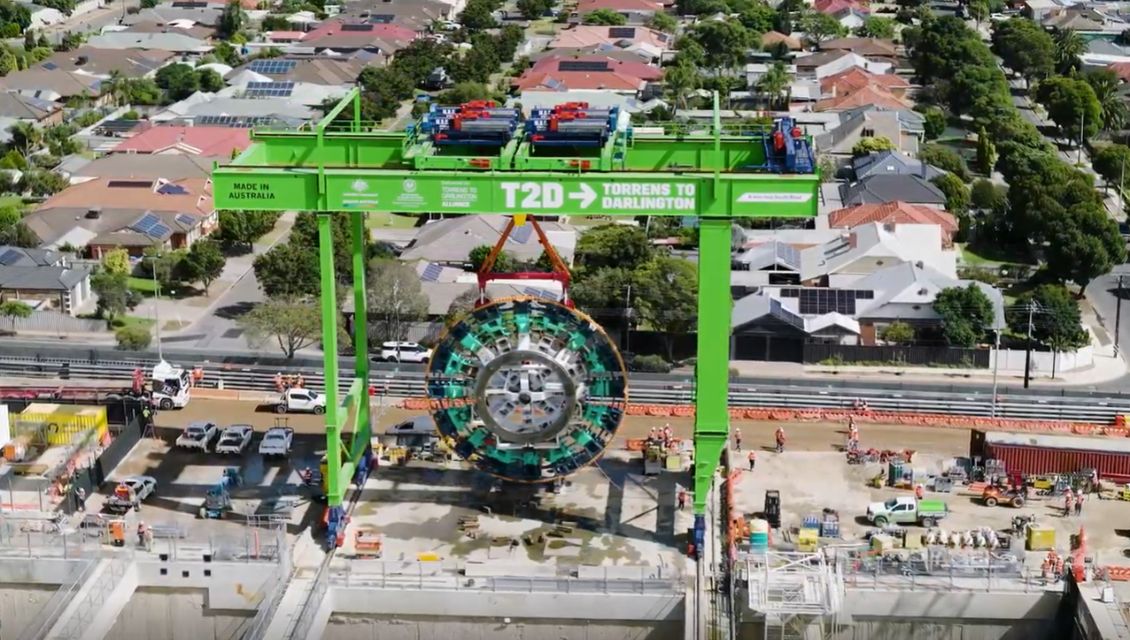
The largest infrastructure project in South Australian history - the $15.4 billion River Torrens to Darlington works to create a non-stop South Rd - has hit a major milestone with the first of three 300-tonne tunnel boring machine (TBM) cutterheads being lifted into place.
In a carefully coordinated operation, a 500-tonne gantry crane has safely lowered the cutterhead into the 20m-deep Southern Precinct launch box at Clovelly Park.
Around 120,000 cubic metres of material weighing more than 343,000 tonnes has already been excavated in preparation for this milestone to form the TBM launch box, which measures 120m x 50m x 20m.
The first and second TBMs are currently being assembled and will soon be tasked with carving out the twin Southern Tunnels, excavating through soil and rock on the 4.5km jo urney towards Glandore and Black Forest.
Meanwhile, all components for the third TBM, which will dig both of the 2.2km-long Northern Tunnels, have now arrived in South Australia.
Once the first cutterhead has been attached to the front of the TBM, other major parts of the machine will then be assembled, with the completed TBM to undergo final testing and commissioning before tunnelling begins.
Tunnelling is expected to commence in the second half of 2026. Once operational, each of the mega machines will operate 24-hours a day, seven days a week, progressing approximately 8-10m per day, with up to 20 specialised workers inside at any one time.
The tunnelling team on the T2D Project has been involved in some of the world's biggest and most complex tunnel projects, including WestConnex and Sydney Metro in Australia, as well as Northern Line Extension in London and the Trunk Road T2 Project in Hong Kong.
Each TBM will be approximately 100m in length and 15m in diameter, roughly the height of the Thebarton Theatre or the goalposts at Adelaide Oval, and weigh approximately 3500 tonnes.
The Australian and South Australian governments have each committed $7.7 billion towards the T2D Project.