
The Murraylands and Riverland Landscape Board has released a further 80 Murray crays into the River Murray, as part of an ongoing project to re-establish the species back into South Australia.
Once common, crayfish in the SA stretch of the river dropped to a point of virtual extinction as a result of overfishing, the effects of regulating river flows and declines in water quality.
The latest release follows the successful reintroduction of 200 crays last year. In an Australian-first, 30 of these crays were fitted with radio tracking devices, allowing researchers to monitor their movement post their 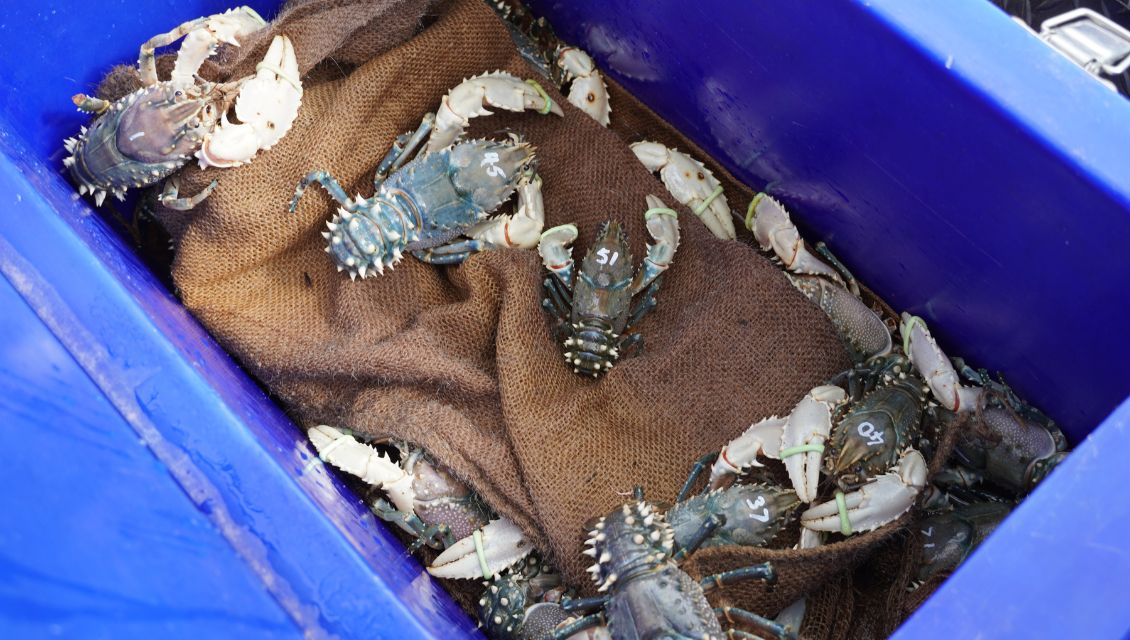 release.
All the tracked crays are still alive and moving, providing valuable insight into the behaviour of Murray crayfish.
While Murray crayfish are still found in Victoria and New South Wales, human intervention is required to successfully re-establish a population in South Australia.
Murraylands and Riverland Landscape Board Acting Team Leader Wetlands Sam Hardy said the initiative relied upon "a strong network of partnerships".
"This project is a collaborative effort between the landscape board and Nature Glenelg Trust with the River Murray and Mallee Aboriginal Corporation (RMMAC) also playing a significant role in monitoring and community engagement," he said.
“Acquiring and releasing the crays in 2024 has involved the New South Wales Department of Primary Industries and PIRSA, so the success of these efforts really hinges on the relationships between these organisations."
Senior Aquatic Ecologist Dr Sylvia Zukowski, from Nature Glenelg Trust, said re-estabishing Murray crays was an "important step for the environment and the conservation of an iconic species at a Murray Darling Basin level".
“This five-year project provides a valuable chance of helping Murray crayfish return to South Australian waters,” Dr Zukowski said.
“It’s also provided us with more data and a better understanding of the specific conditions that Murray cray like so we can fine-tune our approach for subsequent releases."