Variety is the spice of a science life across the arid lands
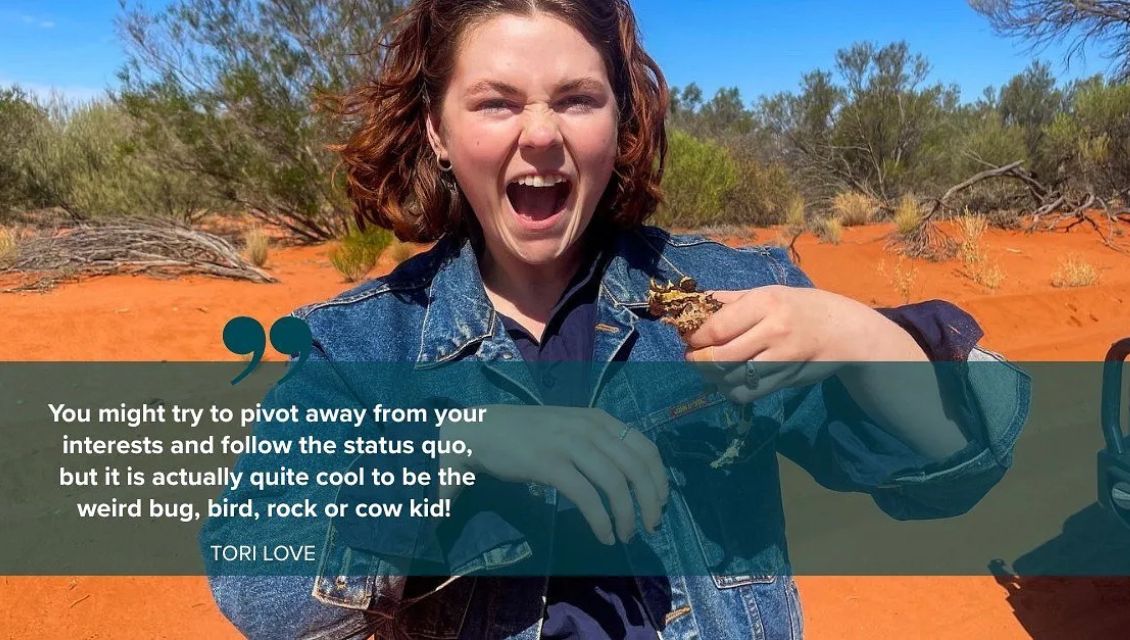
A career in science doesn’t always follow a straight line and in South Australia’s arid north, variety is part of the job. For Community Landscape Officer Tori Love, no two days look the same.
With a background in ecology, Tori plays an all-rounder role for the SA Arid Lands Landscape Board. One day she may be checking pitfall traps for annual biodiversity surveys; the next, supporting Traditional Custodians with data collection, assisting biosecurity operations, or collecting plant samples for pasture analysis. Her work spans disciplines, landscapes and communities, all grounded in practical, on-ground science.
This work unfolds across the vast northwest pastoral region, from Painted Desert Country and mound springs to dense myall over bluebush and deep red sands. Recently, Tori added another skill to her toolkit, supporting an aerial operation that removed 800 large feral herbivores, easing browsing pressure on ground cover during ongoing dry conditions.
Curiosity has been a constant thread throughout Tori’s life. Growing up in the country fostered an instinct to question how landscapes work and why they change. Science was also fostered within her family. A core memory for Tori is when her grandfather converted his backyard swimming pool into a pond so he could breed Murray River rainbowfish. She admits this experience had her hooked.
For girls considering science, Tori’s journey shows there’s no single path in. Exploring interests, seeking hands-on experience and leaning into curiosity can open doors to careers that are as varied as the landscapes themselves.
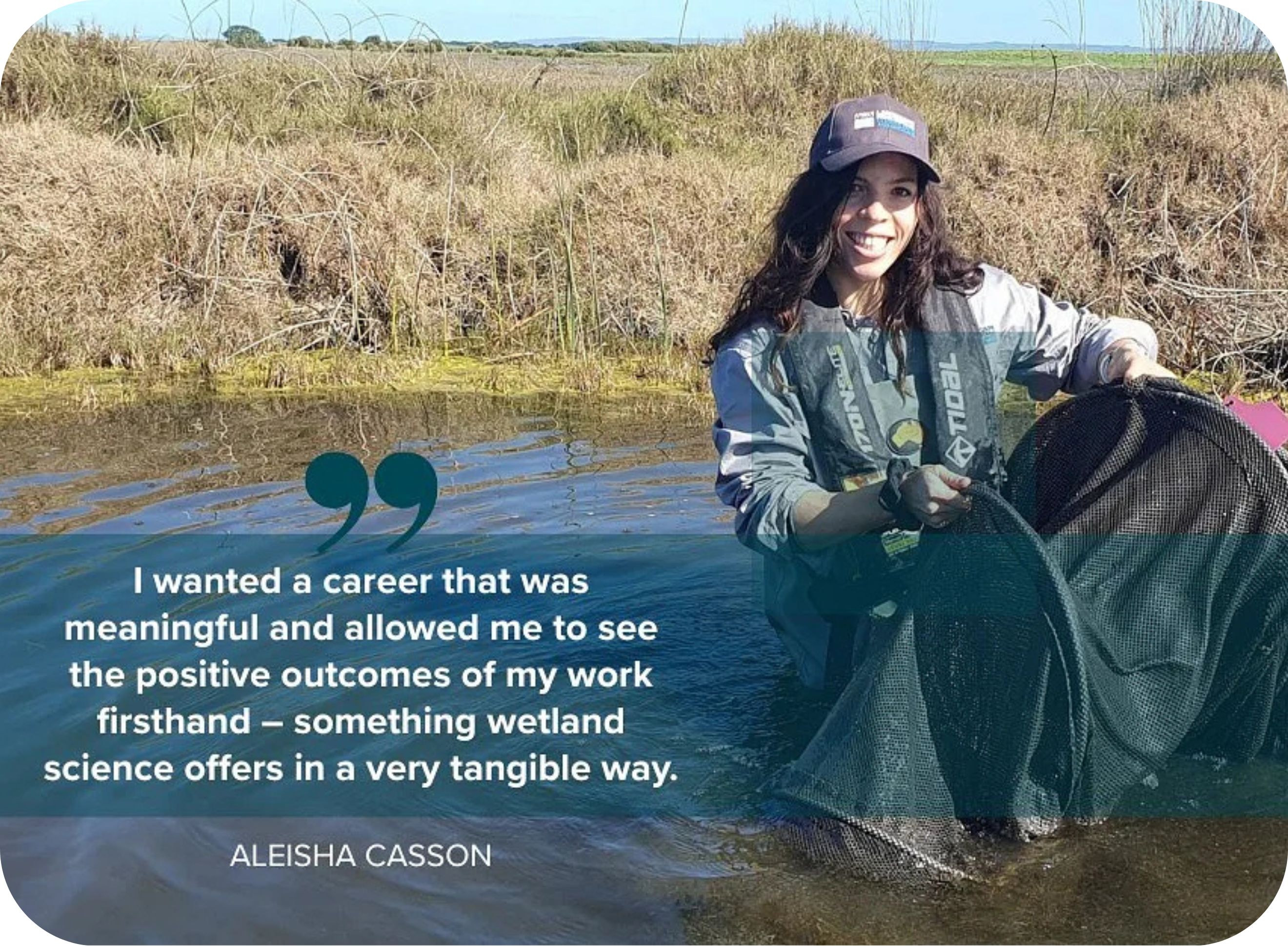
Wetlands are home of career aspirations
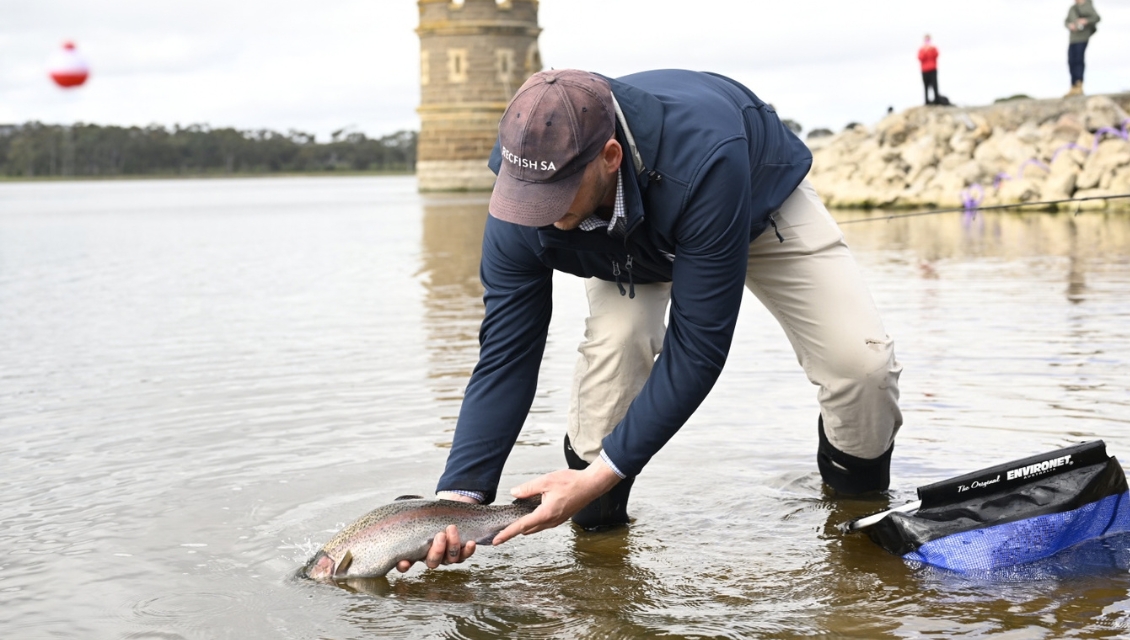
Aleisha Casson’s work as Wetland Project Officer for the Murraylands and Riverland Landscape Board takes her along River Murray–connected wetlands, where her work focuses on understanding how wetlands function and the ways plants and animals respond to changes in water. She monitors fish, frogs, birds and plants, checks water quality, and keeps an eye on the health of trees and wetlands over time. Each visit adds another piece to a much bigger picture, built through data analysis, mapping tools, on-ground observations and local knowledge.
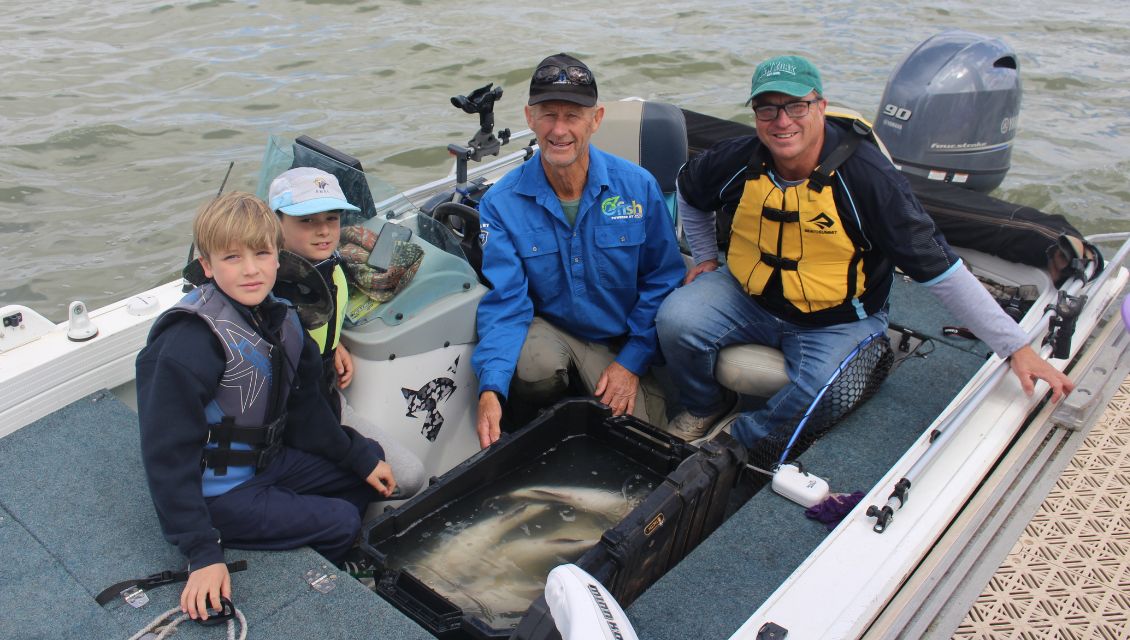
Before the river was regulated, wetlands naturally filled and dried with changing river flows, sending signals that triggered plants and animals to breed and thrive. With these natural changes now constrained, wetland health has declined and invasive species like carp have added further pressure to the wetland system, impacting habitat and water quality.
But when the right science is applied, change can be dramatic.
One of Aleisha’s proudest moments came when a small-scale wetland infrastructure upgrade allowed a wetland to fully dry for the first time in many years. Carp were removed and when the water returned, so did life: clearer water, more native fish and frogs, and waterbirds in droves.
For Aleisha, it’s these very tangible, positive outcomes that make wetland science so meaningful. She hopes girls considering a career in science back themselves, show persistence, and know that they too can help shape the future of our landscapes.
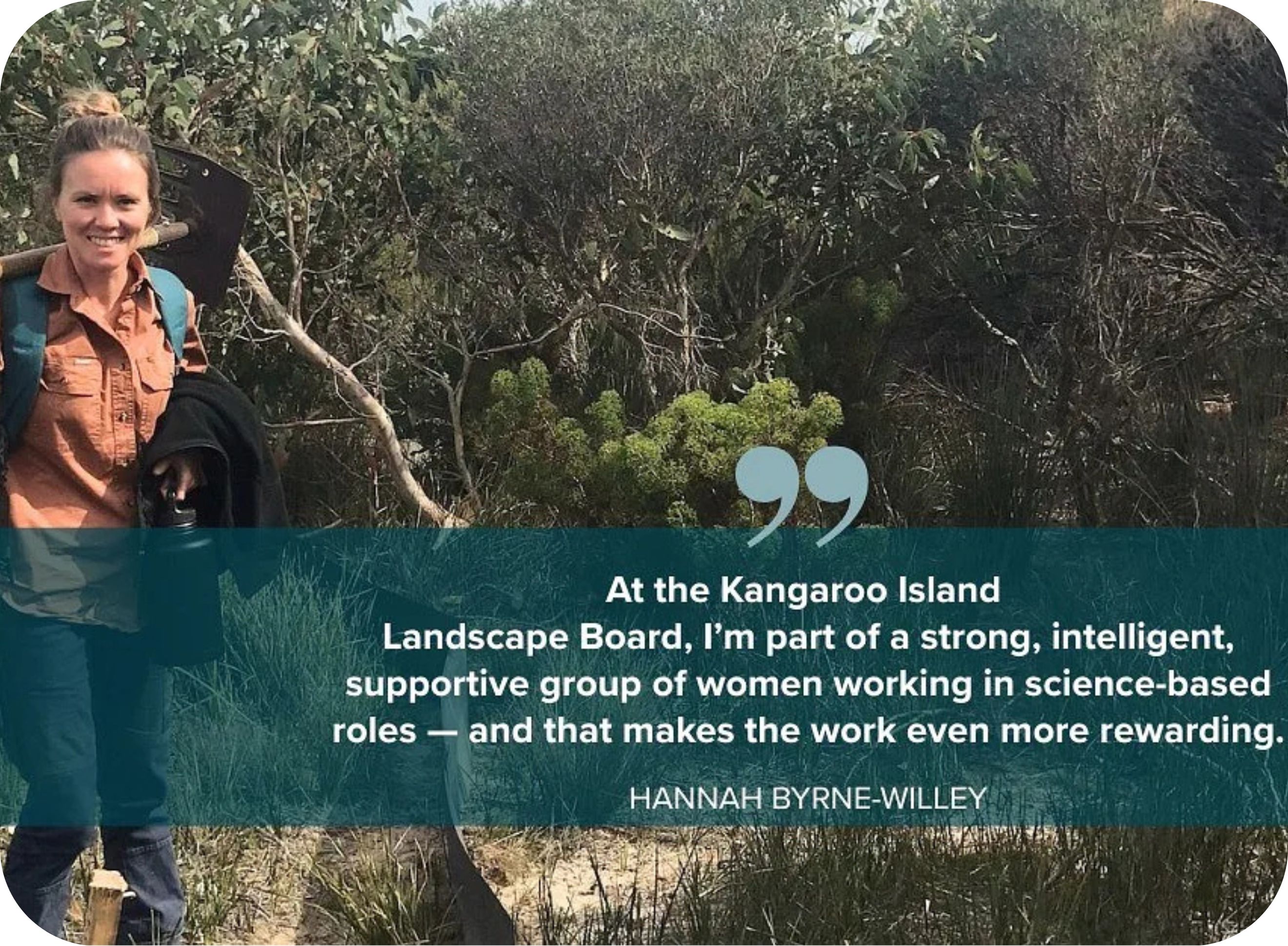
Watching recovery unfold: Science after fire on Kangaroo Island
It takes time and persistence and is often invisible work, yet long-term monitoring of threatened native mammals can be the difference for their survival.
In the year’s following the devastating 2019-2020 bushfires on Kangaroo Island, Hannah Byrne-Willey’s work has focused on the recovery of the endangered Kangaroo Island dunnart. The small marsupial, that is only found on the island, had about 96 per cent of its known habitat on the western end of the island destroyed by the fires.
A Biodiversity Project Officer, Hannah is part of a team that tracks long-term trends following the fires using an array of tools and techniques, from camera traps on drift-fence lines, the development of artificial refuges and targeted trapping programs that build the evidence needed to understand how species are responding as the landscape recovers.
The impact of this work is extraordinary. Before the bushfires, the KI dunnart had been recorded fewer than 100 times ever since it was first described in 1969. Since the fires, Kangaroo Island Landscape Board’s monitoring efforts have recorded more than 4000 detections over 100 sites, creating one of the most powerful datasets ever assembled for the species on the island. The team has also expanded its focus to now include southern brown bandicoots, Kangaroo Island echidnas and pygmy possum species.
Hannah’s career highlights include helping to develop a highly successful artificial-refuge trapping technique that improves animal welfare, fitting the first radio collar to a dunnart post-fire, and trapping the only known KI dunnart ever recorded carrying pouch young.
She didn’t always see herself as "a science person", but discovering she could turn her passion for the environment into a career changed everything. Her advice to girls considering science is simple: try it, get hands-on, and see where curiosity can take you.
This article is a condensed version of a piece prepared for Landscape South Australia. To read the full profiles of eight women using science to help care for our landscapes click here.