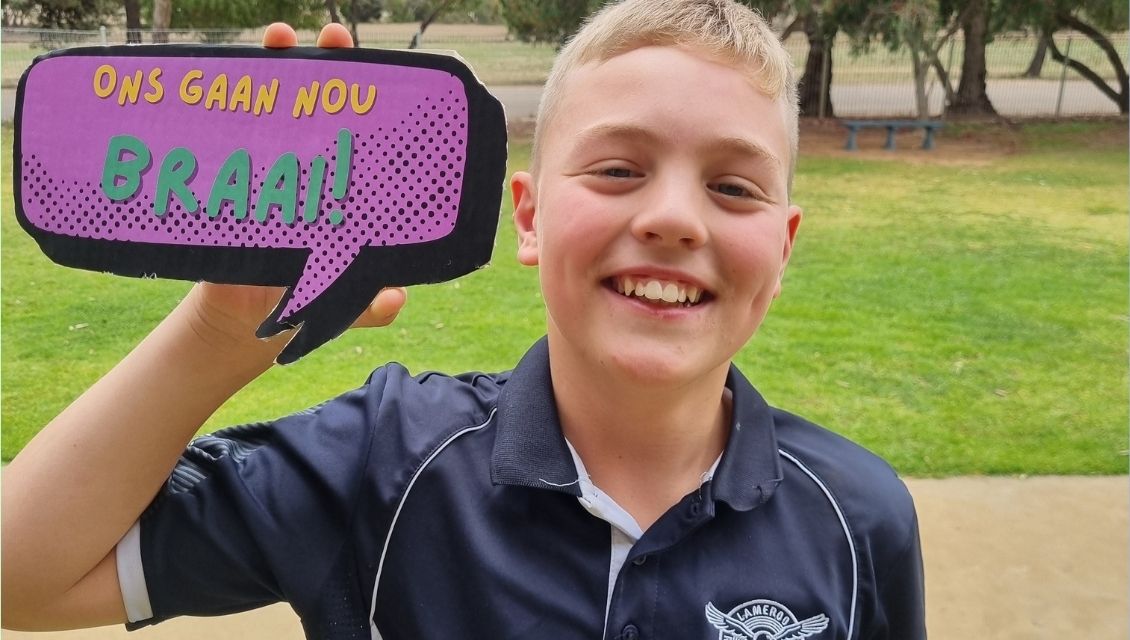
While language students across South Australia are saying "sayonara" or "arrivederci" to 2025, those at Lameroo Regional Community School are saying "totsiens".
That’s because the young scholars at the Murray Mallee school are the only children in the state – and indeed the country – learning Afrikaans as part of their curriculum.
And, according to the students, that’s totally "lekker".
Lameroo Regional Community School is now in its second year of teaching Afrikaans, a Dutch-based language spoken mainly South Africa and, to a lesser degree, some other southern African nations.
Teacher Su-Mari van Vuuren said the classes at Lameroo came about after the school’s German teach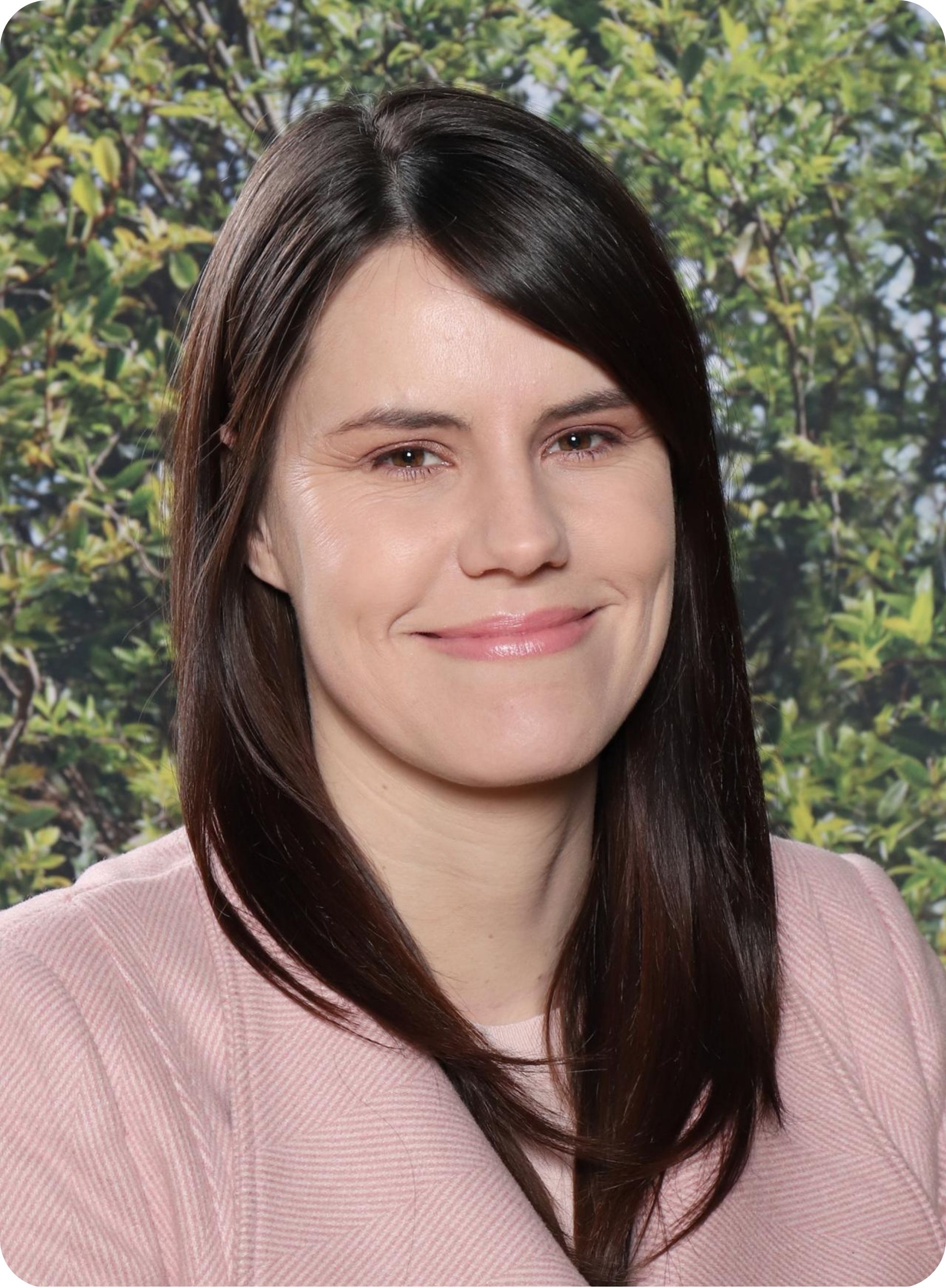 er moved on.
"The principal at the time thought that maybe we should give Afrikaans a go," Ms van Vuuren, pictured, said.
"The principal thought it might help the students make better connections as we have a really big South African community here.
"I’m actually a biology and science teacher, but I said I’d give it a go."
Lameroo’s large South African population has settled in the region to work in agriculture, a sector keen to take on skilled migrants.
"There are a lot of visas you can get for working in regional areas, and there aren’t a lot of Australians who want to move to such a tiny town, so the South Africans have embraced that opportunity," Ms van Vuuren, who moved to Australia seven years ago, said.
"We also have a lot of Filipino people and Pakistani people – there are quite a lot of immigrants in our tiny town."
Ms van Vuuren, who teaches Afrikaans to students from Reception to Year 8, said the young scholars had risen to the challenge of learning a new language.
"At the start it was a bit tough for them – they had to change from learning German to a whole new language – but now we’re in our second year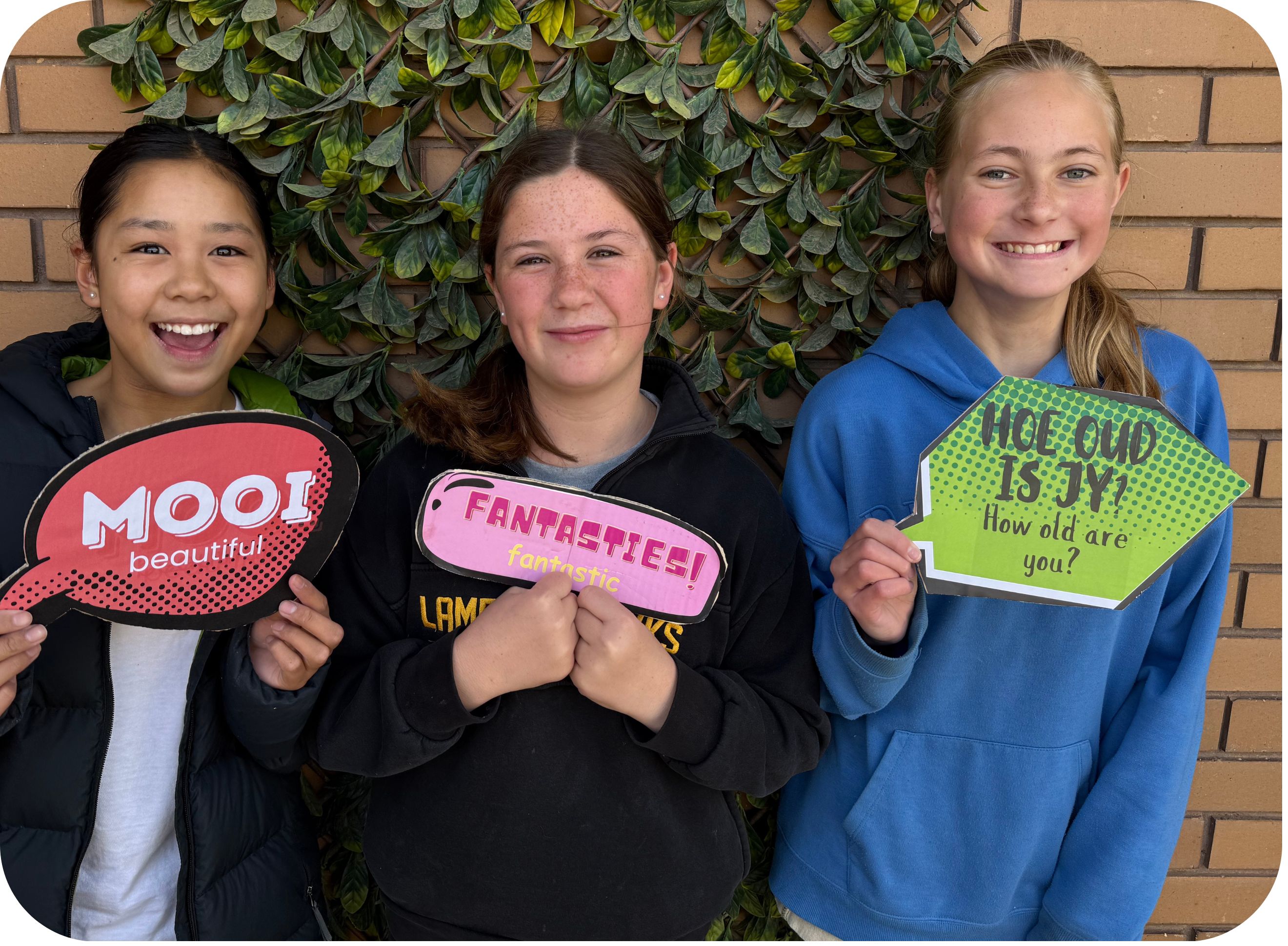 and they’ve really embraced it," she said.
"And we’ve had a big focus on culture too, helping the students understand a bit more about South Africa."
Ms van Vuuren said she loved living in South Africa, but if there was one thing she missed from her home in "the other SA" it was the food.
"Definitely miss the desserts," she laughed.
"We have koeksister (dessert made of dough deep-fried and dipped into ice-cold sugar syrup).
"We ate this at school some of the kids loved that and some hated it.
"And of course biltong (dried meat, similar to jerky). I miss that too."
Want to learn some Afrikaans?
- Goeiemôre - Good morning.
- Hoe gaan dit met jou? - How are you?
- Lekker - Lekker is a widely used term indicating that something is 'great' or 'nice'. For example, 'The food was lekker', or 'We had a lekker day'.
- Dankie – Thank you.
- Bring and braai - Guests bring their own food and drink (usually pre-prepared, except for the meat) to the braai. Braai is a widely used noun and verb for an outdoor 'barbecue' where meat is cooked over a fire or coals.
- Siestog - An expression of sympathy, pity, or dismay; occasionally, an exp
 ression of disgust.
 - Jislaaik - Exclamation of wonder or surprise.
- Ag man - Oh man, with more than a hint of frustration, irritation or annoyance, sadness.
- Sjoe - An exclamation expressing a variety of emotions, especially surprise, shock, wonder, or relief.
- Eina - An exclamation of pain.
- Bakgat – Cool or expression of appreciation for something very well accomplished.
- Nou-nou - Contrary to the original meaning of the English word "now", it means "in due time” and therefore can mean anything from "in the next five minutes" to "in the next five hours".
- Tekkies- Trainers, sports shoes.
- Bakkie - Is what South Africans call a pickup truck or ute.
- Totsiens - Goodbye.