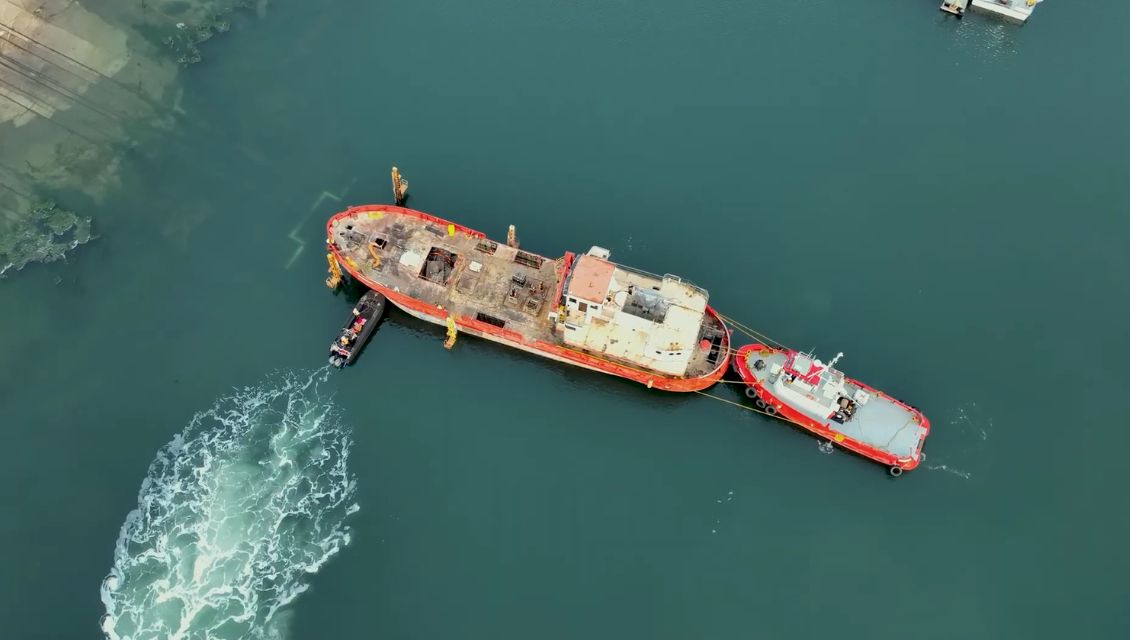
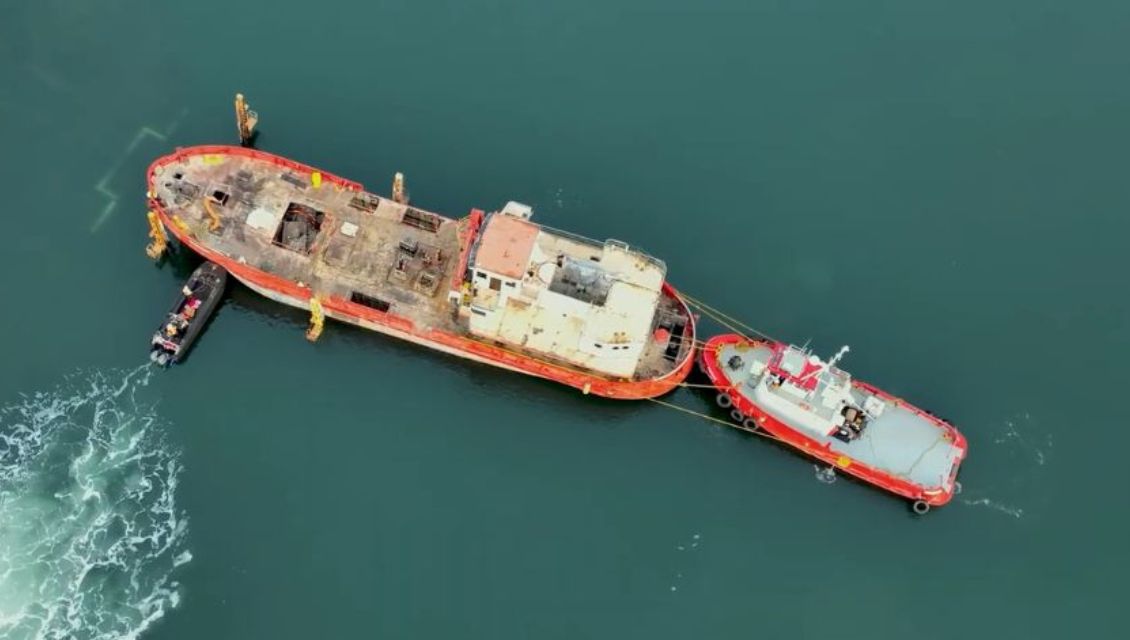
The MV Andrew Wilson has had a long and interesting history.
Built in 1962, the vessel has carried out dredging works, supported previous artificial reef installations and assisted with marine projects across the state.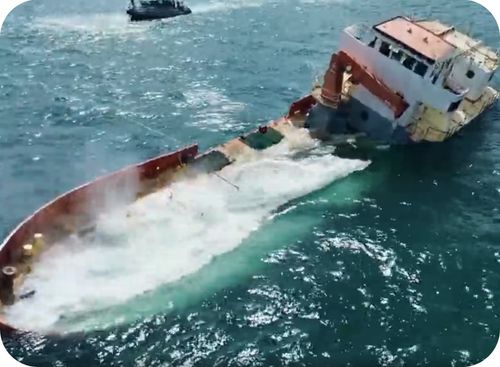
It even played a role in the salvage mission following the Whyalla Airlines Flight 904 tragedy in 2000.
Now this sturdy 40m boat is undertaking its final mission – as a home for marine life and an attraction for divers on the seafloor off the coast of Brighton.
The MV Andrew Wilson became the first vessel to be deliberately scuttled in South Australian waters in more than two decades on 7 September, settling on the seafloor 6km off the shore.
The sinking of the iconic vessel followed a 40km journey from Port Adelaide to Brighton, where she was anchored overnight prior to the scuttling.
Valves were then opened to allow water to flood the hull before the vessel gradually settled 20m below o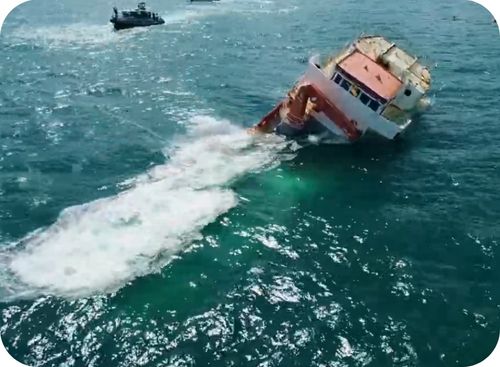 n the sandy ocean floor.
In the coming days, teams will conduct a final safety inspection of the wreck before it officially opens to the public for recreational diving.
Resting in shallower waters, the site is suitable for anyone with an entry-level scuba diving qualification. The location was specifically chosen for its accessibility, ideal seabed conditions, close proximity to boat ramps, and safe distance from major shipping channels.
Once open to public diving, the shipwreck will offer an exciting underwater experience, with explorers able to swim through multiple compartments, including the engine room, galley and bridge.
The shipwreck is also another important step towards restoring fish and other marine life, which suffered a significant blow from the algal bloom.
It builds on other environmental recovery efforts, including building native oyster reefs and restoring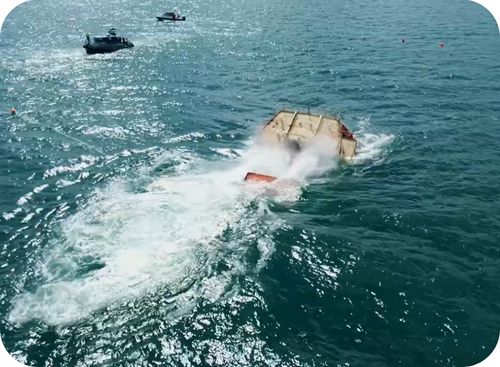 seagrass habitat.
The complex mission to scuttle the ship began several months ago when she was donated to the State Government by Maritime Constructions.
Before the vessel could be sunk, specialist crews meticulously stripped the ship of all hazardous materials, removed internal walls, and cut strategic access holes into the hull.
A deep clean was carried out in close consultation with the Environment Protection Authority and an independent specialist. Strict international guidelines were also met to ensure there were no negative impacts on the local marine environment.
To give the artificial reef the best possible start, a 12-month ban on all recreational and commercial fishing within a 200m radius of the ship is now in effect.
This temporary restriction will allow local fish stocks, such as snapper, flathead, and King George whiting to thrive in the area.