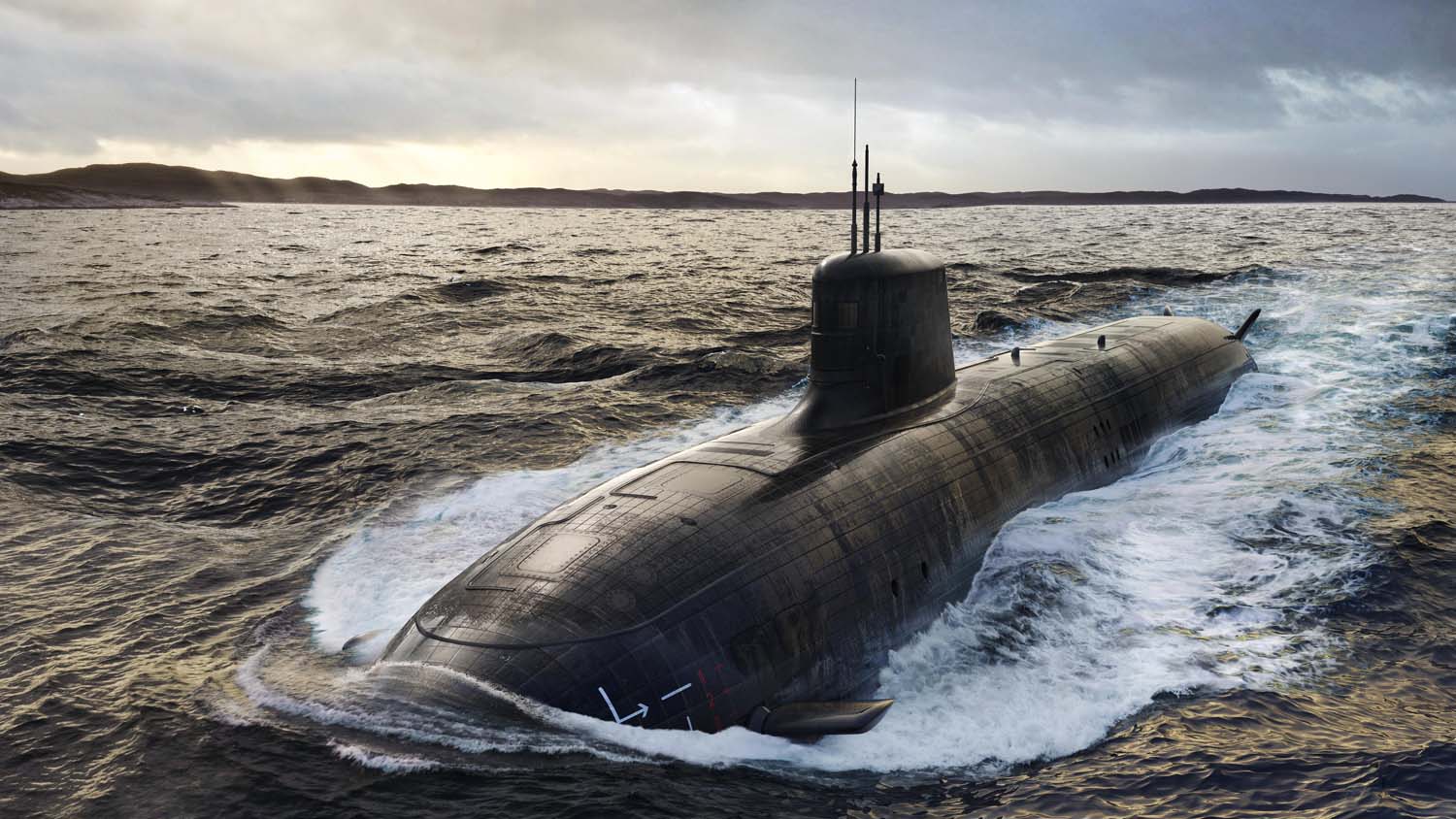
The State Government has announced a new program with America’s largest shipbuilder to help South Australian companies enter the global supply chain for nuclear-powered submarines.
The new program with HII was announced earlier this month during a tour of HII’s Newport News Shipbuilding division in Virginia in the United States, where the defence giant builds Virginia Class submarines.
The agreement connects the South Australian Government to HII’s Supplier Capability Uplift Program, enabling selected SA suppliers to participate in the nuclear-powered conventionally armed submarine supply chain.
Given the highly specialised and technical nature of the work to build Virginia Class submarines, participating companies will be evaluated by HII using the same requirements applied to its existing US suppliers.
HII will undertake reviews of South Australian companies that provide design and engineering, equipment integration, advanced manufacturing, welding, fabrication and quality services.
On completion of the review process, participating companies will receive a tailored report outlining recommendations for capability development and improvement activities required to compete for work on the Virginia Class Submarine Program.
Ultimately it is the goal of the program to have these South Australian companies positioned to enter the supply chain for the AUKUS nuclear-powered submarines to be built at Osborne in Adelaide.
HII’s Australian business lead Michael Lempke said the company was looking forward to “continuing our commitment to help address critical skills needs, education and training programs, and supply chain capability in Australia as they create the infrastructure necessary for building and sustaining nuclear-powered submarines”.
Australian Submarine Agency Director-General VADM Jonathan Mead said: “The Australian Government welcomes this South Australian initiative investing in Australia’s defence industry, which complements national ASA-led initiatives to uplift the submarine industrial workforce and to support Australian industries’ access to the trilateral supply chain.“
"Australian state and federal governments, working together with industry, are expanding Australia’s industrial capacity to produce and sustain nuclear-powered submarines into the future, which will also contribute to building our collective resilience.”
Meanwhile, South Australia and the State of Maryland will collaborate on developing the skilled workforce required for the AUKUS program under a Memorandum of Understanding signed last week.
Maryland is a national leader in defence, space and cyber, meaning there is strong scope for collaboration with South Australia. Fifteen of the world’s top 20 aerospace and defence companies have a presence in Maryland.
As part of the Memorandum of Understanding, both states have agreed to connect local companies with shared areas of expertise, exchange knowledge and expertise at a government and commercial level regarding defence workforce development and skills capability, undertake trade and business missions between the two jurisdictions, explore common research and development projects, and share access to public research infrastructure and information.
The State Government has also signed a Letter of Cooperation between SA and the US state of California, to advance the states' shared leadership in renewable energy and clean hydrogen technology.
The two states have agreed to work together on a number of fronts, including:
- Advancing the clean energy transition and its integration of renewable energy into the grid.
- Developing world-leading clean renewable hydrogen projects for the production of clean renewable hydrogen and other low and zero carbon fuels and scaling hydrogen production for use and export.
- Advancing large-scale renewable energy generation and storage such as wind, solar PV, batteries and long duration energy storage.
- Exchanging best practices on policies and other mechanisms to support the uptake of zero emission vehicles, including light-duty passenger vehicles, medium-duty and heavy-duty trucks and buses, and goods movement, and investment in charging and refuelling infrastructure.
Like South Australia, California is a global leader when it comes to renewable energy. Both states have achieved periods where 100 per cent of their energy needs have come from renewable sources.
As part of the State Prosperity Project, South Australia is building the world's largest hydrogen power plant and electrolyser at Whyalla.