
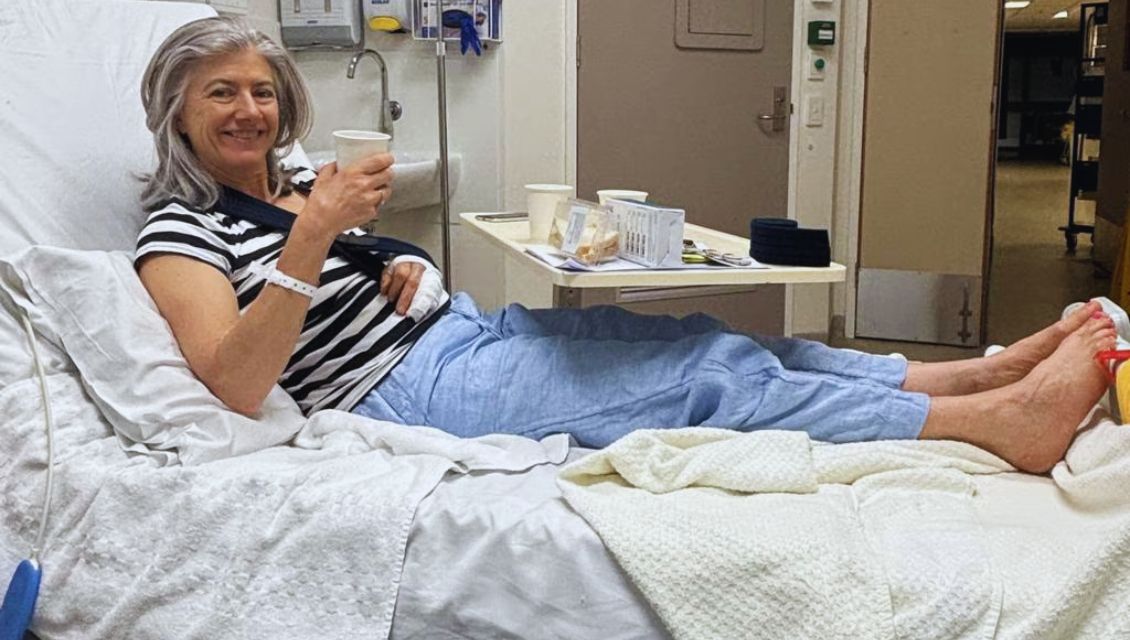
South Australia’s Chief Public Health Officer Professor Nicola Spurrier has told how she thought of her three children as "it all went black" after she was knocked off her bicycle by a driver who failed to give way.
Speaking at the launch of Road Safety Week, Prof. Spurrier said she was taking a morning ride on the streets of Glenelg last year when the accident happened.
"I thought, 'Well this is the end, I’m dead because there’s nothing I can do'," she said.
"I was cycling with a helmet on, on a road bike, I had a light flashing and I came towards a roundabout and I looked to my left and there was a car coming towards the roundabout.
"Of course I have right of way … and then the next thing the person accelerated and my wheel was right at the bonnet of that car.
"And it all went black and I thought, ‘I’m dead’, and I could see a light at the end of the tunnel.
"And I was thinking about my three kids, and I managed to open my eyes and I’d been thrown about four metres to the other side of the roundabout and landed right in the gutter."
Prof. Spurrier said she ended up with a "very badly injured shoulder", three painful pelvic fractures, a broken rib and a broken finger. The well-known public servant has had two operations and is still undergoing occupational therapy as she recovers from her injuries.
"I’m one of the lucky ones," she said.
"We are human beings out there on our bikes, we have families, so really this is such an important message."
Forty-three lives have already been lost on South Australian roads this year, 14 more than the same time last year.
It’s this sobering statistic that highlights the necessity of Road Safety Week, which began on 18 May.
More than half of the lives lost occurred on regional roads, where 24 people have lost their lives 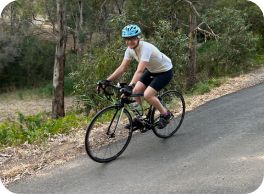 this year, compared to 16 at the same time last year.
On metropolitan roads, 19 people have lost their lives this year to date.
Every road death or serious injury is devastating and has an impact on families, friends, communities and the emergency service personnel who respond to incidents or work to save lives.
The State Government has released a comprehensive Road Safety Action Plan to reduce lives lost by 50 per cent and serious injures by 30 per cent by 2031.
This includes the introduction of time-based 40km/h zones at priority sites near schools to protect some of the state’s most vulnerable road users.
Since the rollout began in November 2025, the new time-based speed limit has been installed at 60 schools, with around 160 schools expected to have 40km/h signage in place by the end of 2026.
Another key prevention measure has been the introduction of mobile phone detection cameras to reduce road trauma caused by driver distraction.
Tragically, this year we have seen a spike in the number of motorcyclists and cyclists killed or seriously injured.
Ten motorcyclists have lost their lives on our roads so far, more than double this time last year, with 77 suffering a serious injury, while four cyclists have been killed and another 32 have suffered serious injuries.
SA Health data has reported 2139 people sustained injuries that required treatment at one of South Australia’s Trauma Services. Of these, almost 40 per cent were motorcyclists (468) or bicyclists (369).