Weeds have a huge impact on our environment. They steal space and water from native plants, are not as nutritious for local wildlife, impact on farming land and local food production, increase the intensity of fires, and rack up a huge cost in controlling them.
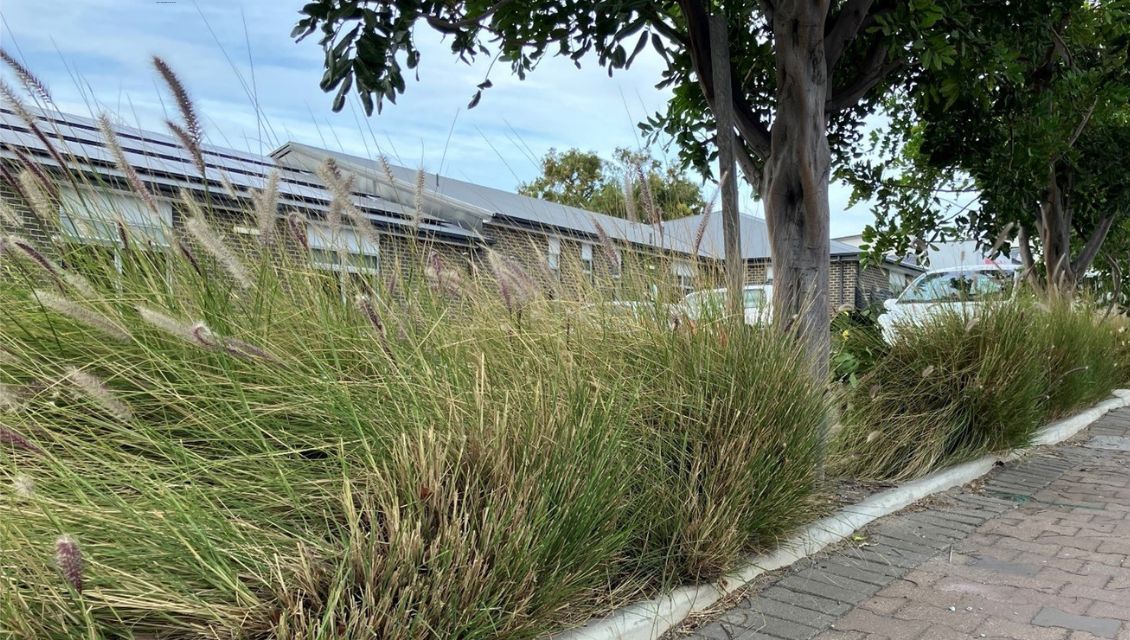
Adelaide’s milder than usual summer has allowed some weeds to take off, and Green Adelaide is keeping an extra close eye on Adelaide’s latest problem weed – fountain grass – to reduce its impact.
Regional Coordinator of Biosecurity and Species Management at Green Adelaide Shannon Robertson said that fountain grass was a weed Adelaidean's were likely to come across.
“Historically, people were free to plant it, in fact it was widely used in landscaping as it is easy to grow and fairly resilient,” Mr Robertson said.
What is fountain grass?
Fountain grass (cenchrus setaceous) is a highly invasive weed. It came from Africa and was once widely planted in people’s backyards as a decorative grass. Unfortunately, its resilience and ability to spread quickly has caused big problems today.
Fountain grass is now a declared weed, meaning the sale of it is not allowed, it can’t be transported along public roads, and landowners are required to control it.
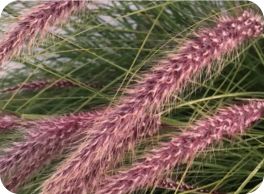 It is an upright grass with leaves that grow close together. It can grow up to 1m high and has cream, pink or purple flowers (pictured left) with feathery bristles. These flower heads, which grow between 8 and 30cm long, are made up of lots of small seeds.
These seeds are easily picked up by wind or water, which spreads this weed even further. These seed heads tend to occur in summer, but in milder conditions it can flower for longer periods.
The seeds of fountain grass can remain in the soil for around six years, which means any sort of control of this weed has to be followed up, to make sure any remaining seeds haven’t started growing back.
Why is fountain grass a problem?
Fountain grass is escaping gardens, washing down waterways and blowing along roads and getting into national parks, reserves and coastal areas. It grows in tight clusters, which crowds out native plant species by stealing their nutrients and water and smothering them from sunlight.
This has a negative impact on local wildlife because fountain grass clutters previously open spaces, which native animals rely on for basking in, finding food or even spotting predators.
“Fountain grass is impacting our native species as it crowds out the habitat of the endangered chestnut-rumped heathwren, creates too much shade in the habitat of vulnerable Cunningham’s skinks which rely on basking in the sun – and is even impacting some of rare native plants, such as narrow leaf fox-tails and orchids,” Mr Robertson said.
“It is these smothering impacts on our natives that has contributed to fountain grass now being listed as a declared weed."
The way that fountain grass forms in tight clusters can also increase the spread and intensity of fires.
How do you remove and control fountain grass?
Fountain grass can be easy to remove initially, but you will need to check back on areas where it is removed to make sure no seedlings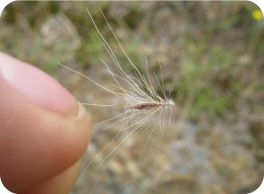 are popping up, because of its long-lived seeds (pictured right).
When fountain grass is at a seedling or small plant stage, it can be removed by pulling it up by hand when the soil is moist. It can be placed in your household bin. You might like to fill the gap that it leaves in your garden by planting a native instead, such as lemon-scented grass. Check out more native grass options in our planting guide.
Chemical control can be effective to get rid of this weed, but it often requires several treatments. Treatments should occur when fountain grass is actively growing, and ideally before flowering, which tends to be in spring. For advice on chemical options check out the information from our friends at PIRSA on controlling declared weeds in SA.
When fountain grass escapes into national parks, reserves and coastal areas, we work closely with our council partners on controlling this weed to reduce its impact on local plants and animals.
As it continues to escape gardens, especially in recent conditions, this task is growing. Green Adelaide is encouraging all South Australian to play their part in lessening the impact of fountain grass by working together and stopping this weed from getting out of gardens.
We can all play a part in controlling weeds and lessening their impact. Removing fountain grass from your garden is a great first step in stopping the spread to our more natural areas. Learn more about fountain grass and its impact on Green Adelaide’s native species.
This story was originally published on Green Adelaide and has been republished here with permission.