Students from St Mary’s College in Adelaide are ensuring the stories of South Australians who served in World War I are never lost, teaming up with The Headstone Project SA (HPSA) to bring history to life in a way that’s both meaningful and personal.
As part of their Year 9 history curriculum, students spent the year uncovering the lives of veterans buried at West Terrace Cemetery in Adelaide, many in unmarked graves.
They researched their stories, created commemorative booklets and attended ceremonies where new headstones were unveiled.
Now in its third year, the partnership gives students a unique opportunity to connect classroom learning with real-world history.
Reflecting on the project, St Mary’s College Principal Heidi Senior said this was the kind of learning that really mattered.
"The most important kind of learning we can do in a school is learning that is authentic an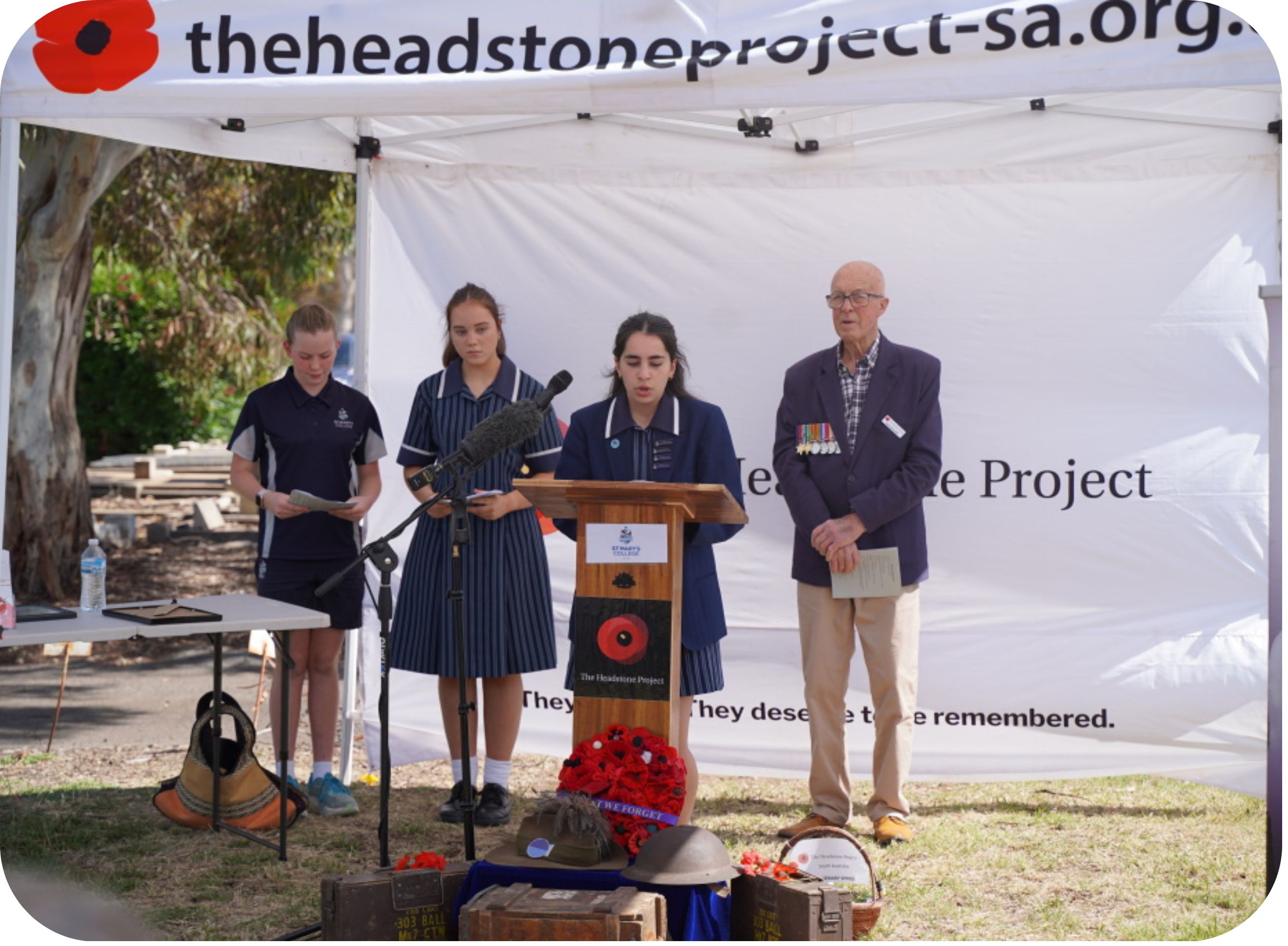 d connected," she said.
"The Headstone Project gives our students an extraordinary opportunity to work with purpose, in a way that strengthens our human relationships and recognises how important story is to people."
So far, more than 200 St Mary’s College students have researched 110 graves, including 50 that were previously unmarked.
St Mary’s College Humanities Coordinator Kathryn Pill said the experience had been transformative.
"It has been exciting to watch the students develop not only as critically aware learners, but also to deepen their understanding of themselves and others within the broader context of Australia’s history," she said.
As part of a culmination of the students’ efforts, five South Australians who served in World War I were honoured at a recent dedication ceremony at West Terrace Cemetery, including two nurses whose graves had remained unmarked for more than a century.
The ceremony paid tribute to Sister Christina Gordon McLean and Sister Isabella Louisa Parkinson, who both served with the Australian Army Nursing Corps.
Christina enlisted in 1915 and cared for soldiers during Gallipoli before serving in Egypt and France. Isabella enlisted in 1918 after losing two brothers in the war and worked at the 7th Australian General Hospital in Keswick. Both women devoted their lives to nursing and supporting veterans.
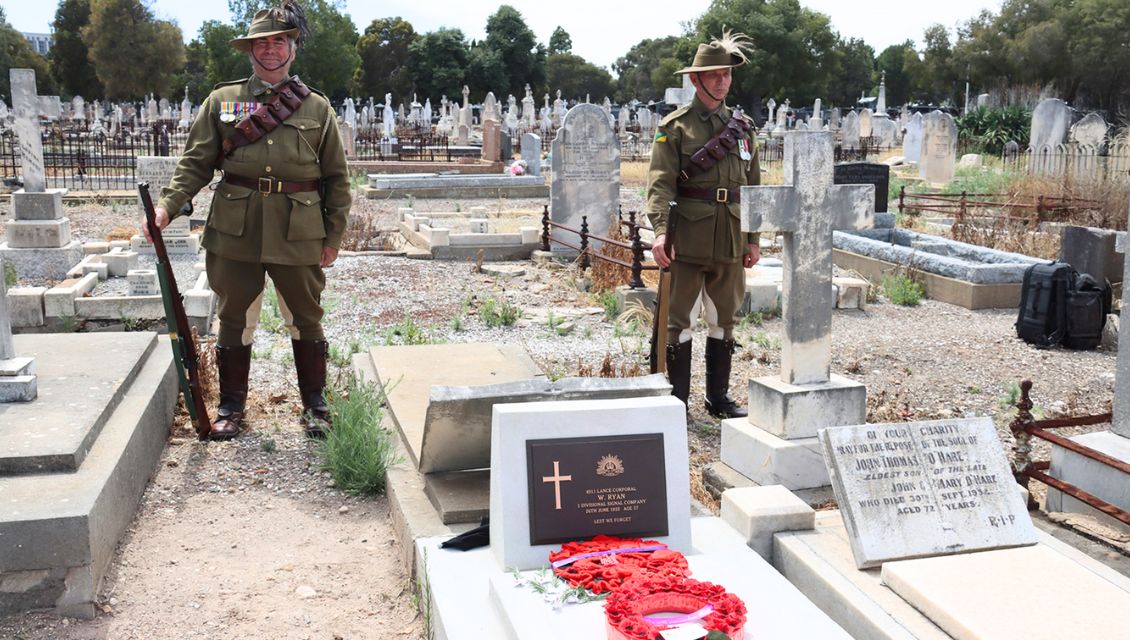
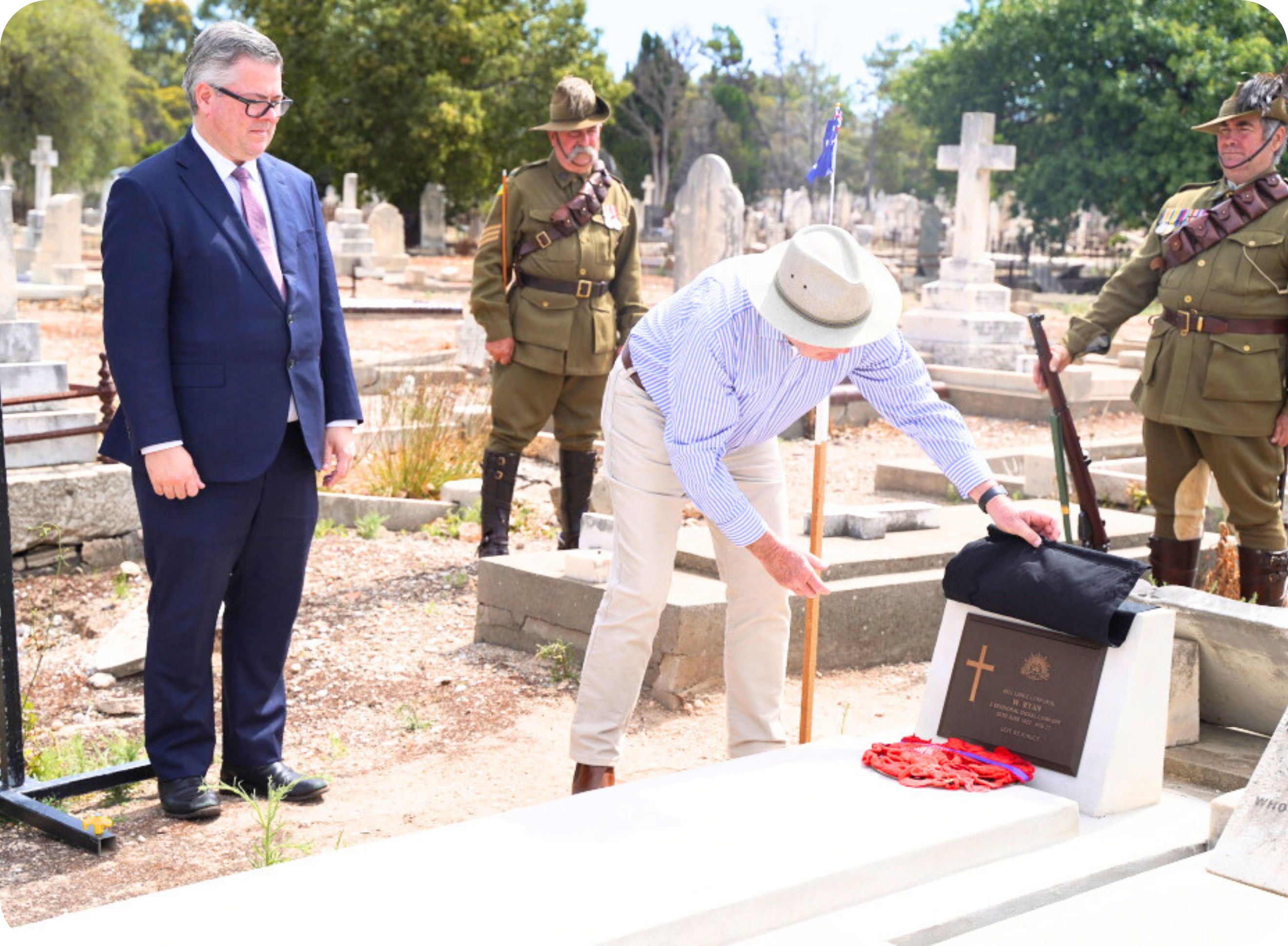 Adelaide-born William Ryan, whose grave is pictured left, was also honoured at the service. Born in 1884, he joined the army in 1915. As a signals specialist, William kept vital communication lines open from Gallipoli to the Western Front.
Surviving a torpedo attack and tough conditions, William was promoted to Lance Corporal and earned several service medals, returning home in 1919. Sadly, he died of influenza in 1922 at just 38 years old.
Also honoured were Private Arthur Thomas Anderson and Private Frederick Alfred Parker who both served with the 27th Battalion on the Western Front.
HPSA President John Brownlie praised the students’ dedication to helping preserve the legacy of World War I veterans.
"I want to thank the history students at St Mary’s College for their outstanding research," Mr Brownlie said.
"My hope is that their interest in World War I history doesn’t wane when they graduate, as the future of The Headstone Project rests on the shoulders of the likes of these young women as those of my generation will not be able to carry the burden forever."
The Headstone Project SA is a volunteer organisation dedicated to identifying unmarked graves of World War I veterans, confirming their service and installing official military headstones.
HPSA estimates more than 2500 World War I veterans lie in unmarked graves across more than 900 cemeteries in South Australia.
In 2024, HPSA received $60,000 in State Government (external site) (external site) funding through Veterans SA to support this work over three years.
This article was prepared by veteranssa.sa.gov.au and has been reproduced here with permission.