
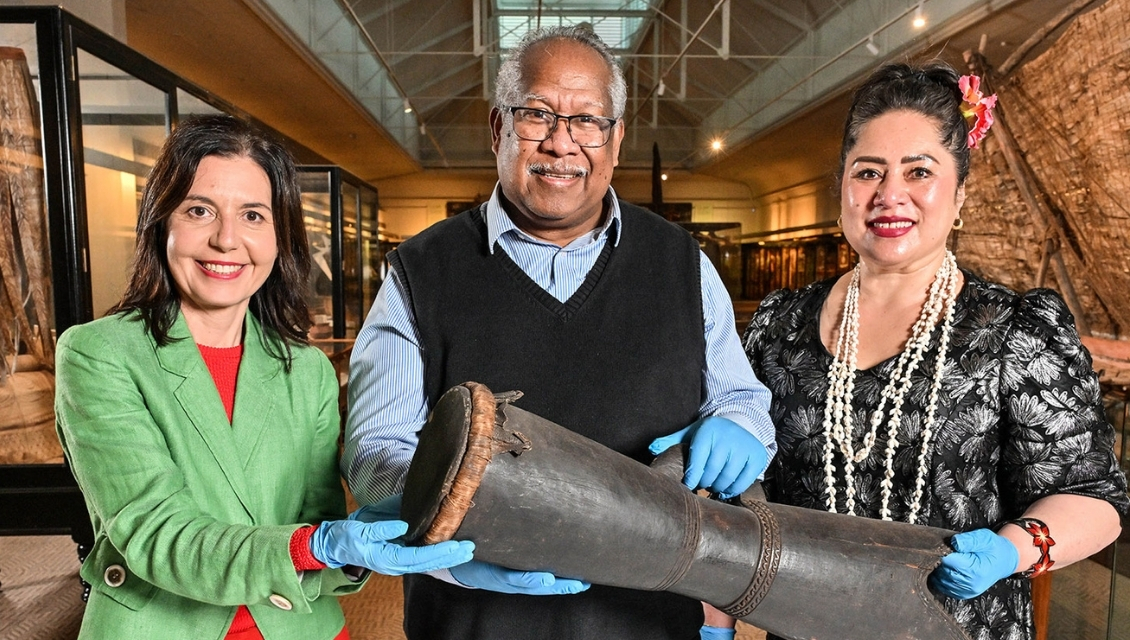
Many items in the South Australian Museum's Pacific Cultures Gallery have been on display for decades and now require specialist conservation work to ensure their long-term preservation.
The conservation work is being delivered in partnership with the Pacific Islands Council of South Australia (PICSA) and Pasifika community leaders, with cultural knowledge, authority and protocols guiding the care of ancestral objects throughout the process.
The Pacific Cultures Gallery will close to the public from Monday 3 August, allowing museum staff, community representatives and conservation specialists to pack, document and assess objects. This work will be undertaken in collaboration with Pacific communities and Artlab Australia.
Although the gallery will be temporarily closed, access to Pacific collections will continue in new ways. The Museum has already begun a high-resolution 3D digitisation program in partnership with Flinders University, creating digital records that will support access for community members, researchers and the public during the closure.
The conservation program will also create opportunities for visitors to see other Pacific collections that have previously been held in storage. These objects will be featured in temporary community-led displays and pop-up exhibitions over the coming months, bringing rarely seen cultural materials into the public eye.
South Australian Museum Director Dr Samantha Hamilton said the project was being undertaken in close consultation with Pacific communities.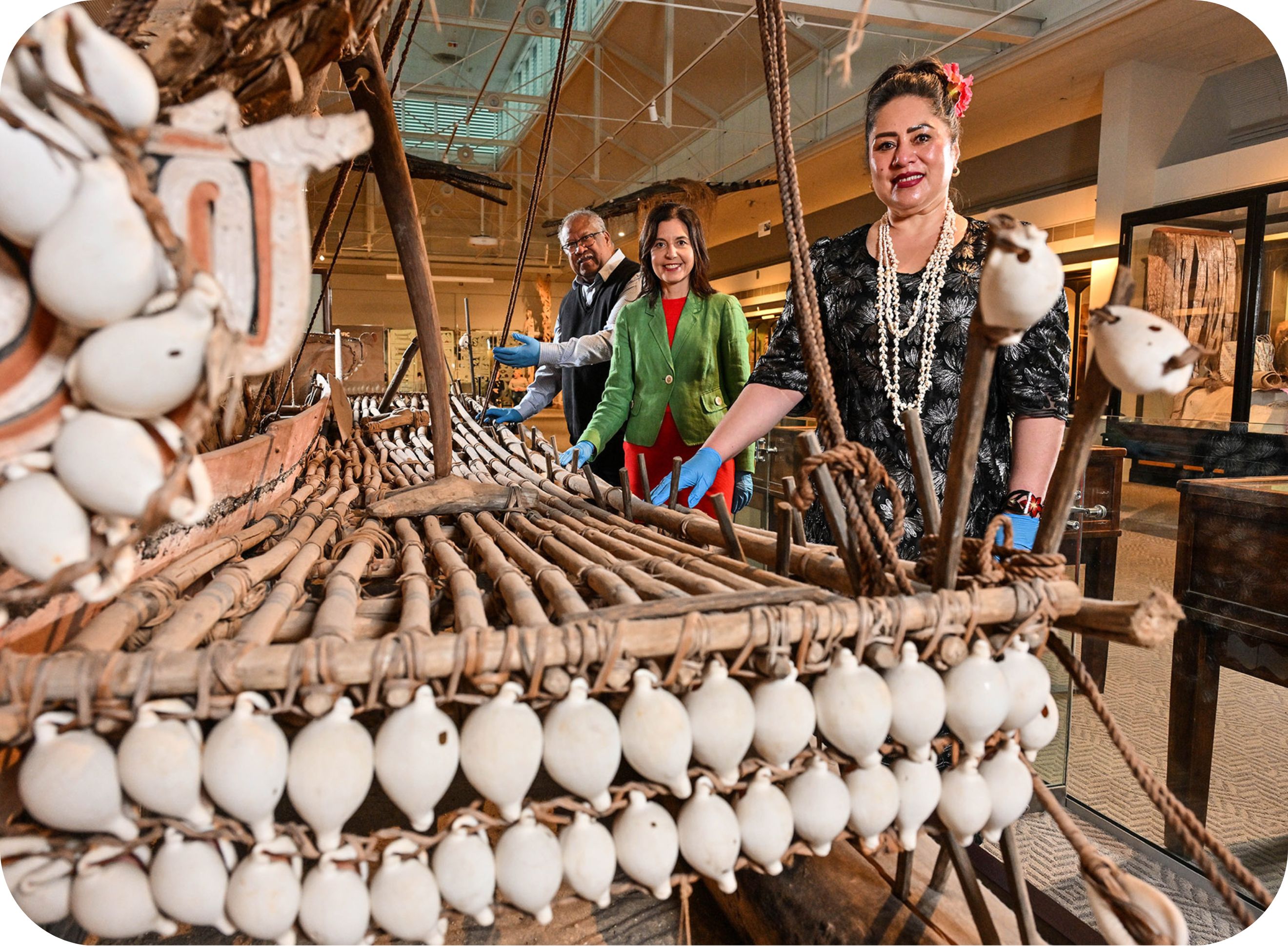
"The Pacific Cultures Gallery will be enhanced as a permanent display, with new stories, stronger community voices and contemporary interpretation developed over the coming years," she said.
During the conservation period, the gallery space will continue to host national and international touring exhibitions, providing visitors with new cultural and learning experiences.
PICSA CEO Rosanna Maualaivao MacDonald said they were proud to see Pasifika communities lead the project.
"The leaders and cultural custodians of our Papua New Guinea, Vanuatu, and Māori communities are directly driving the cultural protocols, care, and next steps for their respective ancestral items and Tumbuna treasures," she said.
PICSA Board Member and PNG Community Leader Fred Ovia said the conservation work ensured that the artefacts on display were protected and maintained for future generations to enjoy.
"While many of the artefacts remain strong others — such as masks, headdresses, the major canoe, and the hut display — require considerable conservation efforts," he said.
"This specialised work can only be effectively carried out by experts in the field of preservation and conservation."
The conservation project forms part of the South Australian Museum’s 2025–2030 Strategic Plan, which was announced in response to the South Australian Museum Review.
For more information about the conservation program and upcoming displays, visit the South Australian Museum website.
MORE STORIES LIKE THIS