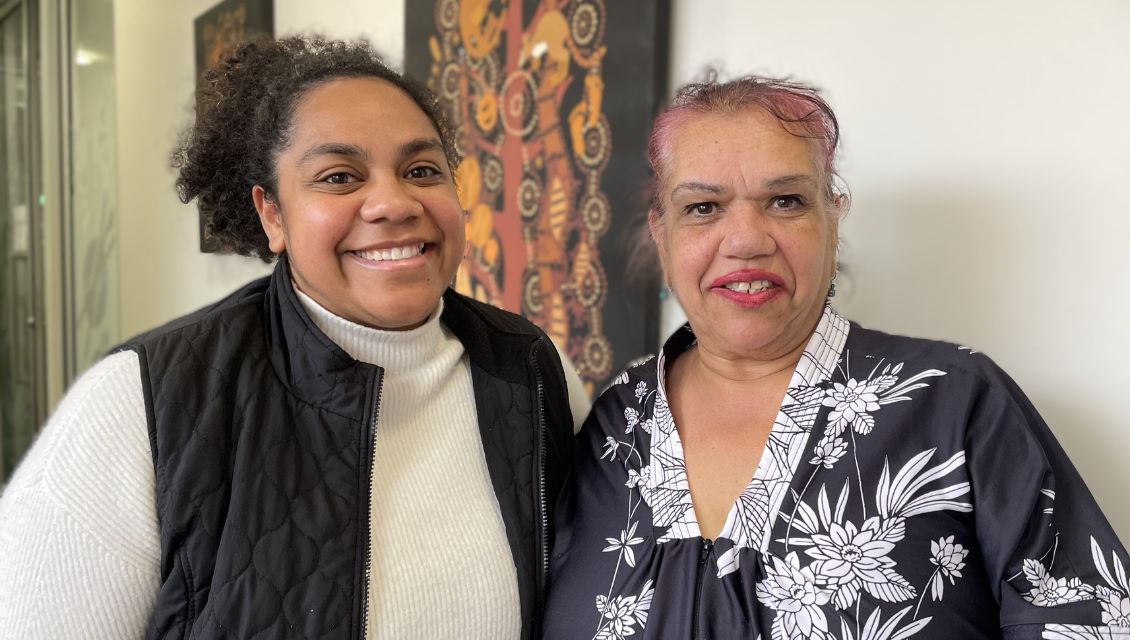
All Jillian Bovoro wants to do is help give Aboriginal children a sense of who they are.
That’s something some of the children question as they travel through the child protection and family support system.
“It’s the first thing we ask,” the proud Adnyamathanha woman said. “Who’s your mob?”
Supporting children to develop their sense of identity is the driving force behind Jillian’s work as a Senior Aboriginal Practice Development Officer with the Department for Child Protection.
Jillian manages the Aboriginal Life Story Book program, and provides the books to the children and young people when they come into care.
They’re designed to be added to by the children, with support from their case worker, so they have a comprehensive record of their life and heritage both before and after they come into care.
The books provide a place to gather together all known information about the child or young person, including their Country, lore and totems.
“They just give the child the chance to know what their background is - their identity,” she said.
“They find safety in their connection; knowing who they’re related to or where they’re from.
“So, when they tell other Aboriginal people their stories, they can say who they’re related to and find their way back to Country.
“The books help satisfy a sense of yearning about where they come from – that’s the beauty of them.”
Jillian was last year nominated in the South Australian Child Protection Awards, for the Active Efforts category, which recognises those who have demonstrated excellence in making active efforts to implement the Aboriginal and Torres Strait Islander Child Placement Principle.
The Department is sharing her story as it seeks nominations for this year’s SA Child Protection & Family Support Awards.
Jillian has worked at DCP since 2018, and on the Life Story Books for the past five years.
Her daughter Emma works on the same floor at DCP’s Flinders Street headquarters, finding safe homes for vulnerable Aboriginal children. She is the Aboriginal Placement Thinking Circle Convenor with the Aboriginal Practice Directorate’s Taikurtirna Warri-apinthi team.
Emma thinks her mother’s work is crucial to the Aboriginal community, because it encourages young people to know about their own identity and enquire about where Aboriginal people they meet are from.
“Many kids aren’t asking anymore, and Mum’s books are helping to bring back that tradition,” she said.
“A lot of kids also say they’re Kaurna, just because they grew up in Adelaide, and that’s very misleading for the child too.”
Jillian, who is also Kuyani, Western Arrernte, Dieri and Yawarrawarrka, also proudly talks about her Afghan cameleer heritage.
Her family helped establish Australia’s oldest mosque at Beltana in the State’s Far North and some of her wider family members are practicing Muslims.
Nominations for this year’s South Australian Child Protection & Family Support Awards are open until 16 May. Follow the link for more information and to nominate someone you know.
This article was prepared by the Department For Child Protection and has been reproduced with permission.