An education campaign to promote better ways to safely release undersized or unintentionally caught snapper has been launched, aimed at improving survival rates and ensuring the long-term future of the species in South Australian waters.
Snapper can suffer barotrauma when caught from depths greater than 10m due to the rapid change in pressure when they are brought to the surface, resulting in the expansion of gases within the fish’s body.
Barotrauma can cause significant internal injuries, affect the ability of the fish to regulate buoyancy, and is strongly associated with mortality, which can occur up to 24 hours after release.
The Department of Primary Industries and Regions has developed educational materials to promote the best practices for capture, handling and release of snapper to increase the chance of survival.
The information has been compiled from the latest findings by the South Australian Research and Development Institute in a co-funded research project with the Fisheries Research and Development Corporation (FRDC).
An educational video is now available on the PIRSA website, along with a flyer and updated information on the techniques recreational fishers can use to boost survival rates of released snapper and other bottom dwelling fish.
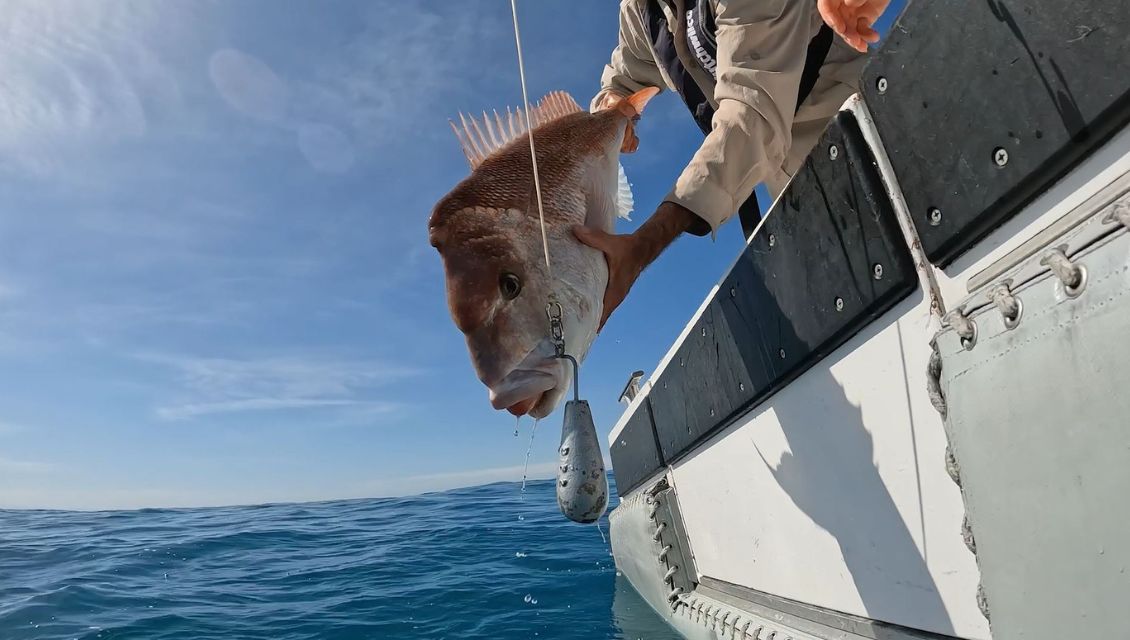
The effects of barotrauma can be reduced by using a release weight when returning fish to the water, which is designed to rapidly send the fish back to the depth that it was caught.
This recompresses the gases in the fish’s body and enables it to regulate its buoyancy.
Last December, the State Government announced the Snapper Recovery Package – a three-year, $8.8 million support package, developed in response to the extended closure of Spencer Gulf, West Coast and Gulf St Vincent to snapper fishing until June 30, 2026.
The package includes:
- $5 million for the Snapper Science Program, which is co-funded by the State Government and FRDC.
- $2.4 million fee relief to support impacted commercial fishers.
- $1.2 million to support the continuation of the snapper restocking program.
- $200,000 for reef restoration projects.
Fisheries Research and Development Corporation Managing Director Dr Patrick Hone said the sustainability of snapper, one of the most popular eating fish in Australia, has been an FRDC research investment priority for more than two decades as populations have declined throughout Australian waters.
"As a highly prized recreational fishing species for food and fun, it’s important we provide the best available science and handling practices to recreational fishers to give released snapper the highest chance of survival," Dr Hone said.
"If you’re looking to go fishing these holidays, I encourage you to check out these excellent educational resources which have been developed specifically with you in mind."
More information on safely releasing snapper can be found here.