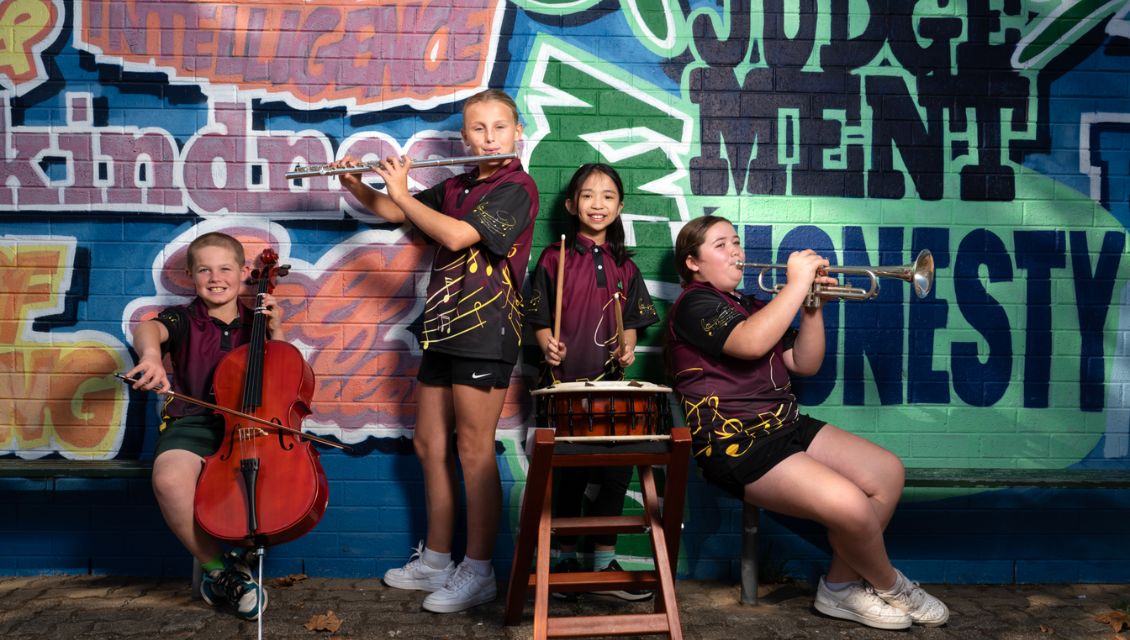
South Australian school students will have greater access to music education following the commitment of $7.5 million over three years to expand programs.
The announcement follows the release of a new report this week called Setting the Tempo – research supported by Alberts | The Tony Foundation’s Music Education: Right from the Start initiative and the South Australian Department for Education.
The report featured a survey of teachers and representatives from 115 public primary schools, that identified the benefits of music learning in the classroom.
Almost all teachers agreed it improved students' educational experience – 97 per cent – with similar responses seen for positive impact on literacy and numeracy skills (94 per cent) and reduced stress and anxiety among students (94 per cent).
The study showed that teachers from South Australia’s primary schools universally backed the student benefits of music learning, but many agreed that teacher training, dedicated facilities and appropriate resources were lacking.
The extended state government investment will go towards buying more musical instruments, extra training, upskilling non-specialist teachers to become music teachers and having music spaces and rooms available at schools.
Music education includes singing, playing a musical instrument, songwriting or composing. Under the state government's 10-year Music Education Strategy, music should be part of students’ regular learning, rather than a special activity.
Alberts | The Tony Foundation’s Music Education: Right from the Start Director Emily Albert said that while most teachers graduated without the skills to deliver music learning to all levels of curriculum expectations, South Australian teachers had strong access to support and a clear willingness to advance their capabilities.
"That’s good news for students. This research adds to the body of evidence linking music learning and students’ educational, developmental and personal wellbeing outcomes," Ms Albert said.
"Now, we must ensure access to resources and the good practices adopted by many schools are equally applied to all in the state, so no student is left behind in their learning journey."
The Pines School's Assistant Principal Toula Girgolas said music education was delivered in a variety of ways.
"All preschool junior primary staff are mentored in teaching music through the National Music Teacher Mentoring Program," Ms Girgolas said.
"We have a permanent arts teacher who teaches music across the school, and a leader who coordinates our music program and teaches music to individual students and groups. An instrumental teacher also visits once a week to teach students.
"Currently we have five classrooms being used for music education as we have 150 students from Year 3-6 playing 15 different instruments.
Ms Girgolas said that in her time as a teacher, she had seen many benefits of music education.
"At The Pines I have seen a marked improvement in the emotional and social well-being of our students as well as an increase in their self-esteem and focus through experiencing challenge and success," she said.