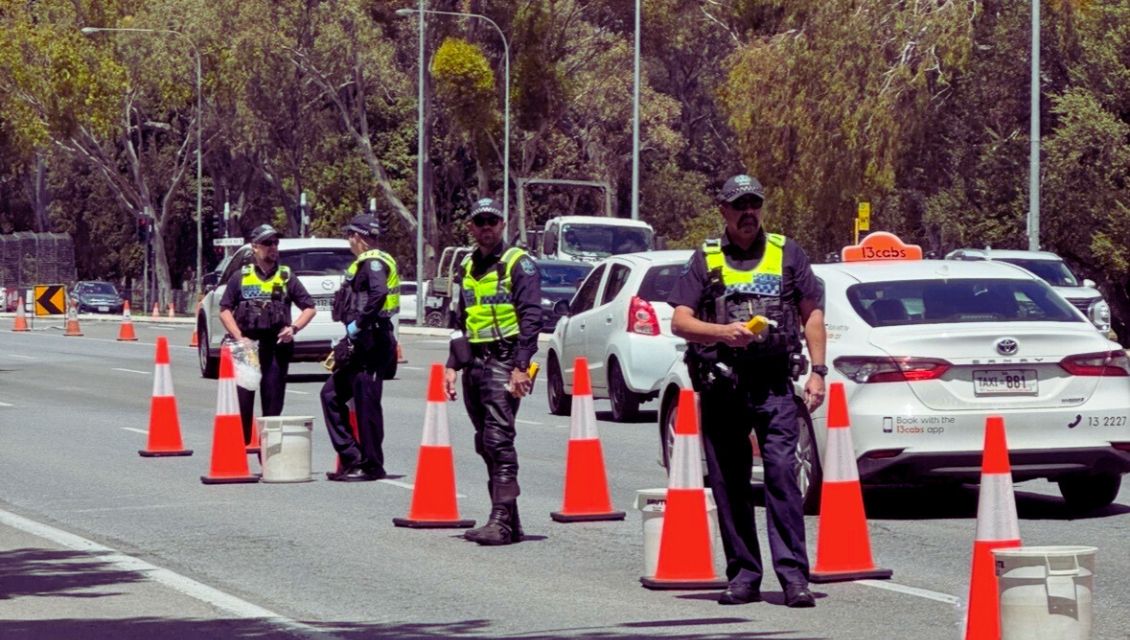
Roadside drug testing in South Australia now includes the detection of cocaine.
This follows a request from South Australian Police Commissioner Grant Stevens prompted by the increased use of drug driving, and the prevalence of illicit cocaine use more broadly across the state.
Previously, roadside tests could detect THC (the active component in cannabis), methamphetamine and MDMA, also known as ecstasy, with cocaine only able to be tested from blood samples.
The Road Traffic (Miscellaneous) (Drink and Drug Driving) Amendment Regulations now list cocaine as a prescribed drug for the enforcement of drug driving offences, with police able to test for it at roadside testing units.
"We know that consumption of cocaine can lead to overconfidence and aggression, reduced inhibition, increased risk-taking behaviours, agitation and loss of concentration, delusion, and affected vision, all traits you don’t want in a person driving," Commissioner Stevens said.
"It is crucial that roadside drug testing includes cocaine to keep these dangerous drivers from our roads."
So far this year, drug driving contributed to eight people losing their lives, and 76 received life-changing serious injuries. More than 2600 drug drivers received expiation notices.
This is compared to 2024, where drug driving was a factor in 14 of the lives lost on our roads and 129 life-changing serious injuries.
Penalties vary for drug driving offences and include a fine of $875 plus a $105 contribution to the victims of crime levy for a first offence, four demerit points and a minimum three-month licence disqualification.
Those who refuse or fail to comply to a random drug test may incur an immediate loss of licence, six demerit points and a court-imposed penalty with a minimum of 12 months disqualification.
From 2022 to 2024, the number of people who refused a comply with a drug test, jumped almost 20 per cent – from 84 to 100.
Unlike drink driving offences, there is no minimum amount of prescribed drug that needs to be detected in a person’s system. A positive oral fluid test which is confirmed by a laboratory is sufficient for a person to be charged.
A new road safety campaign will be rolled out statewide to educate road users about the consequences of driving under the influence of cocaine.
MORE STORIES LIKE THIS