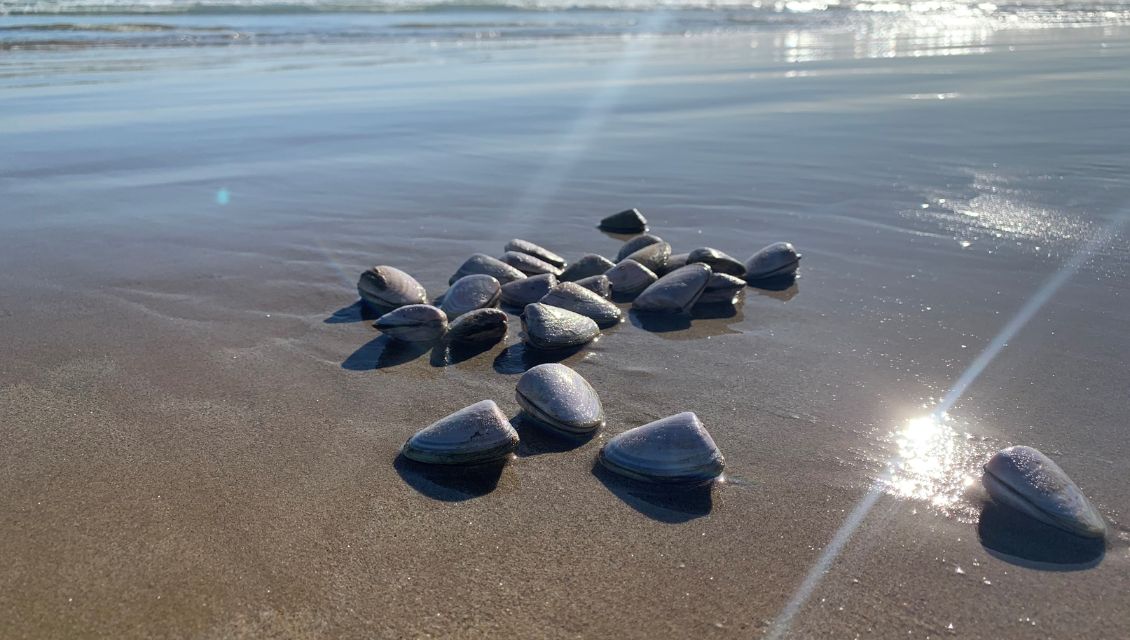
Seafood-loving South Australians will be doing the pipi shuffle from 1 November as the annual season for collecting the popular shellfish opens.
Equally prized as a tasty cooking ingredient and as an excellent fishing bait, pipis can be harvested around the state but are most commonly taken between Goolwa and the Murray Mouth.
One of the best ways to find pipis, also called Goolwa cockles, is to stand in the wet sand and do the twist until your toes strike gold - the famed pipi shuffle.
And in good news for pipi fanciers the bag limit has been boosted, from 300 pipis per person to 330 (taken east of 136°E, near Louth Bay).
The possession limit has also been increased from 1200 to 1320. There are no changes to size limits, which remains 3.5cm across widest part of shell.
Pipis, or kuti, as they are known in the local Ngarrindjeri language have been harvested by First Nations people in South Australia for thousands of years.
Pipis have also traditionally been collected by recreational fishers to use as bait and in more recent times they have become increasingly popular as a headline feature in seafood recipes.
Following a proposal brought forward by RecFish SA earlier this year, the South Australian Research and Development Institute advised that a 10 per cent bag limit increase was acceptable in sustainability of the Pipi stock.
RecFish SA Executive Officer Asher Dezsery said pipi collection was “hugely important to the recreational fishing community” and that RecFish SA was pleased to be able to work alongside government and agencies to ensure the resource was well managed throughout the state.
“Whether for cooking meals, or use as bait for other species, Pipis are a recreational staple, establishing a fun, accessible and economical introduction to self-harvested seafood from a young age,” Mr Dezsery said.
For more information on recreational fishing in South Australia click here.