

It's National Science Week, a celebration encouraging interest and participation in all things science and technology.
To mark the occasion we spoke with Sam Gaylard, Principal Scientific Officer (Marine) within the Environment Protection Authority Water Science Branch, just one of the scientists whose work is contributing to a more positive outlook for the future of our environment.
What sparked your interest in science, and how did it lead you to your current role at the EPA?
It wasn’t always a clear path for me. Like most kids finishing high school, I didn’t have a strong sense of direction, but I enjoyed biology and felt like I understood it.
That interest led me to a course called Environmental Toxicology - a fascinating mix of biology and chemistry that turned out to be really important. At the same time, I’ve always loved the beach and water sports, which sparked a lifelong passion for the ocean.
Those two interests, science and the sea, came together in a really natural way.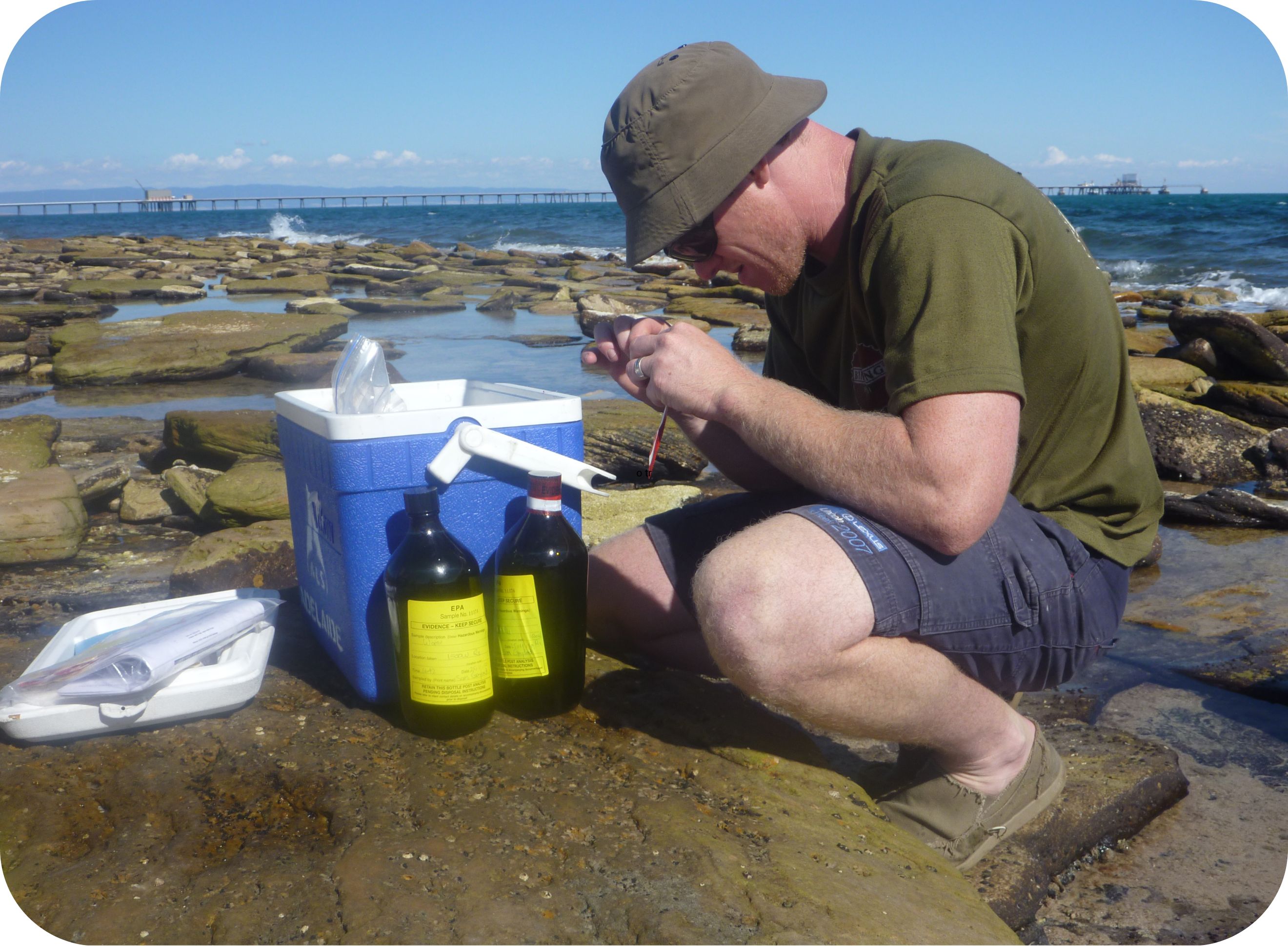
My background in toxicology has been especially valuable at the EPA, where we regulate pollution and need to understand the effects of contaminants at all levels, from subcellular impacts to entire ecosystems. It’s not pure biology or pure ecology; it sits at the intersection of multiple disciplines.
I started at the EPA as a graduate in a compliance role, focusing on marinas and slipways. As the Water Science area developed, I transitioned into a marine science role, reviewing water chemistry data from our large monitoring program.
Fast forward 20 years, and the demand for high-quality marine science advice has only grown, as has our understanding of the ocean’s value and the pressures we place on it.
Today, I lead a team of four scientists who provide expert advice on major developments like desalination plants, ports, wastewater treatment, and other discharges into the marine environment. We also run a large monitoring program to track the condition of our oceans, because without understanding the pressures, we can’t know whether our regulations are effective.
What is the most exciting part of your job, and why do you think it matters for the future of our environment?
In the early days it was going scuba diving and seeing all parts of our beautiful coastline. Now it's being able to develop and utilise monitoring to identify an issue and manage our regulation within the organisation to drive change.
So over time we can see improvement in the condition of the environment, including the return of seagrass along the metropolitan coast and continue to have beautiful coastlines to enjoy.
If you could give one piece of advice to someone thinking about pursuing a career in environmental science or policy, what would it be?
Science is a way of thinking, it's not about knowing everything. It's about knowing how to logically understand processes, measure and isolate what is driving them in a robust way.
This requires being inquisitive, persistent, patient and being able to say I don’t know that, but I know how to find out. Work hard to understand the fundamental principles (especially statistics) and the rest will fall into place.
If you could tell a young person one cool thing about working in science that they might not know, what would it be?
Scientists will be the ones behind the scenes that fix the world's problems…
This article was prepared by the EPA (external site) (external site) and has been reproduced here with permission.
MORE STORIES LIKE THIS