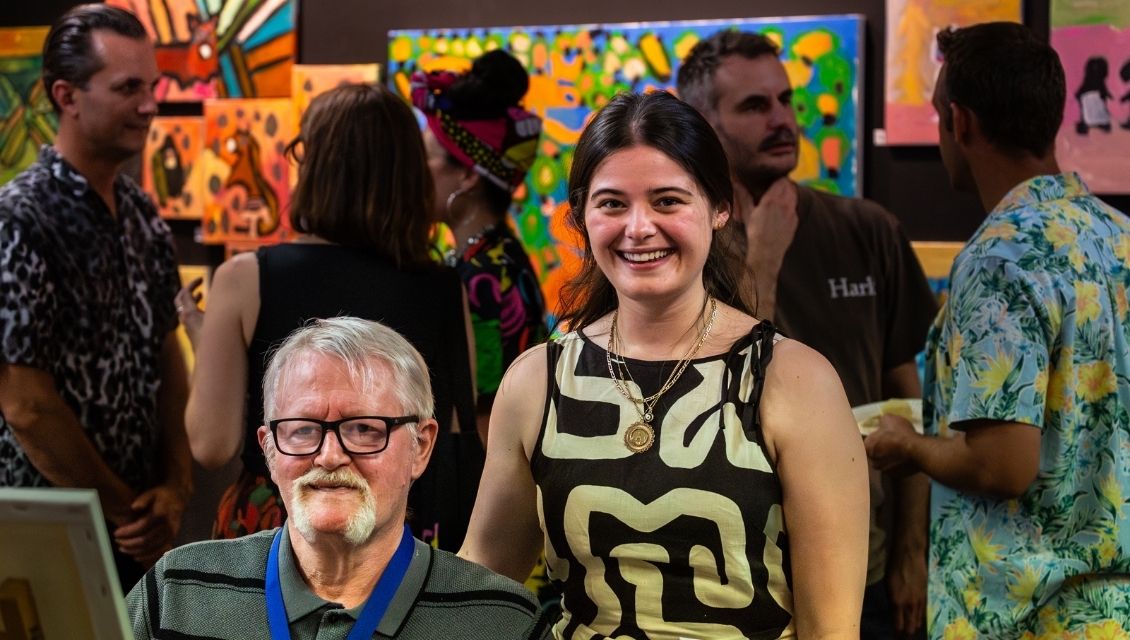
Tutti Arts is a hive of activity.
Across the Brighton campus of this multi-arts organisation that brings together learning disabled and neurodivergent South Australians, people are creating.
In an upstairs visual arts studio, artists are busy putting paint to canvas. Down the hall choir members are rehearsing their parts for a new musical piece.
In the courtyard young actors are chatting over morning tea, while The Beats Crew fills another studio with electronic music.
Each week more than 240 learning disabled and neurodivergent artists work across the fields of visual art, acting, music, screen, dance and digital. Tutti Arts has three locations – Brighton, Port Adelaide and the Barossa Valley.
Tutti’s vision is that learning disabled and neurodivergent people seize their rightful place at the centre of arts and culture. It aims to do this by shining a light on the astonishing work of the artists who practice there.
And some of those people are being supported to achieve their full potential as artists thanks to the Richard Llewellyn Deaf and Disability Grants. The grants are an incredible legacy from a passionate South Australian supporter of the arts and advocate for people with disability.
Richard acquired severe disability when he was 20 years old. He approached his new way of life as an adventure, beginning a series of small businesses, including running Llewellyn Galleries, in Dulwich and North Adelaide, which promoted local artists.
In the late 1970s, he formed a self-help group of people with disability in Adelaide and went on to serve on many national and State bodies, advocating for new policies, infrastructure and services to improve people’s lives.
He was the Disability Adviser to the Premier of South Australia for seven years and later worked as a disability access consultant.
Each year Richard Llewellyn Deaf and Disability Grants are awarded across four categories – professional development, individual projects, organisation and group projects, and access – helping to fulfill the artistic visions of South Australian artists.
Artists like painter Jeffrey Brown who used Richard Llewellyn Deaf and Disability Grant money to stage his first solo exhibition, heARTwork By Jeffery Brown.
When We Are.SA visited Tutti, Jeffrey was hard at work on one of his vibrant paintings. Many of his works feature fantastically colourful anim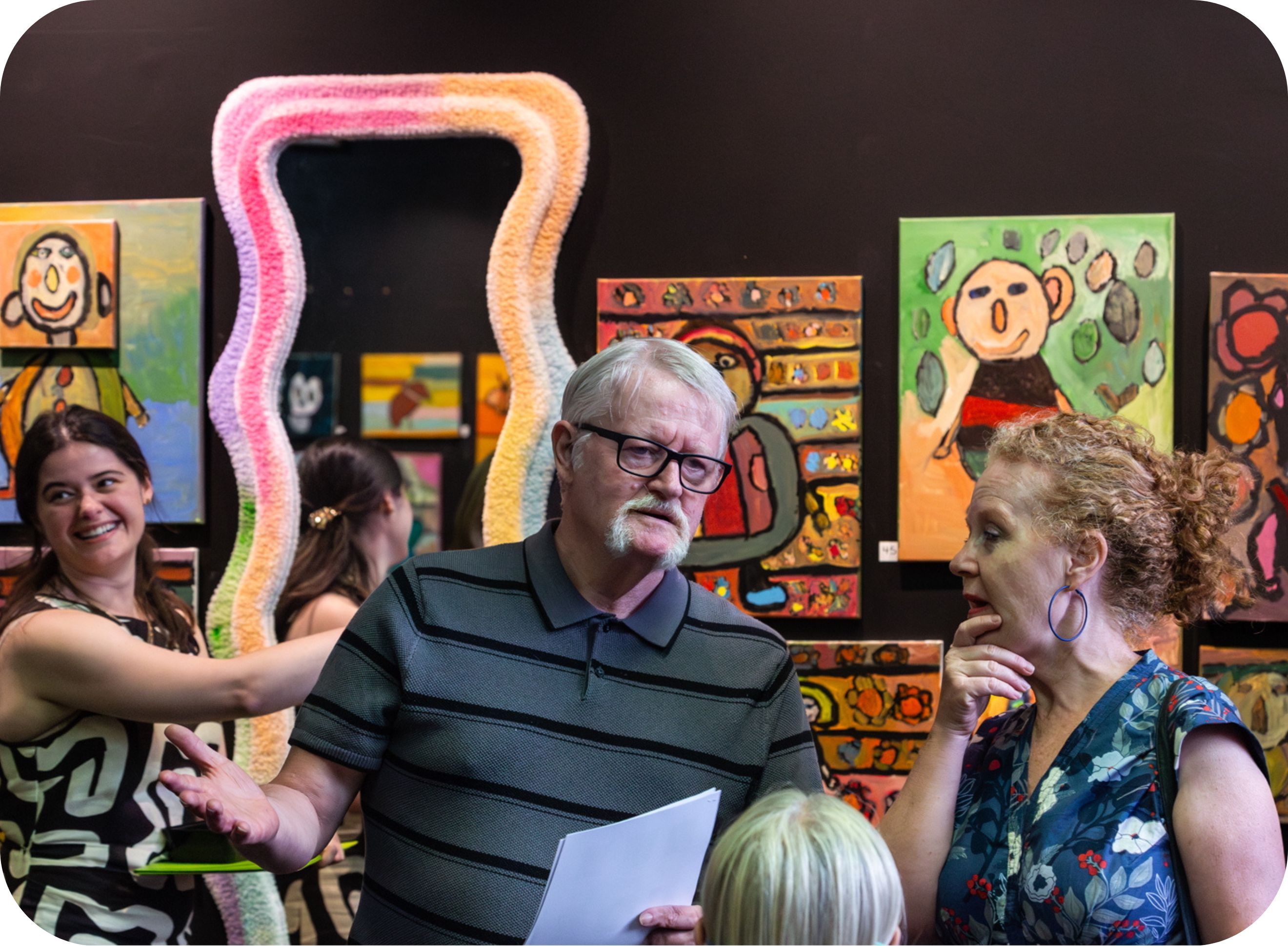 als and characters.
"I was big fella when I started doing my art," Jeffrey, who began attending Tutti as an older adult, said.
"When I arrived here, I didn’t know what I wanted to do.
"I started painting and I liked it. I’m very quick at it – I just start painting and they come out good."
Jeffrey is currently working on a large and still untitled multi-media piece featuring cut out montages of some of his favourite animals.
"When I’ve finished this I’m going to do another one with sea creatures," he said.
"Having my own exhibition was really good – it made me happy."
Tutti’s all-female learning-disabled singing group The Sisters of Invention also received a Richard Llewellyn Deaf and Disability Grant in 2025, using the $25,000 in funding to help write and record their third album.
The group (pictured) has performed across the nation, including sold-out shows at the Perth International Cabaret Festival, and received a South Australian Music Award in 2024 for Community Achievement.
Group member Aimee Crathern said a career highlight for The Sisters of Invention was perfo rming for a packed stadium at the closing ceremony of the Special Olympics National Games in 2018.
"That was an amazing experience," Aimee said.
Tutti’s Arts Manager Jane Gronow said the Richard Llewellyn Deaf and Disability Grants had been "extremely important" to Tutti Arts over the years.
"The support for Tutti’s disability-led collectives and individual artists has been absolutely vital – to achieve their goals and ambitions," Jane said.
She said that projects like the Sit Down Shutup and Watch Screen Festival – which showcased the work of learning disabled and neurodivergent screenmakers – likely wouldn’t exist without Richard Llewellyn funding.
Jane said the funding "gives Deaf and disabled artists legitimacy for their work and practice. It makes disability arts projects more viable and visible!".
An example was a cultural exchange residency between South Korea and South Australia. Project funding supported visual artist Lewis Constantine to travel to Seoul.
And her advice for other organisations considering applying for Richard Llewellyn Deaf and Disability Grants?
"If you’re going to do it, do it well," Jane said.
"Get advice from people who have applied before, talk to your peers, talk to Access2Arts – they have an amazing support network.
"Make sure your project concept is clear and that you have evidence of your creative process.
"And no idea is a bad one. Richard Llewellyn Deaf and Disability Grants are really open to different kinds of art forms that don’t sit in the usual silos. And just … have a go!"
Submissions for Richard Llewellyn Disability Grants close 11 May 2026. For more information visit the CreateSA website.