
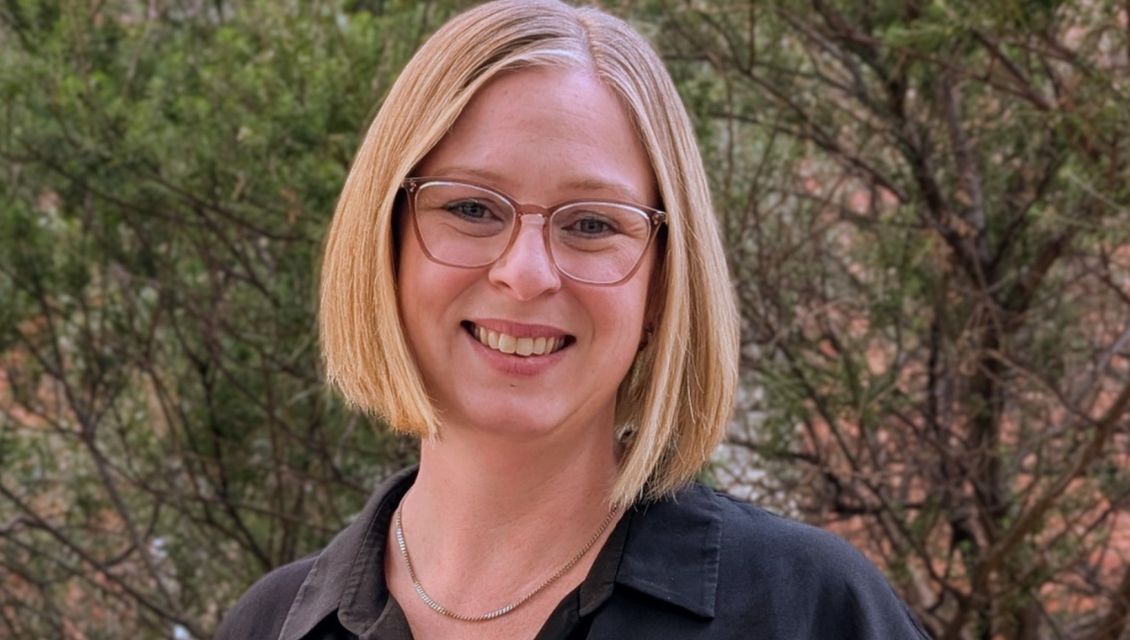
Jodie Johannsen was 36 when she was diagnosed as Autistic.
Suddenly, she says, her "entire life made sense".
"A wonderful quote I once heard was that life as (an undiagnosed) Autistic person was like playing a video game on hard mode and everyone else has the cheat codes," Jodie, a Senior Project Officer with the Office for Autism, says.
Growing up in regional Victoria, Jodie says that she learned to hide her differences in an effort to fit in with the people around her at school or work, a process known as "masking".
"So it’s likely that I would not have been diagnosed as a child because I was so high masking," she says.
"I can play a neuro-normative human quite well when I need to.
"But also the criteria was quite different back then, and there was gender bias in how things were assessed as well (boys were more likely to be diagnosed as Autistic than girls), so it's likely I would not have got a diagnosis even if we’d sought one."
Jodie, who now has a Masters Degree, left school before finishing Year 12, says she was a student with very strong political views that often saw her on the outside of friend groups in high school.
"I was very outspoken about human rights and other social issues, so as a teenager I irritated a lot of people by having opinions that are probably beyond my age," she says.
"I think this often came across as lecturing. I can understand why I was not a popular teenager."
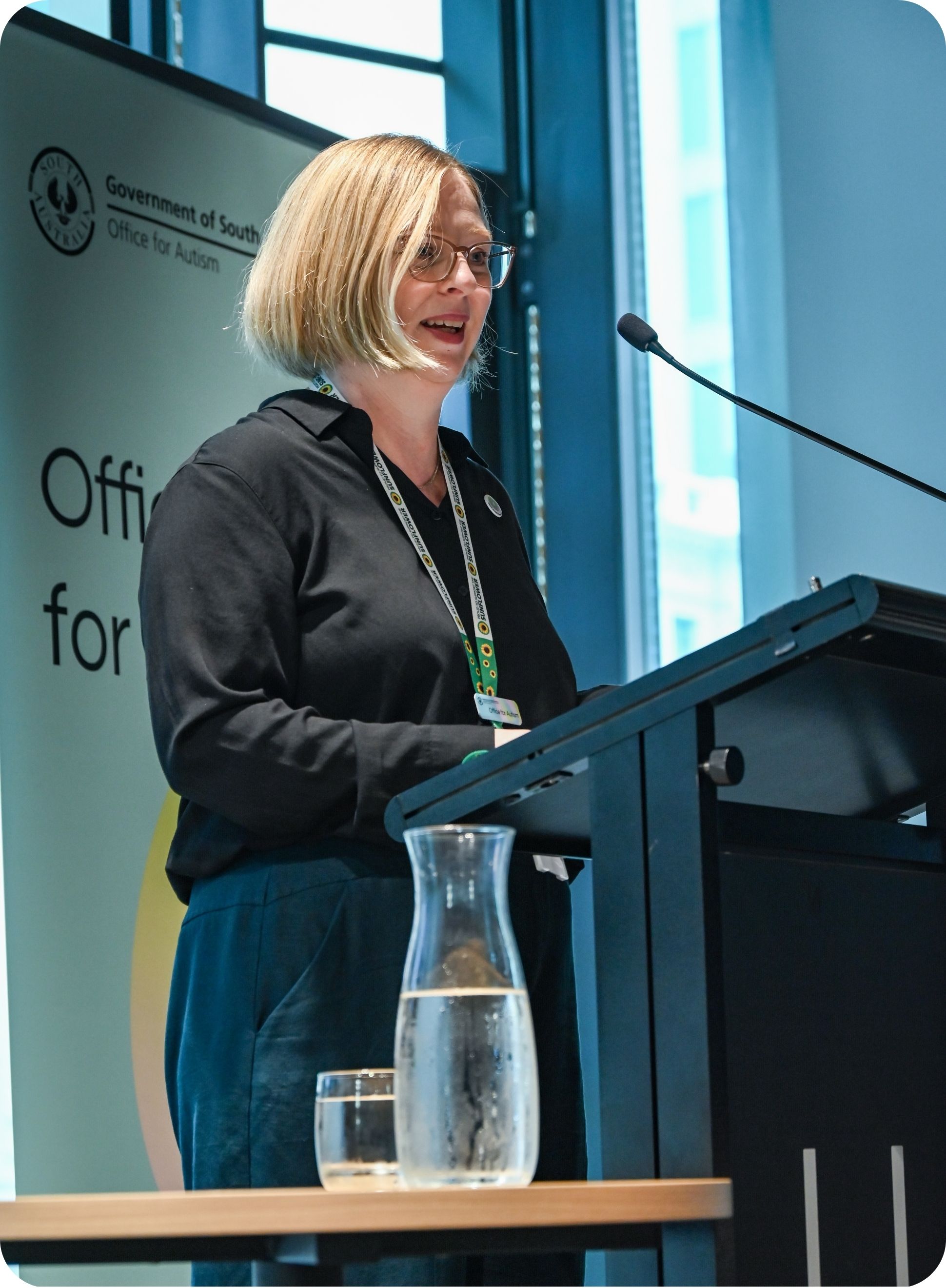
Jodie can laugh at the memories now, but she says at the time not fitting in could be a difficult path to walk.
Things didn’t improve for her in the workforce, where she says her different ways of working were often dismissed as inattentive.
"I remember not being allowed to use headphones in the office because people assumed that I wasn't concentrating," Jodie says.
"Then there were times when I’d be in the office suffering light sensitivity or noise sensitivity or I had a migraine and had to endure constant untrue jokes about me having a hangover. It was just so derogatory."
Jodie says she also struggled to maintain lifelong friendships, and it wasn’t until she was in her thirties and found herself socialising with a group of neurodivergent people that things began to click.
And it was this group of friends that encouraged her to explore the possibility that she too could be Autistic.
"They were like, 'so, when are you getting a diagnosis?' And I was like, 'I don’t know that I am … am I?'"
However, that’s exactly what she did, confirming what she had long suspected.
"I lost someone very close to me when I was 33," Jodie says.
"I was a working mom and then you put grief on top of that, and I just put up that mask again.
"I functioned for quite a while but eventually I just couldn’t keep up with everyday life.
"And that was when I started to think, 'this might be something more'. This isn't depression, this isn't anxiety, this is my brain working in a different way."
Jodie says she remembers bursting into tears of relief when, at the end of her assessment, she heard her doctor say, "I think we might be working with an autistic brain".
Now, Jodie says she has the privilege of working in a role where her autism is not only understood, it’s celebrated.
"That’s a new thing for me," she says.
"It feels very nice."
Jodie’s role with the Office for Autism sees her providing training activities and resources in support of the delivery of the SA Autism Inclusion Charter (external site) (external site).
The job sees her working with Government of South Australia employees to provide an introduction to autism in the workplace, working through topics like definition, myths and facts, autistic strengths and strategies for inclusion.
"Every Autistic person is very unique and brings a unique skill set with them to the workplace," Jodie says.
"I think we can celebrate those skills while recognising that someone might need a bit of help in certain areas but can thrive when they are supported.
"When people are supported, it brings out the best in them."
And, Jodie says, at the end of the day a more inclusionary workplace where people are given every chance to shine benefits everyone, not just neurodivergent people.
"You never know what somebody is going through," she says
"And I often say that even if one person in every training session that I deliver comes away with some extra knowledge and are then in a situation where they're able to be a little more understanding or a little extra helpful then I've done my job for the day."
For more information on autism and autism awareness training visit the Office for Autism website