Damien Shen’s artistic practice is informed by two strong and ancient cultures.
On his mother’s side he is Kaurna and Ngarrindjeri with a connection to country stretching back countless generations.
On his father’s side his heritage is Chinese, the son of man born in Hong Kong in the 1950s sent to Adelaide in the 1960s for the chance of a better life.
Through his decade-long arts practice, the Director Aboriginal and Regional Public Health in the Department of Health and Wellbeing brings these worlds together, exploring what it means to, as he puts it, exist in two worlds.
But there is another, more modern, influence on Shen’s recent work – childhood memories of Saturday morning cartoons.
"Some of my favourite childhood memories – which I created my last exhibition (Entombed in Joy) about – was Saturday mornings as a child, sitting in front of the TV, eating a bowl of Froot Loops and drawing cartoons," he laughs.
"It’s a distant memory now, but it feels like that’s all I did as a kid!"
Entombed in Joy, which saw Shen painting iconic 1980s characters like He-Man, Jabberjaw and Astro Boy on backgrounds shaped like Kaurna and Ngarrindjeri shields in a style that might seem more at home in a skate shop than a high-end gallery, was not only an exploration of his ‘happy place’ as a child – it was also his first creative offering since that period of disruption during the COVID-19 pandemic.
"I had a number of shows close prematurely as the pandemic started," Shen says.
"And I thought, 'well, as an artist, this is fairly demoralising', because you do put a lot of time and energy into the studio creating new work and you want to share this with the world.
"So what do you do? Do I keep working against it, or do I just put my creative practice on ice and wait for it all to pass? I chose the latter, thinking I'll just work my day job, not stress about it, and once the pandemic's over then I'll emerge."
And Shen’s "day job" at the time was more than enough to keep him busy after he found himself mobilised into an important and fast-paced role within the health department during the coronavirus pandemic.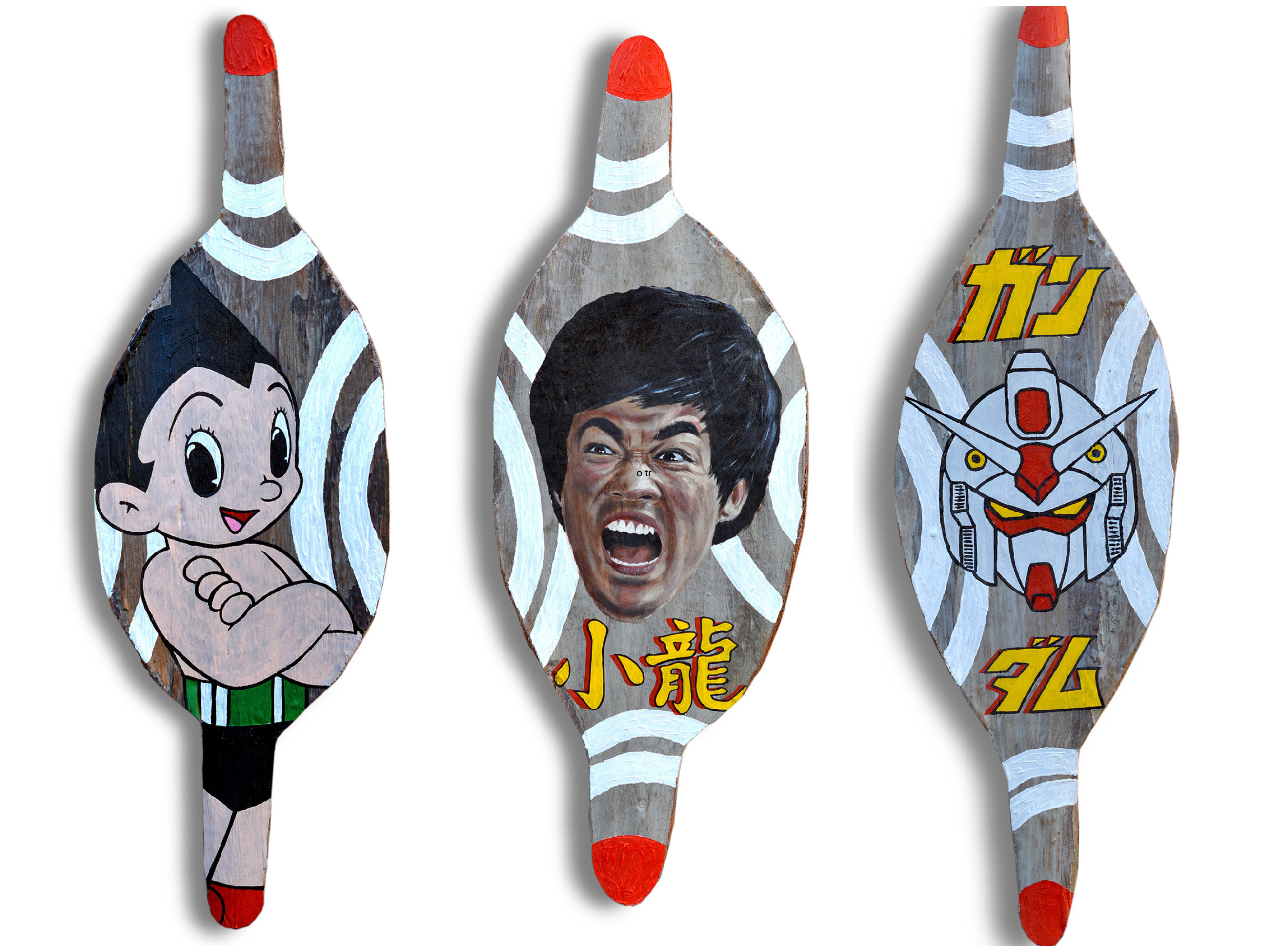
But you can’t keep an artist away from their means of expression forever, and – with some nudging from his representative gallery in Melbourne – Entombed in Joy (pictured) was born.
"The seed was planted after I'd had a fairly random conversation with a curator at an exhibition opening about the concept of 'leaning into joy' and I thought, 'well that's exactly what I need to do to get back into the studio after the pandemic was over'.
"That feeling of just being a child – all the innocence and joy that you experience in the moment – it’s something you can never truly feel as an adult.
"There's too many other pressures in life. You can search for it, but you never quite get there, because you've got all this other stuff wrapped around you, layers and layers of responsibility that comes with adulthood.
"I feel like the joy is stuck in a crypt somewhere that you can't quite get back to. That’s what I wanted to capture and feel while making this body of work."
Shen says he sees each artistic period, each exhibition, as being like chapters in a book, and one chapter that let him deeply explore his own roots and family connections was a body of work he called On the Fabric of the Ngarrindjeri Body.
Shen says it was an important period for him as it allowed him the time and space to connect more closely with his Ngarrindjeri roots and, most importantly, with Ngarrindjeri and Kaurna elder Major Sumner, the man most people know as Uncle Moogy.
In Shen’s case, however, he really is Uncle Moogy. "Back when my arts practice was starting to develop, I called him and said, 'Uncle, I’ve got this idea – do you reckon you could do this with me?" he says.
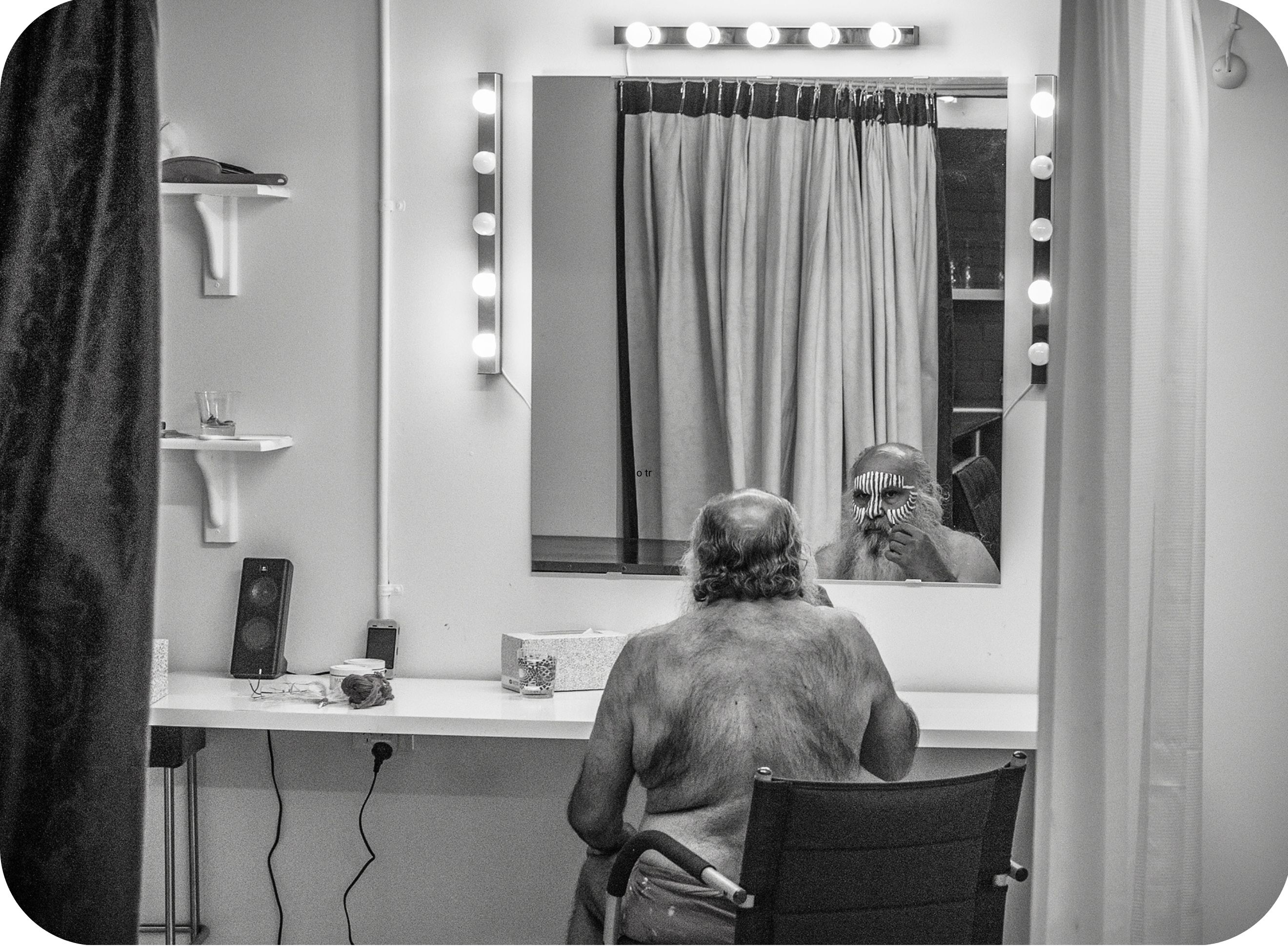
His idea, through a series of photographs, was to document a moment in time between a significant Aboriginal elder sharing cultural knowledge with his nephew, but to co-opt the style of the 19th Century ethnographic photography which, on one hand, captured a literal snapshot of First Nations culture but also objectified their subjects.
"I created this work with an acclaimed advertising photographer friend of mine, Richard Lyons. We had worked together a lot previously while I was coordinating important anti-smoking campaigns in a previous health agency role," Shen says.
"I wanted to visually describe the idea of how Aboriginal people were represented in early times to try to give a sense of the 'anthropological and ethnographic gaze'.
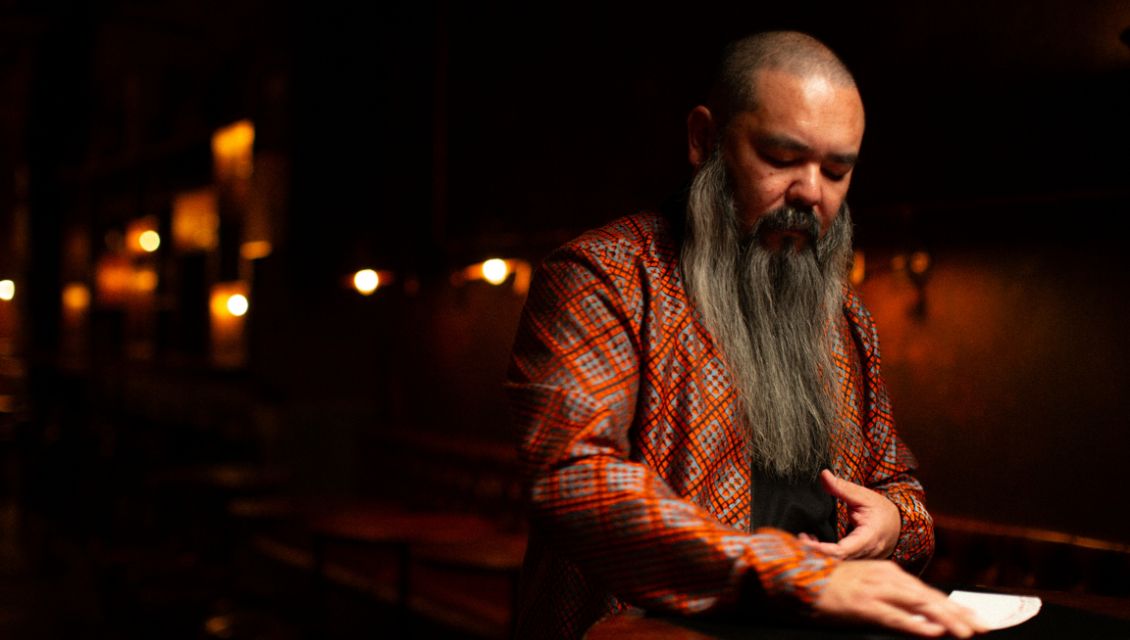
"It's this juxtaposition between something that looks old and historical, to the contemporary journey of this incredible man (pictured below) who's my uncle, who every single day of his life is out there sharing and teaching our culture."
Shen says his father was sent, as a boy, to boarding school at Sacred Heart by his parents who were trying to shield their family from the Chinese Communist Revolution.
"My grandparents were from mainland China, and they had to flee to Hong Kong during the revolution in the late 1940s," he says.
"Dad was born in Hong Kong, but my grandparents were worried and they decided to get the kids out of there. Dad got sent to Australia and his sister got sent to America."
Shen says the Chinese side of the family was still a strong influence on him growing up.
"My Chinese grandfather was a really amazing influence on me, and he played a significant role in shaping my view of the world, with his warmth, generosity and entrepreneurial spirit," he says.
"A lot of people know my sister Dana – she’s very successful in what she does, and I think a special part of this is that she embodies a lot of what my grandfather was.
"But then as a young person I spent a lot of time with Uncle Moogy and family on my mum's side, too. I’d be at Uncle Moogy’s house and there’d always be five or six cousins there, mattress on the floor, video games out, laughing, playing and having so much fun.
"I walked in two worlds, and I was very fortunate to have been exposed to these two strong cultures."
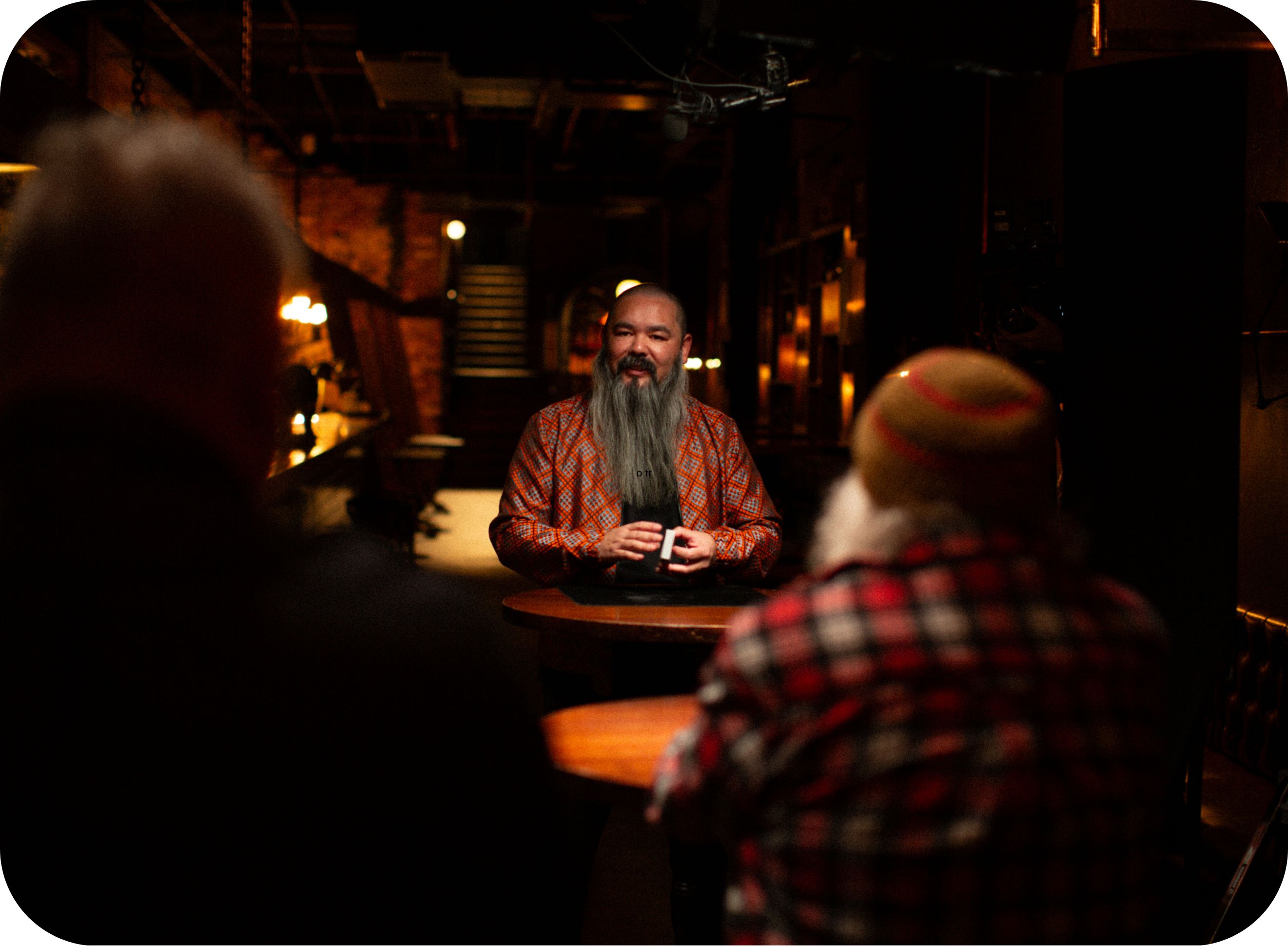
Shen’s next "chapter" is an upcoming exhibition in September at the Adelaide Central School of Art where he’ll explore another one of his childhood loves – close-up magic.
"I’m flipping the narrative and visual representation on how mainstream magic was portrayed to audiences back in the 80s and 90s," he says.
"Much like drawing and cartoons on a Saturday morning, I loved close-up and stage magic in the same way that I could get absorbed in it and for a moment it would become a wonderful reality.
"I dedicated 12 months to perfecting the sleight of hand and storytelling elements for a moving image work, with a cultural twist, that will be at the centre of the exhibition. I’ve been working on this with award-winning cinematographer, Johanis Lyons-Reid.
"It’s scary to make the kind of work that pushes you completely outside of your comfort zone, making you feel vulnerable. But I guess artists must try push boundaries from time to time.
"A great artist I know from Melbourne once shared his philosophy of art with me.
"He said that making good art requires the head, the heart and the hands.
"I want to make work that is well considered, shows human experience and emotion, and is technically well produced. A lot of great art captures these elements.
"So yeah, it's important, regardless of what you do as a job, that you have you find a way to do whatever you can, at whatever scale, to feel human, and lean into joy."
You can see Damien Shen's latest work at the Adelaide Central Gallery, 7 Mulberry Rd, Glenside, from 23 September to 31 October.