When Ceryce Stone began a hairdressing apprenticeship at the age of 15 she could never have known that she was developing skills that would serve her well in her career in youth justice.
"During my time as a hairdresser I learned how to connect with people, how to listen, how to build trust," the Senior Programs Practitioner says.
"And these things are just as important in youth justice today. That time laid the foundation for where I am today.
"People come to a salon, they sit in front of you in a chair, and they share their lives with you. They talk about their struggles, they cry, they tell you stories. There’s a lot more to the job than styling hair. You form a deeper connection with people when they sit there for hours on end. It's such a beautiful space."
Ceryce is the first to admit that her career journey has been an unorthodox one.
"Growing up I faced my own challenges," she says.
"I was disengaged from school quite early and was surrounding myself with people who weren't always making the best choices.
"I had split parents and lacked, I guess, a sense of belonging - but I knew that if I left school I needed to do something.
"So at 15 I started a school-based apprenticeship in hairdressing and when I was offered that full time, I left school and then pursued that.
"I was a qualified hairdresser at the age of 19, which is actually a pretty impressive achievement if I reflect on it. It's not something that most people achieve at such a young age."
A change in career
Ceryce says she knew that she wanted to eventually pursue a career that would harness her passion for helping others, but didn’t know exactly what that would be at the time.
She enrolled to study a Diploma of Youth Justice, and in 2015 began a placement with the Australian Red Cross.
Ceryce stayed with the organisation after her placement, firstly in a volunteer capacity and later as an employee working across a variety of roles.
"That’s where my career really started," she says.
Now, as a Senior Practitioner, Youth Justice at Kurlana Tapa Youth Justice Centre, Ceryce says she finds a deep fulfillment in her work with young people.
Kurlana Tapa is a safe and supportive place where young people in custody are given the chance to grow, learn and plan for a brighter future.
The Centre is home to young people from a wide range of backgrounds and cultures.
Every resident is supported through regular check-ins to make sure their needs are met and their progress is recognised.
A variety of programs are offered to build confidence, strengthen cultural identity and connections, improve mental health and wellbeing, and support education, relationships, and independent living skills.
A wide range of challenges
Ceryce laughs when asked to describe a typical day.
"No two days here are the same," she says.
"But that’s what keeps it exciting. It’s a job that offers flexibility and creativity and I love that. The fact that the next day is not predictable is exciting for me."
However, some things remain consistent no matter what the day presents, and for Ceryce one of those unwavering consistencies is the belief that every young person deserves an opportunity to turn their life around.
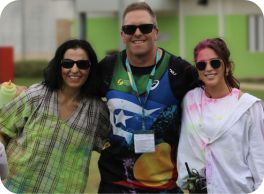 "I truly believe in second chances," she says.
"Most young people are capable of turning their lives around and I guess it comes down to whether they're supported in the right way and whether they have positive role models.
"And I think that lived experience is so valuable and so important in youth justice.
"If they can see that you can relate to some of the pressures and the challenges that they have faced and that you can – without taking away from or devaluing their experience – see things from their point of view and guide them then I think that’s really valuable.
"I think that the pro-social modelling is such an important model in youth justice – if you're able to show them the right way of responding and regulating and advocating for themselves I think that will go so far in life."
Ceryce is effusive in her praise for her fellow team members at Kurlana Tapa Youth Justice Centre and says she believes the outcomes for young people in the youth justice system are greatly improved thanks to the devotion and dedication displayed by her colleagues.
Working with remote communities
Ceryce says there have been many highlights so far in her 10-year youth justice career, but one that sticks with her is the time she has spent in the remote APY Lands in the state’s north-west.
Based in the communities of Indulkana and Amata, Ceryce contributed to a petty crime prevention program that supported young people to develop essential life skills. Her role extended to mentoring, promoting wellbeing, and encouraging pathways away from offending behaviours.

"Being welcomed into, and genuinely embraced by, these communities will sit with me forever," she says.
"Meeting these young people in remote communities and getting a better understanding of the barriers and the challenges that they face has really shaped my approach to the work that I do.
"I feel very privileged to have experienced that in my career."
And her advice for young people thinking of pursuing a career in youth justice?
"I would strongly encourage them to explore it," Ceryce says.
"Working in youth justice offers the opportunity to make a real difference in young people’s lives, to support them through challenges, and to contribute to meaningful change in the community.
"It can be demanding, but it’s also incredibly rewarding and provides invaluable experience for both personal and professional growth."
DHS always continues to recruit new staff in youth justice. For more info, visit the website (external site) (external site).