Dr Sam Benveniste thrives under pressure.
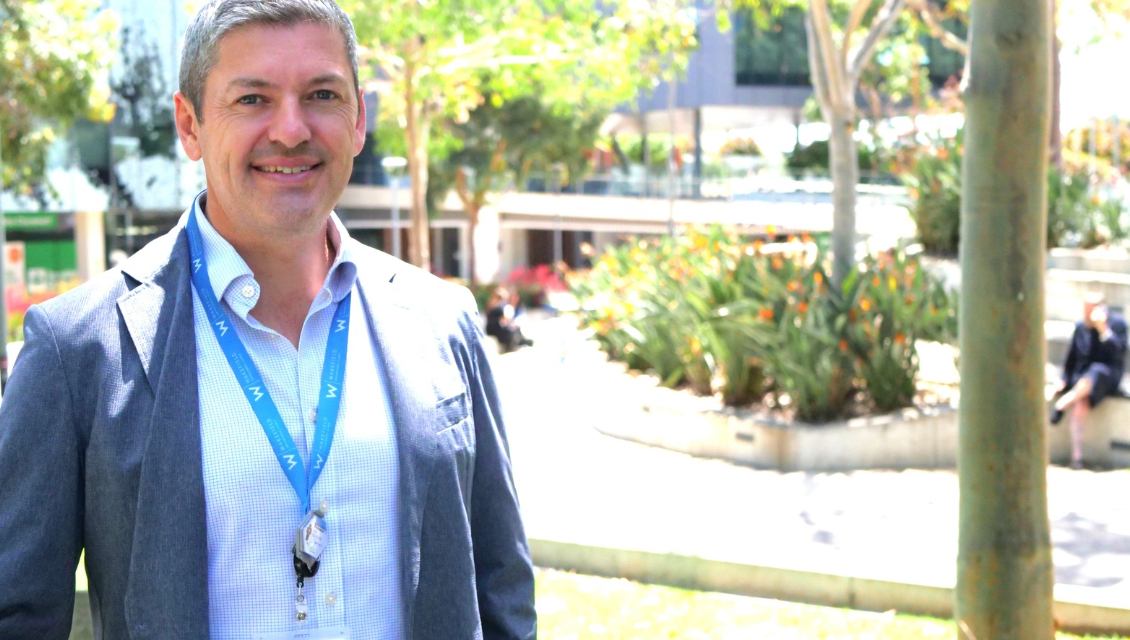
As Head of Orthopaedics and Trauma at the Royal Adelaide Hospital, Dr Benveniste is making daily decisions with lifelong consequences for his patients.
Whether he’s replacing a joint ravaged by arthritis or repairing bones damaged by injury, the 44-year-old surgeon needs a cool head and a steady hand.
And this ability to stay calm in tense situations has been enhanced, he says, by time in a testing arena – the Army Reserve.
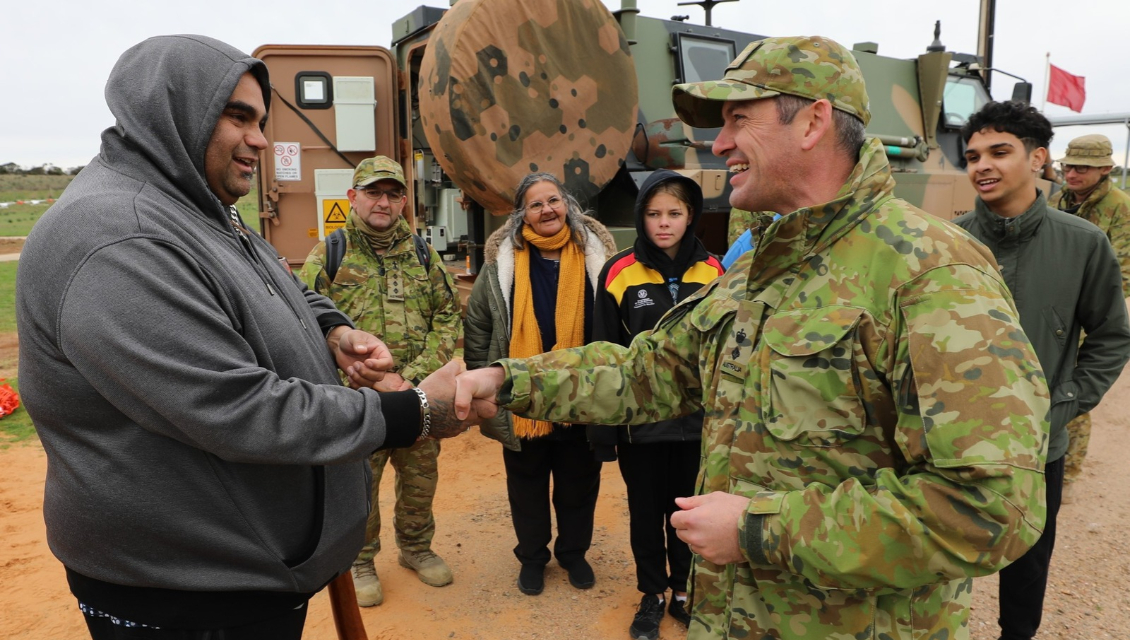
When he’s not at the RAH Dr Benveniste can often be found serving his country in his role as a Lieutenant Colonel in the Australian Army Reserve.
"The Army Reserve is a great way to challenge yourself, develop your skills and gain unique experiences,” Dr Benveniste says.
"It helps you grow as an individual while also being part of a team. People are at the heart of the Army, and you'll meet and work alongside an incredible range of individuals while building your own skills and abilities."
While he admits the two callings are quite different in some respects, he also says that there’s a lot he has learned from his more than two decades in the Reserve that he incorporates into his daily practice as a surgeon.
"I joined the Reserves in my second year of medical school," Dr Benveniste says.
"Rather than going into the medical stream, I went through general service officer training through the Adelaide Universities Regiment and then, at Duntroon, I graduated as a combat engineer.
"Both are very practical in nature. Combat engineering involves construction, solving problems, fixing things and occasionally blowing things up.
"Orthopaedics is similar. It's very results and detail-oriented. It's about making decisions and fixing something to achieve an outcome."
Dr Benveniste says there are also more theoretical skills he’s gained from his time in the Reserve, including leadership.
"I've actually given a couple of talks on this topic," he says.
“Decision-making is another a big one. Like military planning, surgery requires analysing information and making timely decisions to achieve an objective. You need to be able to adapt and change course when required.
"Managing stress and competing priorities is also an important skill. Resilience is something you build through training and experience, and understanding stress and how to manage it is a key part of both fields.
"And back on the practical side, surgery involves leading and managing a small, highly-specialised team. It's about helping everyone perform at their best to achieve the best outcome for the patient and that's something the Reserve has helped me develop too."
He says, conversely, there are plenty of skills he has learned in the operating theatre that have proven useful in the Reserve.
"Those lessons work both ways. Decision-making, analysis and leadership principles translate directly between the two environments," Dr Benveniste says.
“The leadership experience I've gained in the military has certainly supported my role as Head of Unit. Likewise, leadership in surgery has strengthened my military leadership.
"While the situations may be different, the principles are largely the same. It's about communicating effectively, articulating a mission or vision, and bringing people together to achieve an outcome."
After qualifying as a surgeon Dr Benveniste spent a year living in Canada and undertaking fellowship work.
While there, he signed up with the Canadian Army Reserve, giving him a unique insight into Reserve life in another country.
"I was the Officer Commanding of a Canadian Engineer Squadron, which was great," he says.
"It was really interesting to see how the Canadians do things, both in the Reserve and in the hospital.
"After that, I came back and started working at the Royal Adelaide Hospital and Wakefield Orthopaedic Clinic in the city.
"I've been here ever since. I took over as Head of Unit in 2024 and have led the department since then."
Dr Benveniste is among more than 1000 veterans employed across the South Australian public sector, including more than 130 active Reservists, whose expertise and operational experience enriches the capability of the public service.
For Dr Benveniste, Remembrance Day is a special time to reflect on all Australians who have given time to military service, particularly those who have paid the ultimate price in the name of freedom.
"I spent three years as Commanding Officer of the 10/27th Battalion, the South Australia Regiment," he says.
“Because of that role in particular, I often reflect on the people who served in the unit during the First and Second World Wars.
“You think about those who made the ultimate sacrifice, their legacy and about the history of the unit that exists today. That was something I reflected on a lot.
“The 10th Battalion was the centre battalion at Gallipoli on ANZAC Day, and the Regiment’s battle honours reflect generations of South Australian service, from the Boer War, Gallipoli and the Western Front, to Tobruk, Kokoda and the campaigns of the Second World War.
"A huge number of South Australians served across those conflicts, so that history sits right at the heart of our state."
Dr Benveniste says he has also lost friends who had served more recently, and November 11 was about pausing to remember their service.
"That’s it for me," he says.
"It's about remembering friends I've lost and reflecting on the history of the unit I was privileged to be part of."
For information on how you can honour our veterans on Remembrance Day visit the RSL of SA’s website (external site) (external site).