
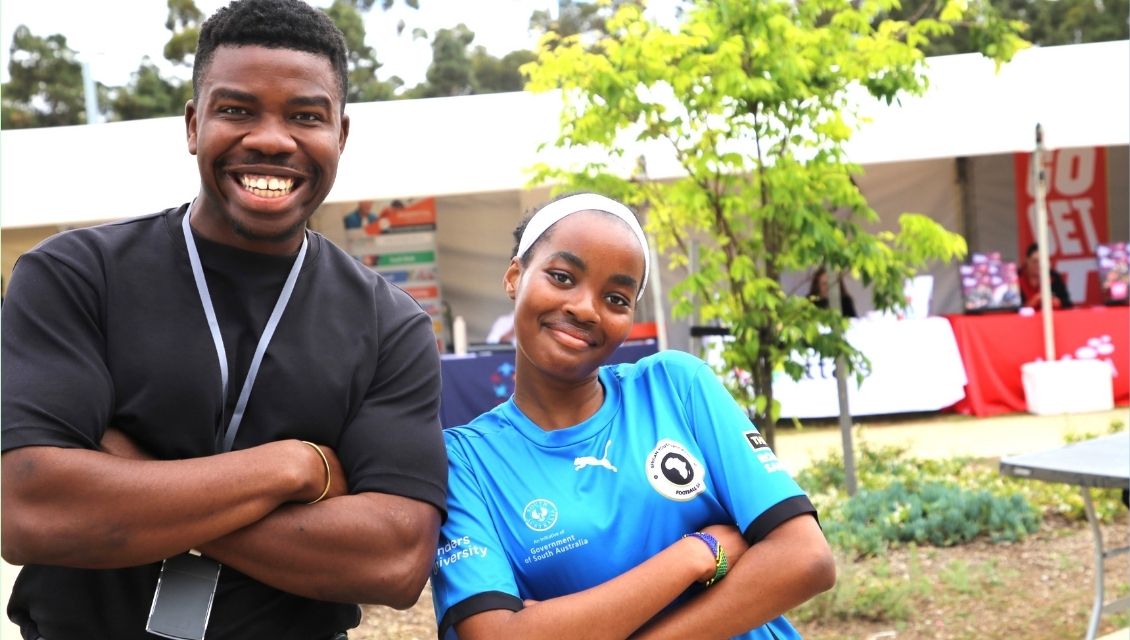
At ServiceFM Stadium in Gepps Cross, on a sunny Thursday morning, dozens of young people are engaged in multiple games of soccer.
It’s a riot of colour and noise, with the athletes playing hard, but with a sense of fun and camaraderie. Each goal draws huge cheers.
On the sidelines things are no less busy, with creative arts, DJing and basketball workshops alongside marquees offering career information and advice.
On one level the Empowering African Youth Program end-of-year carnival is an opportunity for young participants to put into action the skills they have learned over the past year – confidence, self-awareness, gratitude and leadership.
But more than that, the carnival is a celebration. A celebration of a year of hard work in a program that is driving real results for young South Australians of African heritage.
The Empowering African Youth Program began in January, targeting seven schools in the north of Adelaide that have a high population of students from diverse African backgrounds, many with English as an Additional Language or Dialect.
It aims to strengthen connections between young African South Australians and their education, through improved cultural education support and community sports programs.
A football program, delivered through Football South Australia, a basketball program in conjunction with the Eastside Rams Basketball Club and The Village program, which provides structured early intervention cultural support initiatives for African students during school hours, are cornerstones of the scheme.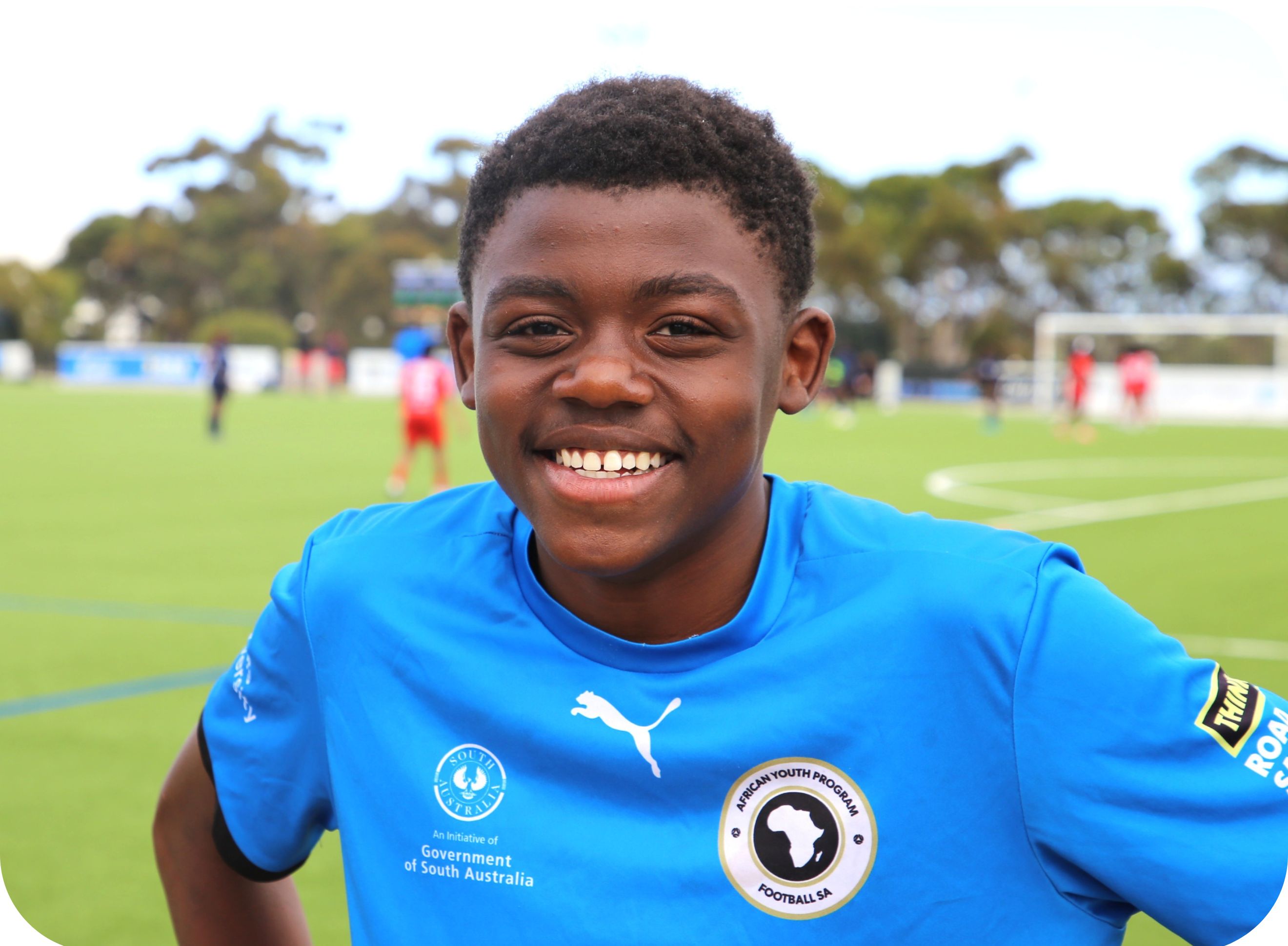
For Shabani Saidi, the Empowering African Youth program has helped him and his fellow participants to be more disciplined, both in schooling and in life.
"It’s a really good program and I definitely think they should continue it," Shabani, pictured, said.
"I’ve made a lot of new friends, and I think I’m just better at talking to people now."
Shabani, who would love to play football at the highest level for a European club, said that he enjoyed all elements of the Empowering African Youth program, but it was the football that he really loved.
"I would love to make it as a pro one day," he said.
"I don’t know if I can, but you have to keep trying."
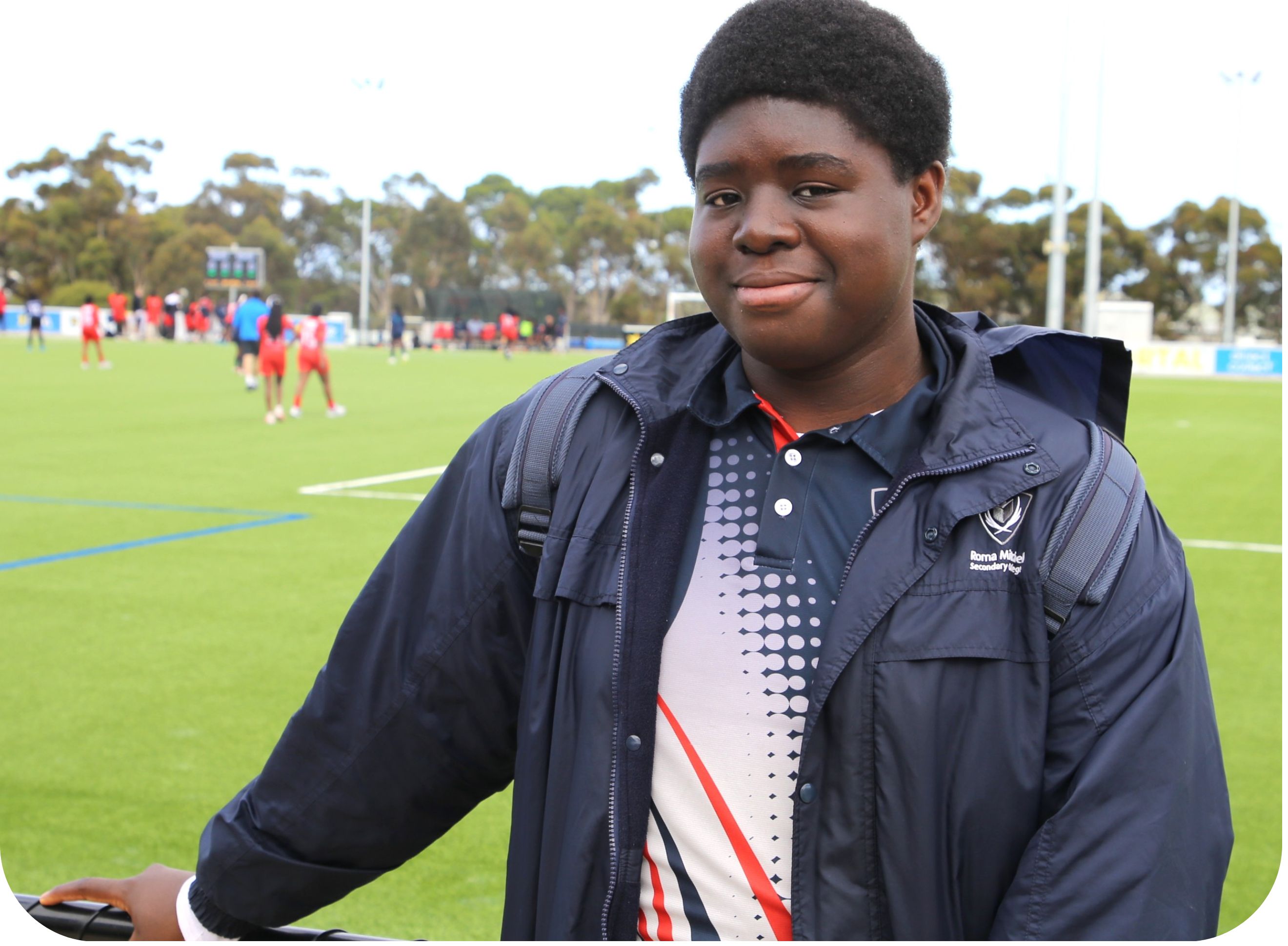
Laye Fofona, pictured, who prefers the creative arts to sport, said he would love to make a career in acting and that the program had helped him to become a more confident person.
"I also think it’s made me a better communicator, and I’ve made a lot of friends through the program," he said.
"This program brings people from all different African nationalities and cultures together so we can share our stories. It’s been great."
 Kentia Niyogushima, fresh from scoring a goal in her team’s three-one victory on the football pitch, said the Empowering African Youth program had taught her that it was "good to speak out, speak your mind and talk to people if you’re in need".
"My favourite part are the days like this when everyone comes together – including the staff – and has fun," Kentia, pictured at the top of the article, said.
"It really puts me in a good mood."
David Chikwuba, Executive Director of Mentoring Coaching and Counselling (MCC), said his organisation had been involved with the Empowering African Youth program since its inception.
Mr Chikwuba said he was "proud" to be able to play a role.
"The objective was always to create a safer space, a safer environment, for young people in schools, and specifically young African people," he said.
"We’re an emerging migrant group that gives a lot to the community through sports, through entertainment, and even t hrough education.
"But it’s a group that has been neglected and overrepresented in deficit parts of the data, whether that be child protection or youth justice.
"The way to combat that is to deal with this in schools and look at things through an early intervention and even pre-early intervention lens."
Mr Chikwuba said sports like football and basketball were vitally important to engage young people in the program but emphasised that sport was only part of a bigger picture.
"The missing link, I think, has always been the education and efforts to make young people feel empowered about their culture," he said.
"MCC has been working on the Village Program, which is based around the concept that it takes a village to raise a child.
"But for a child to feel part of the village they have to understand exactly what happens in the village. So, we’ve been working around themes about how we 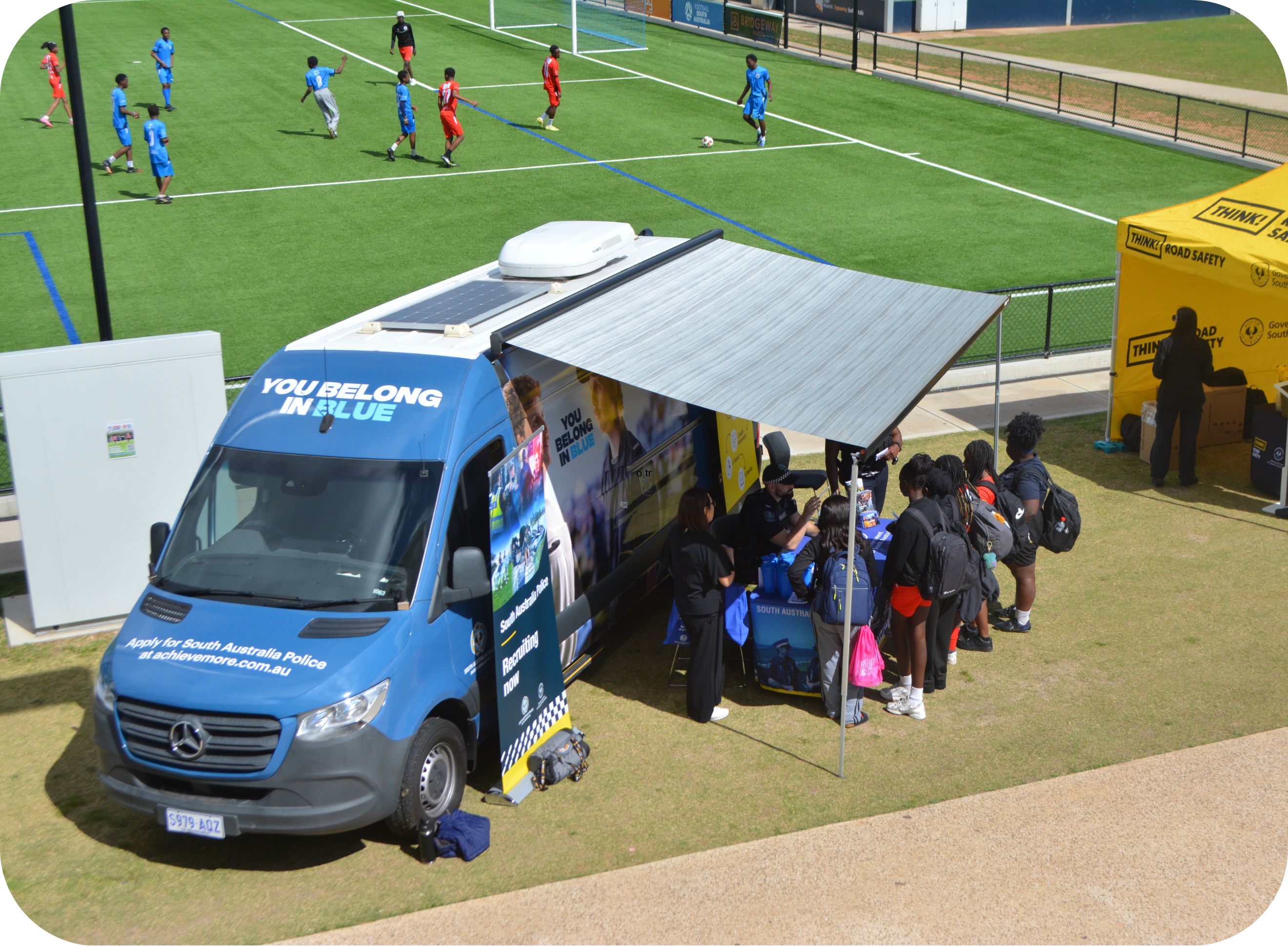 can live in Australian civil society safely and with our culture.
"It’s been very empowering for kids, and some of them have said that it’s been the first time they’ve felt like they could breathe at school."
Mr Chikwuba said that schools did a great job in addressing racism and bullying, but that wasn’t enough if the students didn’t feel comfortable and safe.
"That’s why this program has been really, really powerful,” he said.
"We can bring the best out of these kids when they feel safe. If they don’t feel safe, they can’t learn.
"If you imagine a kid, for example, who is black and wearing a hijab. They might be the only kid in that classroom who is a different colour, and they might be the only kid in a hijab – there’s a lot going on.”
"To come in and help them feel like they’re part of the bigger village is so important.”
"I’m very proud to be involved, and it’s just the start."
More information about the Empowering African Youth program can be found at the website.