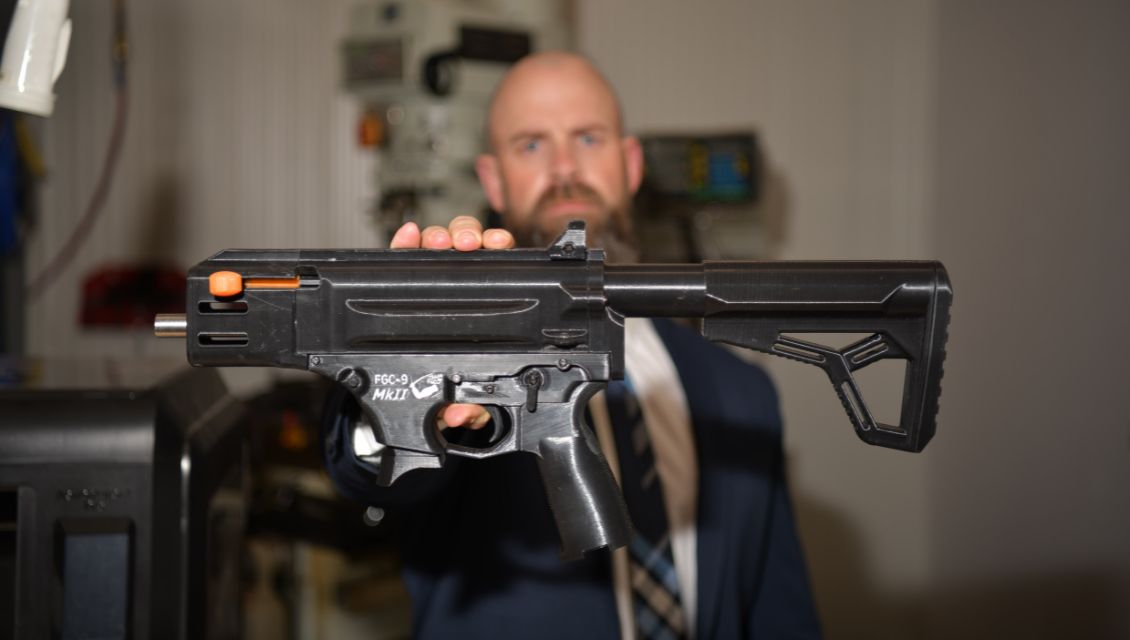
In 2013 American gun rights activist Cody Wilson designed the first three-dimensional (3D) printed handgun, which he christened ‘The Liberator’.
The designs for the weapon - made of 15 parts plastic and a nail for the firing pin - were posted online, heralding the beginning of an alarming trend, with the quality and range of 3D guns greatly improving and expanding over the ensuing 12 years.
3D privately made firearms (PMF) are considered a high priority threat for Australian law enforcement agencies. The weapons are cheap and easy to make, with designs having advanced rapidly in recent years.
"They are now considered to be an effective weapon of choice for illicit use – from backyard operators through to serious and organised crime groups," Officer in Charge of Firearms Branch, Detective Superintendent Lauren Leverington said.
"3D-printed firearms can be made almost or entirely of plastic and are in most cases completely untraceable. Emerging technologies present new challenges for law enforcement; however, we are constantly evolving to meet them head-on.
"These guns pose an unprecedented risk to public safety as they circumvent established regulations designed to limit access to firearms."
The rapid advancement of 3D printing technology has enabled individuals with the capability and intent to unlawfully manufacture firearms within the privacy of their own homes.
An entire firearm can be made using a 3D printer or electronic milling machine, by follo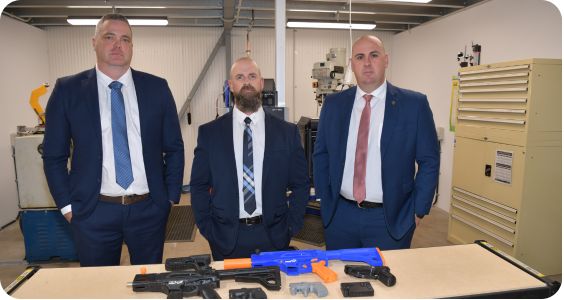 wing a Computer Aided Design (CAD) file, or blueprint that can be found online, similar to a dress pattern.
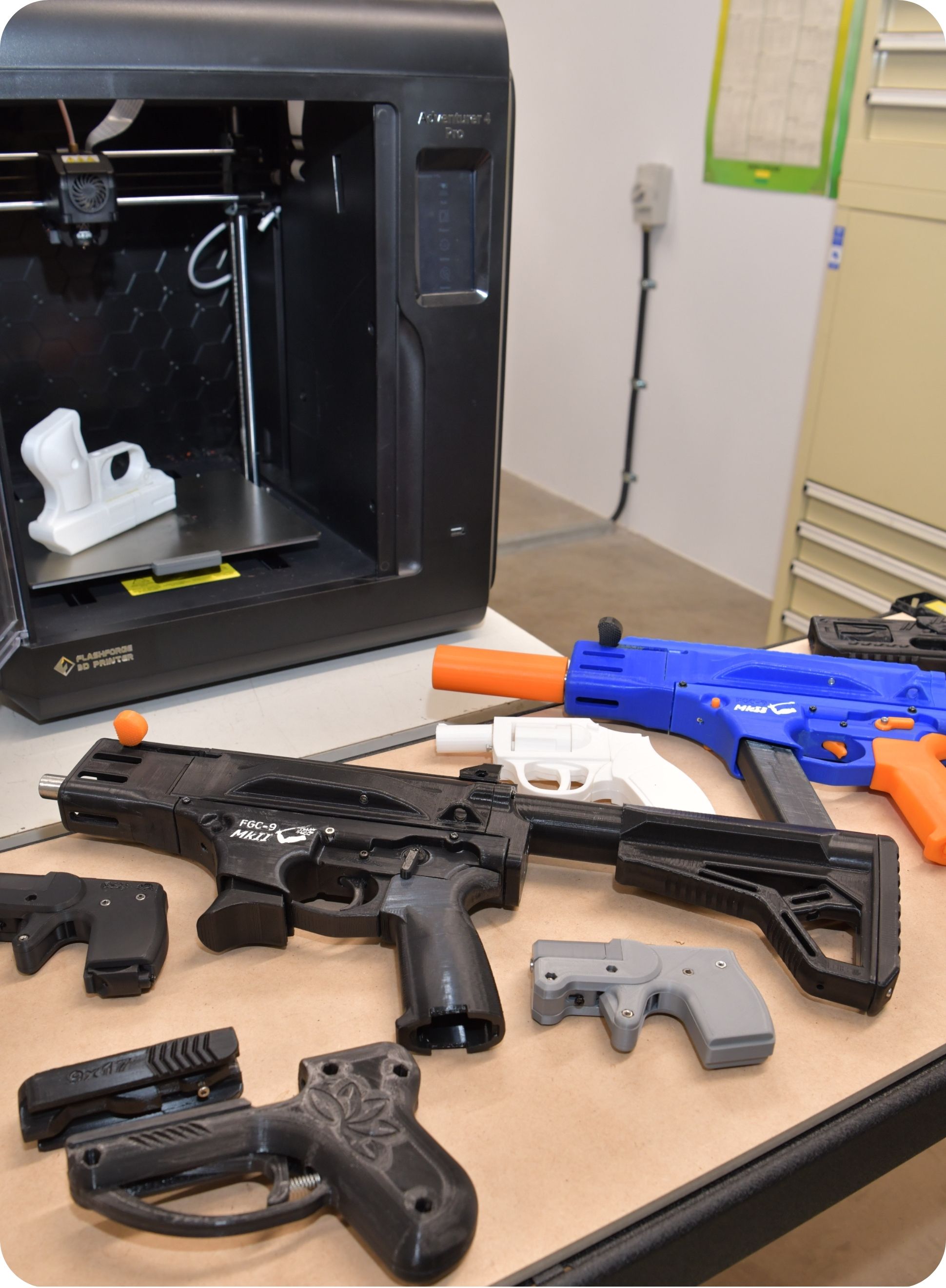
Others use a hybrid model, which combines traditional gun parts such as a barrel with 3D-printed material. The weapon is manufactured in stages, with each part of the gun printed separately and assembled manually.
Detective Inspector Nathan Schollar (pictured right with Senior Sergeant First Class Dan Cahill and Brevet Sergeant Mark Jamieson) from Firearms Branch says this can all be produced using most off-the-shelf 3D printers priced between $500 and $2000.
"3D printing has evolved to become relatively cheap, easily accessible, and with the use of online blueprints, guns can be produced at a low cost, in any location by an unskilled operator," he said.
"The technology has advanced sufficiently that it’s now difficult to tell the difference between a PMF and a traditional firearm in many instances.
"3D-printed firearms are no longer seen as being novice or a niche like they were a decade ago."
This illegal manufacturing trend is not limited to organised crime; individuals acting alone are also engaging in this activity.
"We know there are firearm enthusiasts that are seeing what they can make on their 3D printer, however they need to understand that they’re not a hobbyist or a tinkerer," Detective Inspector Schollar said.
"Undertaking this dangerous activity makes them a criminal."
In recent years police jurisdictions across Australia have seen an increase in the number of 3D-printed firearms seized, along with the printers used to manufacture them.
Locally, SAPOL members have been involved in 46 incidents involving the seizure of 81 3D-printed firearms and more than 173 firearm parts from May 2020 (when data was first collected) until January 2026.
It is predicted that homemade guns will soon overtake illicit weapon imports and become the most prevalent stream of firearms in Australia. The rising number of these weapons in the community elevates the risk to police officers’ safety.
"A 3D-printed firearm may not exhibit the same manufacturing marks or identifiers, making it harder for officers to determine whether a weapon is functional or safe," Inspector Schollar said.
"Concerningly, a 3D PMF can resemble a toy gun or another item, such as a smartphone, in an attempt to conceal its actual functionality.
"Firearms Branch is producing training materials to upskill the workforce in the current operational environment to improve frontline awareness and operational safety."
Triggering new laws
In 1996 Martin Bryant killed 35 people and wounded 23 others at Port Arthur. This tragedy saw the Australian Government undertake significant reforms to gun laws.
The emergence of dangerous 3D-printed firearms now threatens to undermine Australia’s strict gun control laws.
Legislation across Australian jurisdictions is inconsistent, with no uniformity covering 3D-printed firearms and their digital blueprints.
"South Australia, along with New South Wales and Tasmania are the only jurisdictions to have progressed legislation regarding 3D firearm blueprints with any impetus," Detective Inspector Schollar said.
"The South Australian Parliament recently passed the Firearms (Digital Blueprints for 3D Printing) Amendment Bill 2024 which prohibits the possession of digital blueprints to manufacture 3D-printed firearms, parts, or sound moderators.
"This legislation, which will go live early this year, will see individuals found in possession of such blueprints face up to 15 years in prison.
 "It is an important step in dealing with this new threat and evolving technology."
Firearms Branch continues to work closely with state and Commonwealth partners in the National Illicit Firearms Working Group, formerly Operation Athena, to target the trafficking and use of illicit firearms in Australia.
In late 2024, Branch members attended the group’s three-day symposium in Melbourne to collaboratively share intelligence and address the challenges posed by 3D PMFs.
"Learnings taken from this event are pivotal for understanding the current operational environment and vital for developing and strengthening SAPOL’s response to the threat," Detective Inspector Schollar said.
"Proactivity is critical to address the threats posed by 3D-printed weapons in our community – the implementation of effective controls will play a significant role to ensure public safety."
The collaborative relationship with interstate colleagues is also seen in 3D PMF investigations, which are considered crimes without borders.
"States and territories are vulnerable to illicit 3D-printed firearms being smuggled across borders with increasing ease, exacerbating the existing challenges of combating organised crime and threats to community safety," Detective Inspector Schollar said.
"State and national law enforcement agencies are actively implementing new processes and procedures to prevent 3D PMFs from bypassing traditional security screening measures.
"The potential for PMFs to enter the hands of organised crime, terrorist or right-wing factions directly undermines public safety.
"We need to remain vigilant, while working collectively and contributing to stronger legislation to ensure we effectively deal with this emerging threat."
This article was written by Mathew Rodda and first appeared in SAPOL's Blueprint Magazine. It has been reproduced here with permission.