
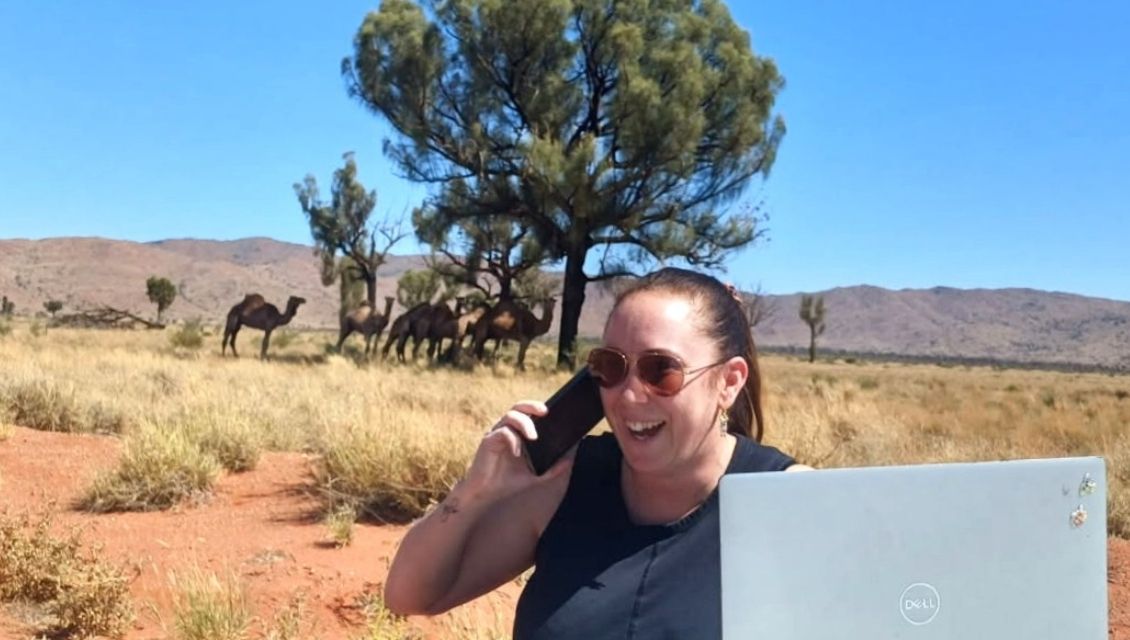
Child protection staff working across the remote Anangu Pitjantjatjara Yankunytjatjara (APY) Lands now have greater connectivity and the ability to respond faster to community needs, with the trial of a Starlink satellite terminal on a work vehicle currently underway.
Starlink is a low-Earth orbit satellite internet constellation operated by SpaceX that provides high-speed, low-latency broadband to remote and rural locations around the world.
The Department for Child Protection (DCP) has mounted a Starlink terminal on one of its Far North team’s cars, as part of a trial of the technology.
Frontline staff have reported the Starlink capability is transforming how they work in some of the state’s most remote communities, allowing them to connect and access critical systems, and in turn, improve how services are delivered – where connectivity has historically been a major constraint.
Some examples of how the pilot has improved service delivery include:
- Giving staff the option to conduct consultations while travelling between locations, maintaining continuity of service without needing to return to a base site to regain connectivity.
- Senior staff being able to access the department’s key systems to provide critical information within minutes, enabling timely decision-making and reducing risk, with fewer delays caused by unreliable connectivity.
- Connection between staff and supervisors and supporting networks while working in remote areas, reducing feelings of isolation and improving safety.
- Benefit to community through faster, more consistent and effective service delivery, especially in time-critical situations. Following the completion of the pilot, a broader rollout of the technology will be considered.
Department for Child Protection Chief Executive Jackie Bray said the technology was "making a real difference for our staff and, most importantly, for the children, families and communities they support, by remov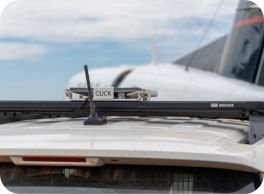 ing the long-standing barrier of poor connectivity for our workforce".
"The ability to access systems and information in real time – no matter how remote the location means decisions can be made quickly and safely, when they matter most," she said.
"The Starlink-on-vehicle pilot is giving our teams more certainty, more capability, and more connection. The early results demonstrate that when staff have the right tools, they can respond faster, stay connected, and provide better support to the community."
DCP Far North Case Manager Mellissa Buttery said having Starlink fitted to the car had been an absolute game changer.
"Due to the remote nature of our work, we are often spending significant lengths of time travelling to attend communities to undertake investigations and complete placement visits," she said.
"Previous to Starlink being fitted, phone and internet reception was only in certain communities, and we would have no service during transit, sometimes for periods of up to two hours.
"Now having Starlink, we now have access to emergency service supports and our client management system and can pull over the car and attend Teams meetings, such as emergency consults.
"It also means we have a higher level of safety for workers, and importantly, that we are more accessible and responsive for families, communities and local services because of the improved connectivity."
This story was prepared by the Department for Child Protection and is republished here with permission.