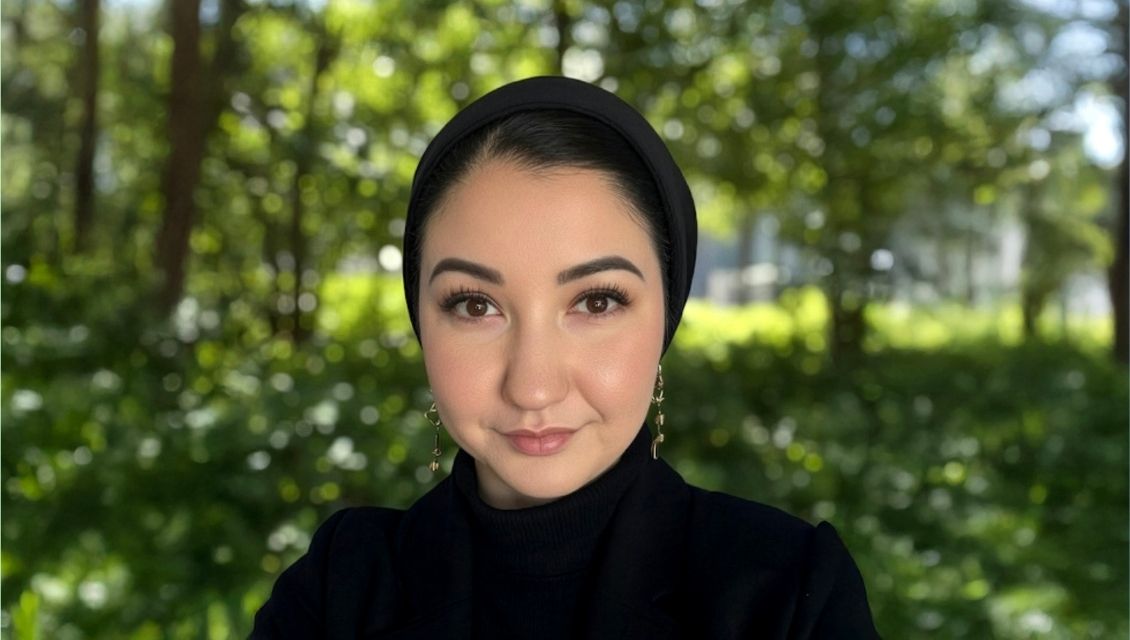
Jamila Ahmadi was only a child when she boarded the people smuggler’s boat on the Indonesian island of Java, but her memories of that day are still vivid.
Miss Ahmadi and her family – members of Afghanistan’s persecuted Hazara ethnic group – had left their home country in the hope that a better life might await them in another nation.
After being forced to leave Iran, which wasn’t accepting any more refugees at the time, the Ahmadi family moved to Pakistan – only to find that the same discrimination Hazaras faced in Afghanistan had followed them across the border.
So after travelling through Malaysia, Miss Ahmadi, her parents and her brother and sister, found themselves in Indonesia negotiating to make the perilous trip across the Indian Ocean to Australia.
“At that time all we knew was that boats were leaving from certain countries to come to Australia,” she says.
“But we honestly didn't know where we we're going to end up. Back then there was no internet, there was no social media, so you couldn’t check these things.
“And we didn't know anyone in Australia either. All we knew was that they were accepting refugees at that time.”
Miss Ahmadi says that she and around 250 others were crammed onto the small Australia-bound vessel.
“It was just a standard Indonesian fishing boat, made out of wood,” she recalls.
“I remember it was like a light blue colour. We all had to sit in a foetal position, because there was so little room.
“We knew that a lot of boats had sunk and that people had drowned, and we had no idea if we would be amongst the lucky ones or not.
“We stayed on that boat for four or five days before the Australian Navy found us.”
A new life in Australia
It’s a harrowing journey by any measure, but the difficult times didn’t end on Australian soil.
The Ahmadi family (pictured) were taken to the now-defunct Woomera Detention Centre,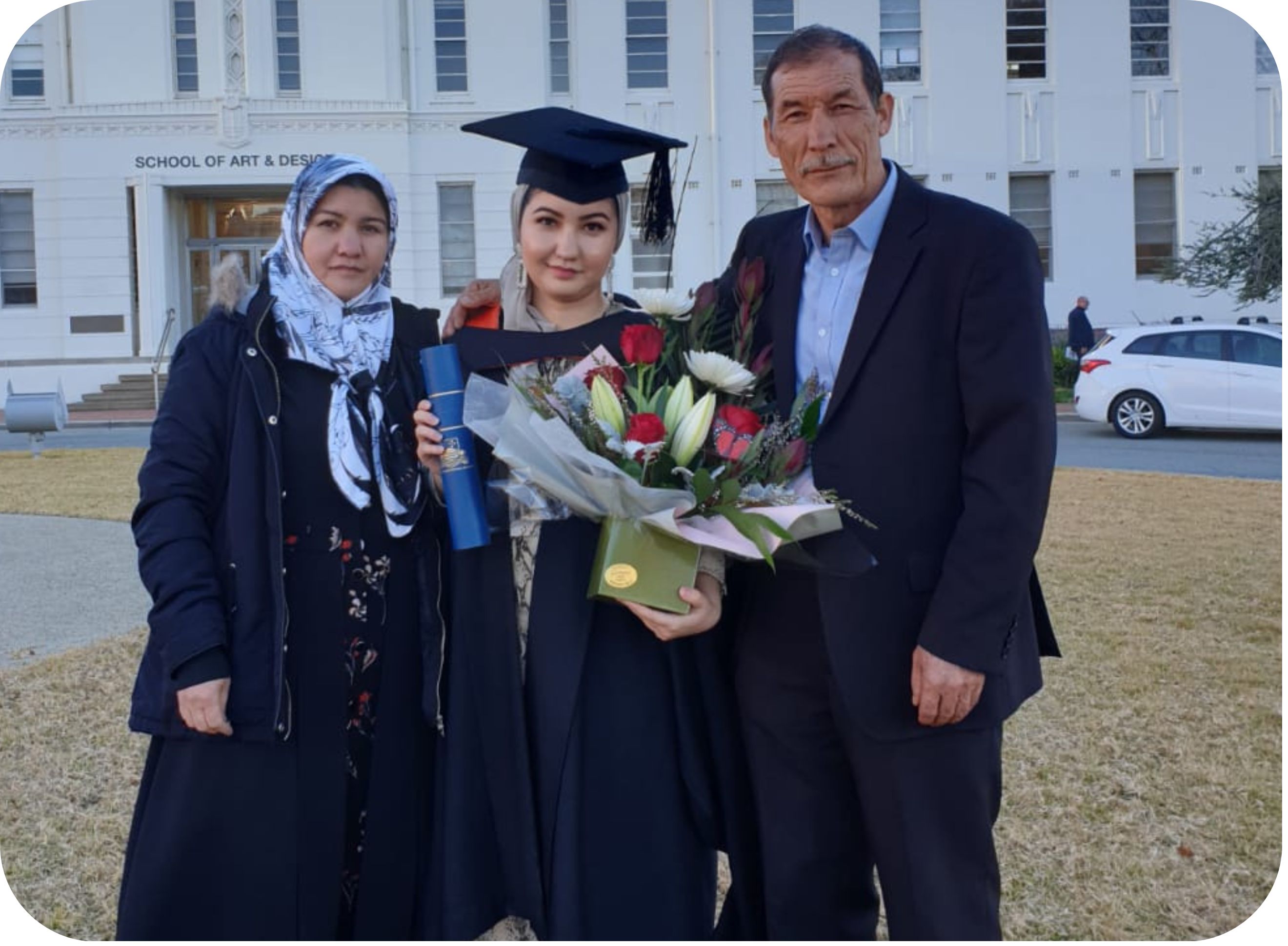 where they were held for six months, before finally being settled in Adelaide’s northern suburbs.
Miss Ahmadi’s father, who cannot read or write, found a job as a welder and quickly impressed his bosses and colleagues with his skills.
“He was very good at working with the diagrams and knowing what to do, even though he couldn’t actually read them,” Miss Ahmadi says.
“People wondered how he could do it, but he was very good at what he did.”
After two years of schooling at Pennington Primary School, Miss Ahmadi transferred to Kilburn where she says she was one of only a handful of kids from a culturally and linguistically diverse background.
“That’s when a feeling of not belonging, of not being able to relate to others, first turned up,” she says.
"It was a very challenging period of time because I was learning English and I had nobody around me that was from a refugee background, that had been on the same journey and could relate.
“Most people didn’t know Afghanistan at that time. They couldn’t point to Afghanistan on a map.
“They’d probably heard of the Taliban, and of course 9/11. That was all most people knew.”
This feeling of isolation is, Miss Ahmadi says, something she remembers and uses as a touchstone in the work she does today as a Community Engagement Officer with the Department of Human Services’ Inclusion Support Program.
“If a young person doesn’t feel that sense of belonging, they may try to find it in places that aren’t healthy, and that can really shape the path they take.” she says.
A journey in education
Miss Ahmadi says that after high school she was drawn towards the field of international relations.
She wasn’t entirely sure what she wanted to do, but she knew she wanted to find a career where she could give back to the community.
“I went to the University of Adelaide where I studied a Double Degree of International Relations and Development Studies," Miss Ahmadi says.
It was at uni that Miss Ahmadi finally met other people who could relate to her refugee experience.
“I networked a lot, and met people with a similar background to myself,” she says.
 “We were the first generation in our families to go to university. Even just getting into university was a big deal.
“But we realised that we didn’t have enough support services, so we created a student association to support one another called The Association of Australian Tertiary Students from Afghanistan (AATSA).
“It could have been as simple as helping each other find where our classes were, or navigating different pathways into different careers, and that student association still stands and is still running to this day.”
After graduating and working for a few years in the international education sector, Miss Ahmadi moved to Canberra to study for her Masters of International Relations degree at Australian National University, a stint that also saw her working in the Embassy of Afghanistan.
“I was working directly with the ambassador himself on a few projects, and at the same time some of my professors had either worked in Afghanistan or knew the realities of Afghanistan on the ground,” she says.
“My original plan was to head to Afghanistan and get involved in peacebuilding and humanitarian work, building on what I’d learned during my time at the embassy here.
“A lot of young people from the Afghan diaspora wanted to go back – for a period of time – to give back and help build it up.
"That was my plan, but after I graduated, the political landscape in Afghanistan shifted."
Miss Ahmadi calls the situation "disheartening’" and explains that she can’t see herself going back to work there under the present conditions.”
She says the fact that girls and women are prevented from studying in Afghanistan only makes her more determined to make the most of the opportunities living in Australia affords.
“As soon as we landed in Australia I remember my dad telling us – and he kept drilling it into our head every week – that this was the land of opportunities,” Miss Ahmadi says.
“If you don't take it, you will regret it. And I think he's absolutely right. I've had the opportunity to be educated, I've had the opportunity to be independent and to learn so much.”
Strengthening social cohesion
In her current role, Miss Ahmadi works in the Countering Violent Extremism (CVE) space within the Department of Human Services’ Inclusion Support Program, where she combines her professional expertise and lived experience to strengthen social cohesion and resilience.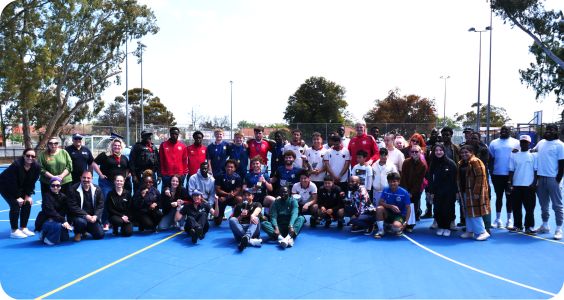
In this role she engages with a diverse range of stakeholders, delivering training and awareness sessions to build foundational knowledge of CVE, a field that continually evolves with global and geopolitical developments.
“South Australia has a very low threshold for what we call extremist materials,” Miss Ahmadi says.
“So in that sense we mainly focus on early intervention and prevention.
“I guess I see myself as a bridge between the community and government. I provide awareness around CVE to different communities and stakeholders, and we also provide training.
“We provide training, for example, to Correctional Officers so that they're aware of what violent extremeism is, and also to the Department of Education.
“We also undertake a lot of projects that focus on prevention. These projects are around working towards better social cohesion and creating a better sense of belonging.”
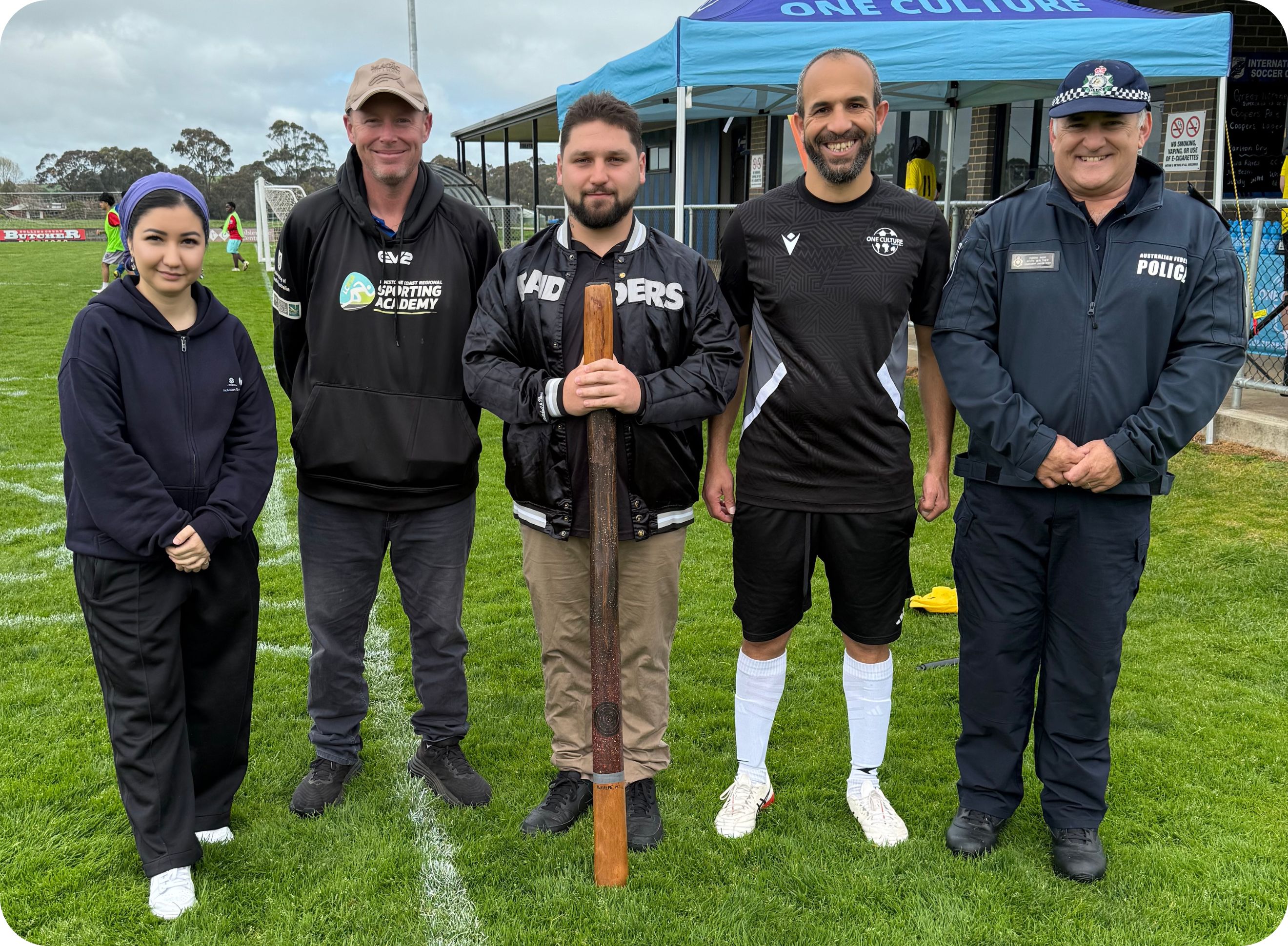
One of those projects is the successful Kick Out Hate soccer tournament (pictured), a program that harnesses the power of the world game to bring together young people, discourage anti-social behaviour and encourage harmony in the community.
Fashion, with a twist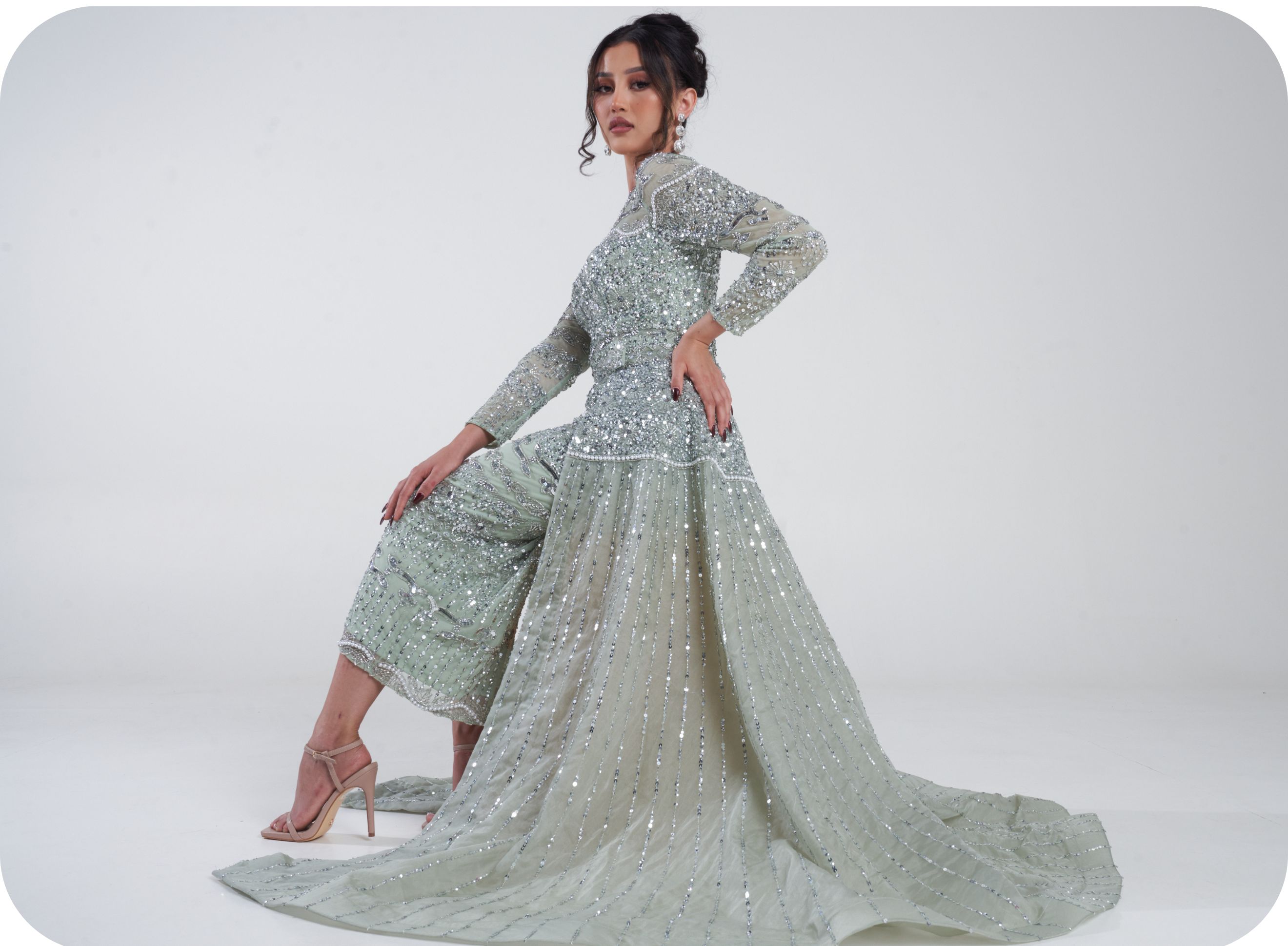
And while this would be more than enough work for most people, Miss Ahmadi also runs a fashion label – Two of Five The Label – with her sister Farzana.
Two of Five was born out of a need for gowns that combined fashion and elegance with modesty.
“Back when I was in Year 12 I wanted to find modest dresses to wear to formals and to weddings and the like, but I couldn’t find anything I liked in the market,” Miss Ahmadi says.
The dresses are shipped around the world and the label has acquired a strong following.
“Many of our customers tell us, ‘We’re so grateful for the opportunity to wear modest, timeless pieces. This is something we couldn’t find anywhere else."